Leadership

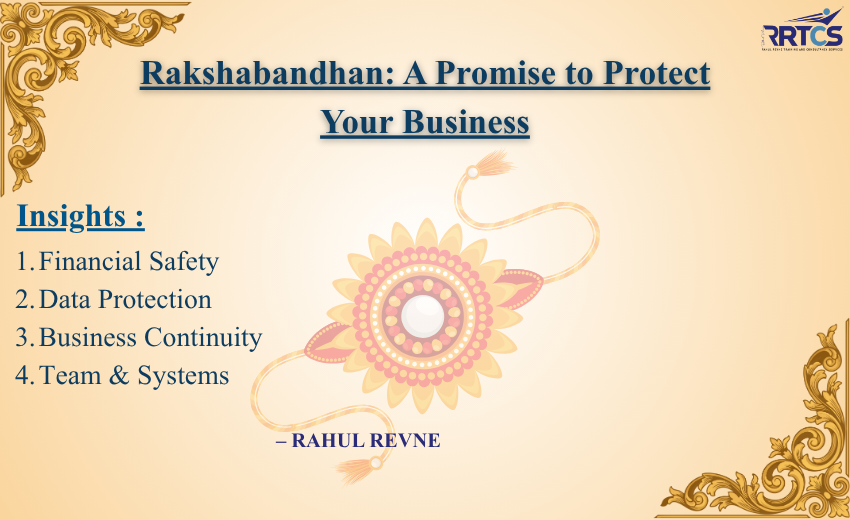
Business owner protecting company operations through strong systems, risk management, financial planning, and business continuity.
Business Growth, Leadership, Rakshabandhan, system

Rakshabandhan: A Promise to Protect Your Business

This Rakshabandhan, Make a Commitment to the Business That Supports So Many Lives “Rakshabandhan is a festival of protection, trust, and responsibility. As entrepreneurs, perhaps the most important promise we can make is to protect the business that supports our employees, customers, suppliers, and families.” Every year, Rakshabandhan reminds us of the importance of standing by those who depend on us. As business owners, we also have people who depend on us every single day. Our employees depend on us for their livelihoods. Our customers depend on us for quality and reliability. Our suppliers depend on us for continuity. Our families depend on the business we have built. The question is: Are we protecting our business with the same commitment? A successful business is not protected by good intentions alone. It is protected by planning, discipline, and systems. ________________________________________________________________________________________ Promise 1: Protect Your Financial Stability Many businesses perform well when everything goes according to plan. Great businesses prepare for the days when it doesn’t. Maintain an emergency reserve for unexpected situations such as economic slowdowns, delayed customer payments, equipment failures, or market disruptions. Cash reserves don’t just protect your balance sheet—they protect your ability to make calm decisions during uncertain times. Promise 2: Protect Your Business Data Today, business data is one of your most valuable assets. Customer information, financial records, employee files, SOPs, contracts, and operational documents should never depend on a single laptop or one employee’s computer. Maintain regular backups, store copies securely, and periodically verify that they can actually be restored. Research shows that while many small and medium businesses perform backups, a significant number either don’t maintain off-site copies or never test whether those backups actually work—leaving them vulnerable when a crisis occurs. Promise 3: Audit Your Business Before Problems Find You Most business owners conduct audits only when something goes wrong. Successful businesses conduct audits to ensure nothing goes wrong. Regularly review: Financial processes Operational systems Inventory controls Customer service standards Compliance requirements Data security An audit is not about finding faults. It is about identifying risks before they become expensive mistakes. Promise 4: Protect Customer Trust Buildings can be rebuilt. Machines can be replaced. Lost customer trust is much harder to recover. Listen to customer complaints. Respond quickly. Deliver what you promise. Protecting your reputation is one of the highest-return investments any business can make. Promise 5: Protect Your Business from Founder Dependency Ask yourself one simple question: “If I am unavailable for one month, will my business continue to operate?” If the answer is no, your business depends more on you than on systems. Document processes. Delegate responsibilities. Develop future leaders. Build Standard Operating Procedures (SOPs). A business should be able to grow because of the founder—not only in the founder’s presence. Promise 6: Prepare for the Unexpected No entrepreneur plans for disruption. But every resilient entrepreneur prepares for it. Whether it is a cyberattack, natural disaster, market slowdown, or a key employee leaving, preparation determines how quickly a business recovers. Recent studies indicate that many organisations still lack a formal business continuity plan or review it too infrequently, increasing the impact of unexpected disruptions. Preparedness is not pessimism. It is responsible leadership. _________________________________________________________________________________________ A Rakhi is more than a thread. It is a promise. This Rakshabandhan, make one more promise. Promise to protect the business that creates opportunities, supports families, serves customers, and carries your vision. Protect it with strong systems. Protect it with regular audits. Protect it with financial discipline. Protect it with secure data. Protect it with capable people. Because when you protect your business, you also protect the dreams and livelihoods of everyone connected to it. The strongest businesses are not those that never face challenges. They are the ones that are prepared before those challenges arrive. ________________________________________________________________________________________ Author Bio Mr. Rahul Revne Founder of RRTCS (Rahul Revne Training & Consultancy Services), Mr. Rahul Revne brings over 15 years of experience in HR, Sales, Strategy, and end-to-end business consulting. Known for turning struggling ventures into thriving enterprises, he helps entrepreneurs master the art of meaningful customer connection, emotional intelligence in sales, and purpose-driven business growth. Author of Entrepreneurial Series and Spirit of Inspiration, Mr. Revne continues to empower leaders with clarity, courage, and customer focus.

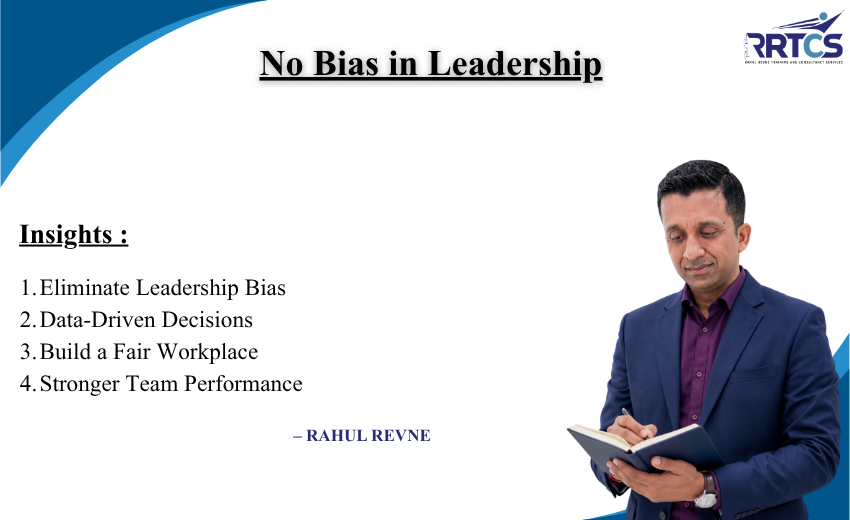
Business leader making fair and unbiased leadership decisions with a diverse professional team during a corporate meeting.
Business Growth, Leadership, system

No Bias in Leadership

Why Great Leaders Build Systems Instead of Favourites “A leader’s greatest responsibility is not to make everyone happy—it is to make every decision fair.”   Every entrepreneur believes they are fair. Ask any business owner, “Do you treat all your employees equally?” and the answer will almost always be yes. But leadership bias is rarely intentional. It happens quietly, unconsciously, and over time. If left unchecked, it becomes one of the biggest barriers to building a high-performing organisation. ________________________________________________________________________________________ The Invisible Trap of Leadership Leadership bias doesn’t always look obvious. It often begins with familiarity. Imagine two employees. One always agrees with you, communicates in a style you like, and shares your way of thinking. The other respectfully challenges your ideas, asks difficult questions, and presents alternative viewpoints. Without even realising it, you may begin to: Trust the first employee more. Overlook their mistakes. Give them more opportunities. Value their opinions more highly. Rate their performance more positively. Not because they perform better—but because they make you feel more comfortable. This is unconscious bias. The danger is that leaders rarely recognise it in themselves. _________________________________________________________________________________________ The Cost of Bias When promotions, recognition, and opportunities are influenced by personal preference instead of performance, the entire organisation suffers. Employees begin to think: “Hard work doesn’t matter.” “Only favourites get opportunities.” “My opinions are not valued.” Over time, people stop sharing ideas. Innovation declines. Trust weakens. Eventually, your best performers either disengage or leave the organisation. The cost isn’t just losing employees—it’s losing the culture of merit that every successful business depends on. ________________________________________________________________________________________ Fairness Builds Trust Great leaders don’t make decisions based on emotions. They make decisions based on facts. Instead of asking: “Who do I enjoy working with?” Ask: “Who consistently delivers results, takes ownership, and lives our organisational values?” Leadership is not about treating everyone identically. It is about giving everyone a fair opportunity to succeed. Employees may not always agree with your decisions, but they will respect them if they know those decisions are fair. ________________________________________________________________________________________ Replace Opinions with Systems The best way to reduce leadership bias is to reduce subjectivity. High-performing organisations rely on systems rather than personal opinions. These systems include: Clearly defined KRAs and KPIs Standard Operating Procedures (SOPs) Structured performance reviews 360-degree feedback Transparent promotion criteria Data-driven decision-making When expectations are clearly defined and performance is measurable, decisions become more objective, more transparent, and more trusted. As management expert W. Edwards Deming famously said: “In God we trust; all others must bring data.” ________________________________________________________________________________________ What Research Says Research consistently shows that unconscious bias influences workplace decisions, often without leaders being aware of it. Studies published by Harvard Business Review highlight that first impressions, familiarity, and personal preferences can unconsciously affect hiring, promotions, and performance evaluations. Gallup’s leadership research also points out that creating accountability is one of the weakest leadership competencies. Organisations that establish clear expectations and objective performance systems create stronger trust and achieve better long-term performance. The lesson is simple: The more your organisation depends on personal judgement alone, the greater the risk of inconsistent decisions. ________________________________________________________________________________________ A Leadership Self-Check Ask yourself these questions: Do I give more opportunities to people who think like me? Do I judge performance based on facts or feelings? Would my team describe my decisions as fair? Can every promotion or reward be supported with measurable evidence? Do I encourage people to challenge my ideas without fear? Honest answers to these questions reveal whether your leadership is driven by fairness or familiarity. ________________________________________________________________________________________ A business cannot build a culture of accountability if its leaders are influenced by personal preferences. People don’t lose trust because leaders make difficult decisions. They lose trust when those decisions appear inconsistent, unfair, or biased. The strongest organisations are not built on favourites. They are built on fairness. When employees believe that performance—not politics—determines success, they stop competing for attention and start competing for excellence. And that is when a business builds a culture capable of sustained growth. ________________________________________________________________________________________ Author Bio Mr. Rahul Revne Founder of RRTCS (Rahul Revne Training & Consultancy Services), Mr. Rahul Revne brings over 15 years of experience in HR, Sales, Strategy, and end-to-end business consulting. Known for turning struggling ventures into thriving enterprises, he helps entrepreneurs master the art of meaningful customer connection, emotional intelligence in sales, and purpose-driven business growth. Author of Entrepreneurial Series and Spirit of Inspiration, Mr. Revne continues to empower leaders with clarity, courage, and customer focus.

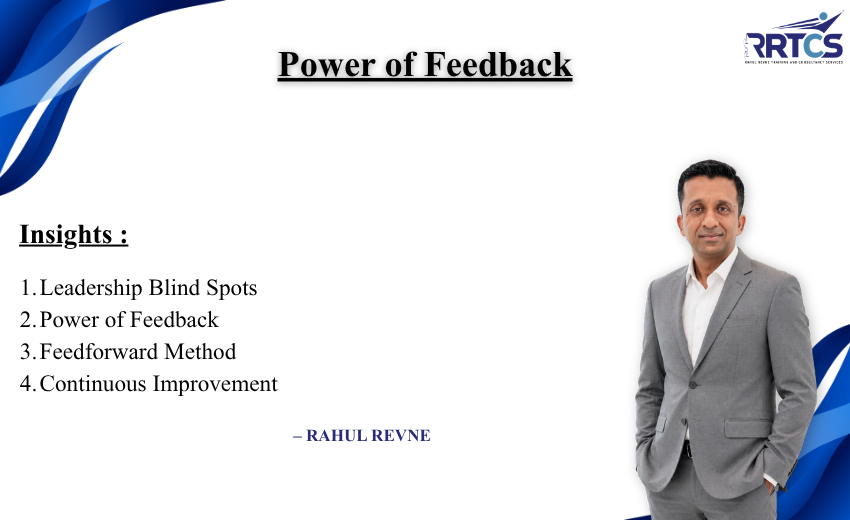
Business leader discussing the power of feedback and leadership growth with a professional team in a corporate office.
Business Growth, Leadership

The Power of Feedback

The Leadership Habit That Drives Continuous Growth “What got you here won’t get you there.” — Marshall Goldsmith   Every business owner wants to grow. They invest in technology, marketing, and talented people. But one of the most powerful growth tools often gets ignored: feedback. As businesses grow, founders become further removed from day-to-day operations. Employees hesitate to disagree, customers stop complaining and quietly leave, and managers avoid difficult conversations. Over time, leaders begin making decisions with incomplete information. This is where growth slows—not because of a lack of effort, but because of a lack of honest feedback. _________________________________________________________________________________________ Success Can Create Blind Spots In his bestselling book What Got You Here Won’t Get You There, Marshall Goldsmith explains that successful leaders often develop habits that become invisible to them but obvious to everyone around them. These habits may include: Interrupting others during discussions. Wanting to be right in every conversation. Rejecting ideas too quickly. Giving advice before fully understanding the problem. Speaking more than listening. These behaviours are rarely intentional, but they affect trust, collaboration, and decision-making. The challenge is that you can’t fix what you can’t see. That’s why feedback is essential—it helps leaders identify their blind spots. _________________________________________________________________________________________ Feedback Is About Growth, Not Criticism Many leaders avoid feedback because they see it as criticism. In reality, feedback is simply information that helps us improve. Goldsmith introduces the idea of Feedforward—instead of focusing on past mistakes, ask people what you can do better in the future. Rather than asking: “How did I do?” Ask: “What is one thing I can do differently to become a better leader?” This simple shift changes the conversation from blame to improvement. _________________________________________________________________________________________ Build Multiple Feedback Loops Don’t rely on one source of feedback. Every stakeholder offers a different perspective. Regularly seek feedback from: Customers Employees Managers Vendors Mentors Customers tell you how you deliver value. Employees reveal cultural and operational challenges. Mentors and peers help you see strategic blind spots. The more perspectives you gather, the better your decisions become. ________________________________________________________________________________________ What Research Says Research consistently shows that meaningful feedback improves engagement and performance. According to Gallup, employees who receive meaningful feedback regularly are significantly more engaged at work. In one analysis, around 80% of employees who had received meaningful feedback in the previous week described themselves as fully engaged. Leadership research also shows that organisations improve faster when feedback becomes a continuous process rather than an annual event. Feedback isn’t just an HR practice—it is a business growth strategy. ________________________________________________________________________________________ A Simple Habit Every Leader Should Adopt At the end of every month, ask five people one question: “What is one thing I can do differently to become a better leader?” When they answer: Listen without interrupting. Don’t justify your actions. Don’t defend yourself. Write down recurring patterns. Focus on improving one habit at a time. Small behavioural improvements, repeated consistently, create exceptional leaders. Businesses don’t stop growing because they run out of opportunities. They stop growing because leaders stop learning. The best leaders aren’t the ones who always have the right answers—they’re the ones who continue asking the right questions. As Marshall Goldsmith reminds us: “What got you here won’t get you there.” If you want your business to grow, start by improving the person leading it. Because the quality of your business will always reflect the quality of your leadership. ________________________________________________ Author Bio Mr. Rahul Revne Founder of RRTCS (Rahul Revne Training & Consultancy Services), Mr. Rahul Revne brings over 15 years of experience in HR, Sales, Strategy, and end-to-end business consulting. Known for turning struggling ventures into thriving enterprises, he helps entrepreneurs master the art of meaningful customer connection, emotional intelligence in sales, and purpose-driven business growth. Author of Entrepreneurial Series and Spirit of Inspiration, Mr. Revne continues to empower leaders with clarity, courage, and customer focus.

Scroll to Top