Blog

Your blog category

Article graphic explaining the Shared Saving Model, showing why businesses should focus on selling measurable outcomes and savings instead of just services or hours worked.
Blog, Business Growth

Stop Selling the Service. Start Selling the Savings.

  Most founders sell their service like this: “We will work 50 hours.” “We will give consulting.” “We will implement systems.” But customers don’t care about hours. They care about results. And the biggest reason customers delay decisions is simple: “What if I spend money and don’t get results?” That is why many deals get stuck in: Price negotiation Delayed approvals Endless meetings “Let us think about it” A smarter approach is the Shared Saving Model. In this model, instead of charging everything upfront, you help the customer reduce costs or improve profits first — and then take a percentage from the savings created. Example: Instead of saying: “We charge ₹5 lakhs for process improvement.” You say: “We will reduce your wastage by ₹20 lakhs annually, and we will take 20% of the verified savings.” Now the conversation changes. The customer feels: Lower risk More trust Better confidence Faster decision-making This model works especially well in: Cost reduction Operations Logistics Energy saving Recruitment cost reduction Profit improvement consulting But one thing is important: Savings must be measurable. You need: Clear baseline Clear numbers Proper tracking Transparent reporting The lesson for founders is simple: Don’t just sell effort. Sell outcomes. Because customers buy confidence faster than they buy services. _________________________________________________________________________________________ Author Bio Mr. Rahul Revne Founder of RRTCS (Rahul Revne Training & Consultancy Services), Mr. Rahul Revne brings over 15 years of experience in HR, Sales, Strategy, and end-to-end business consulting. Known for turning struggling ventures into thriving enterprises, he helps entrepreneurs master the art of meaningful customer connection, emotional intelligence in sales, and purpose-driven business growth. Author of Entrepreneurial Series and Spirit of Inspiration, Mr. Revne continues to empower leaders with clarity, courage, and customer focus.    

Business professional analyzing integrated ERP and CRM systems to streamline operations, improve reporting, manage inventory, sales, finance, and customer service through connected business processes.
Blog, Business Growth

Streamline Operations and Make Smarter Decisions with Integrated Systems

Running a growing business means managing many moving parts. Sales, inventory, finance, customer service, delivery, reporting, and follow-ups all need to work together. An integrated business system, such as an ERP or CRM, connects these functions so your business does not depend on scattered spreadsheets, manual updates, and guesswork. When data flows smoothly between departments, errors reduce, time is saved, and decisions become clearer. More importantly, you get a real-time view of your business — inventory levels, cash flow, customer orders, pending payments, sales performance, and service issues — all in one place. This helps you identify trends quickly and make decisions based on facts, not assumptions. Why Businesses Need Integrated Systems Disconnected tools slow down growth. For example, if sales orders are tracked in one system and inventory is tracked somewhere else, mistakes can happen. Orders may be missed. Stock may run out. Finance may not get updated on time. Customers may receive delayed responses. An integrated system solves this by connecting key business functions. When a sale happens, inventory updates automatically. Finance gets visibility. Customer service can see the order status. Management can review performance through reports. This reduces manual data entry, improves coordination, and frees your team from repeated follow-ups. It also creates consistent and accurate reports, making budgeting, planning, and decision-making easier. Key Benefits of Integrated Business Systems 1. Efficiency and Consistency Automated workflows replace repetitive manual tasks such as invoicing, stock updates, reminders, and reporting. This reduces errors, delays, and dependency on individual memory. 2. Better Visibility Dashboards give you quick visibility into important numbers such as sales, expenses, inventory, receivables, customer issues, and team performance. When numbers are visible, decisions become faster and more accurate. 3. Stronger Customer Service When customer data is available in one place, your team can respond faster, track history, resolve issues better, and personalize communication. This improves customer experience and trust. 4. Scalability As your business grows, the system can handle more orders, more employees, more products, and more locations without creating unnecessary chaos. A good system helps the business grow without depending only on the founder’s daily involvement. Getting Started with an Integrated System 1. Map Your Processes List your core workflows, such as: Lead to sale Sales to cash Inventory management Purchase process Customer service Billing and collections Reporting and review Then identify what the system must handle. 2. Choose the Right Tool Not every ERP or CRM is right for every business. Small and medium businesses can start with cloud-based systems that are affordable, flexible, and easier to implement. Evaluate tools based on your industry, team size, budget, process complexity, and future growth plans. 3. Prepare Your Data Before migration, clean your existing data. Customer lists, product details, pricing, stock records, financial data, and pending orders should be accurate and organized. Good data creates good decisions. Poor data creates confusion. 4. Train Your Team A system works only when people use it properly. Train your team with demos, practice sessions, simple guides, and clear expectations. Adoption is as important as implementation. Actionable Takeaways Start by identifying your biggest operational pain point. Is it double data entry? Missing information? Delayed reports? Inventory mismatch? Weak follow-ups? Unclear cash flow? Once you identify the pain point, check how a unified system can solve it. Involve your employees early. Ask them where delays, confusion, and repeated work happen. Their feedback will help you choose and implement a system that solves real problems. Use reporting features from the beginning. Set up a few key dashboards, such as: Monthly sales vs. target Pending receivables Inventory status Customer complaints Lead conversion Cash flow position A modern business system is not only for large companies. Small and medium businesses can also gain major benefits by connecting data, automating routine tasks, reducing errors, and improving decision-making. Next Step Need help choosing or implementing the right business system? Contact us for a system audit or consultation. We can help you identify the gaps, select the right solution, and make your operations smoother, clearer, and more scalable. Author Bio Mr. Rahul Revne Founder of RRTCS (Rahul Revne Training & Consultancy Services), Mr. Rahul Revne brings over 15 years of experience in HR, Sales, Strategy, and end-to-end business consulting. Known for turning struggling ventures into thriving enterprises, he helps entrepreneurs master the art of meaningful customer connection, emotional intelligence in sales, and purpose-driven business growth. Author of Entrepreneurial Series and Spirit of Inspiration, Mr. Revne continues to empower leaders with clarity, courage, and customer focus.

Leader managing high-growth business challenges, illustrating chaos in scaling operations, delegation, systems building, and structured growth strategy for entrepreneurs
Blog, Business Growth

Managing the Beautiful Chaos: A Leader’s Guide to High-Growth Phases

Managing growth is one of the most rewarding yet challenging phases for any entrepreneur. While everyone celebrates a spike in sales, the internal reality is often very different: pressure, confusion, delayed decisions, and operational chaos. If your business is growing but you feel like you are personally losing control, this guide will help you navigate the high-growth phase with leadership and clarity. Understanding the Reality of Growth Growth is often romanticized, but in practice, it brings a new level of responsibility. Increased Pressure More clients mean more expectations, more communication, more delivery pressure, and more chances for mistakes. Operational Friction Processes that worked for 10 clients often break when the business reaches 100 clients. What looked efficient at a small scale may become weak, slow, or confusing at a larger scale. Constant Follow-ups As the business grows, communication volume increases. Without structure, the founder or leader becomes the default follow-up machine. The goal is not just to grow. The goal is to manage growth in a way that does not create burnout, service failure, or founder dependency. Moving from Founder to Leader In the early stages, the business often depends heavily on the owner. The founder becomes the lead salesperson, primary decision-maker, chief problem-solver, and final approval point. This is called the Founder Bottleneck. To scale effectively, the founder must transition from doing everything personally to building a business that can perform through people, systems, and accountability. From Doing to Leading Stop executing every task yourself. Start building the people, processes, and review systems that allow others to execute well. Your role is not to carry every task. Your role is to create the structure in which tasks are done correctly without your constant involvement. Delegating Authority Delegation is not just giving tasks to people. Real delegation means giving people ownership, decision rights, clarity, and accountability within their area. If your team has responsibility without authority, they will still depend on you for every decision. Creating a Vision That Outlasts Your Role High-growth periods require a clear North Star. When things become chaotic, your team needs to know what they are building, why it matters, and how their work contributes to the larger mission. Define the Impact Move beyond “increasing revenue.” Clarify the transformation you are creating for your clients, your industry, your team, and your market. Revenue is important, but it should not be the only story your team believes in. Build a Lasting Legacy Aim to create systems, culture, leadership, and initiatives that continue to function even when you are not in the room. A strong business should not depend only on the founder’s presence, memory, or pressure. Establishing a Culture of Continuous Improvement When things move fast, mistakes will happen. The difference between a chaotic company and a mature company is how it responds to those mistakes. Instead of looking for someone to blame, strong leaders build a data-driven improvement culture. Audit Your Systems Use pressure as a diagnostic tool. When something breaks, ask: Was the process clear? Was the owner defined? Was the handover proper? Was the review rhythm missing? Was the data visible? Was the team trained? Before blaming people, audit the system. Iterate Constantly If a customer service process fails under pressure, do not just fix that one customer issue. Fix the system that allowed the issue to happen. Every repeated mistake is a signal that the process needs improvement. Choose Clarity Over Chaos Use financial visibility, defined controls, clear roles, dashboards, and review rhythms to convert unmanaged growth into sustainable expansion. Clarity reduces panic. Systems reduce dependency. Review creates accountability. Real Scale Is About Handling More Growth does not automatically solve your existing problems. It often multiplies them. If follow-ups are weak at 10 clients, they will become a crisis at 100. If roles are unclear with 5 employees, they will become chaos with 50. If cash flow is not visible at a small scale, growth can make the risk even bigger. Sustainable success is built on strong systems and a leadership mindset that values stability as much as speed. Build the foundation first. Then growth becomes stronger, calmer, and more scalable.        

Founder-led vs system-led business growth framework explaining how founders can transition from handling everything themselves to building scalable systems and processes.
Blog, Business Growth

From Founder-Led to System-Led: How to Stop Being the “Engine” and Start Being the “Pilot”

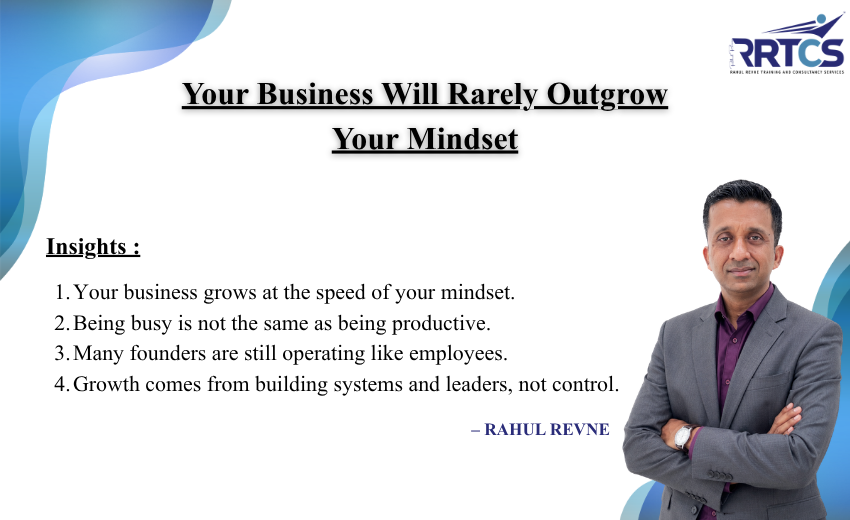
From Founder-Led to System-Led: How to Stop Being the “Engine” and Start Being the “Pilot” In the early days of a business, the founder is everything. They are the salesperson, the customer support, the visionary, and often the person who fixes the coffee machine. This “Founder-Led” energy is what gets a business off the ground. But as a business grows, that same energy becomes a bottleneck. To reach the next level, a business must transition from being Founder-Led to System-Led. The Difference: Founder-Led vs. System-Led Feature Founder-Led Business   System-Led Business Decision Making   Everything goes through the founder. Decisions are made based on set “rules” or data. Daily Operations The business relies on the founder’s “hustle.” The business relies on “Repeatable Processes.” If the Boss Leaves The business grinds to a halt or panics. The business continues to run smoothly. Scalability Limited by the founder’s time (24 hours a day). Unlimited (can be replicated across many offices). Why the Transition is Necessary In a Founder-Led business: When an external crisis hits, the founder tries to “brute force” a solution. They work longer hours and try to solve every problem personally. This leads to burnout. In a System-Led business: The business has a system to handle shocks. It has a pre-planned strategy for cutting costs or switching suppliers. The system absorbs the hit so the people don’t have to. How to Build a System-Led Business (The 4-Step Blueprint) To move away from being a “one-man show,” you need to build a structure that doesn’t need you for every tiny detail. Step 1: Document the “How-To” (The Playbook) If you are the only one who knows how to close a sale or handle a complaint, you are trapped. Action: Write down your “secret sauce.” Create a simple Standard Operating Procedure (SOP) for every major task. If a new employee can’t do the task by reading your guide, the guide isn’t finished yet. Step 2: Hire Leaders, Not Just Helpers Many founders hire “helpers” who just wait for instructions. Action: Look at companies like Bitdefender, which recently hired a Global Chief Revenue Officer. They didn’t hire someone to “help the CEO”; they hired someone to own the revenue system. Hire people who are better than you at their specific job. Step 3: Automate the Mundane Systems don’t always have to be people; they can be software. Action: Use technology to handle the repetitive stuff—email marketing, billing, or inventory tracking. Let the “digital system” do the heavy lifting. Step 4: Shift Your Focus to “The Radar” In a system-led business, the leader’s job changes. You stop looking inside at the daily tasks and start looking outside at the big picture. Action: Create a Strategic Intelligence Unit (as we discussed with the California tax credits). Your job is now to find new opportunities and watch for risks, while your systems handle the day-to-day work. The Goal: The “Pilot” Mindset Think of a pilot. A pilot doesn’t flap the wings of the airplane themselves. The engines and the flight systems do the work. The pilot’s job is to set the destination, monitor the gauges, and make small adjustments to keep the plane on course. The Question for You: Are you currently flapping the wings, or are you sitting in the cockpit? If you are flapping the wings, you will eventually get tired and the plane will fall. If you build the systems, you can fly as far as you want.      

The Growth Trap
Blog, Business Growth

The Growth Trap: Why Getting Bigger Can Be Harder Than Getting Started

The Growth Trap: Why Getting Bigger Can Be Harder Than Getting Started In the world of business, we are taught that “more is always better.” But as the CEO of the AI company Anthropic recently joked, sometimes growth can be “too hard to handle.” After watching companies grow, I’ve realized that businesses don’t usually fail because they lack customers—they fail because they lack the systems to handle those customers. This is called the Scalability Paradox. The Problem: “The Death Wobble” When a business grows too fast without a plan, it starts to “wobble.” The Symptom: You have more money coming in, but your team is stressed, mistakes are happening, and you feel like you’re constantly “putting out fires.” The Reason: You are running a big business with a “small business” brain. What worked when you had 5 employees will break when you have 50. Hidden Obstacles to Growth The “Founder” Bottleneck If every decision—from hiring a clerk to buying a printer—has to go through the boss, the business will stop growing. The Fix: You must move from “People-Power” to “System-Power.” Create a rulebook so the business can run even if the boss takes a month-long vacation. The “Outside World” Bottleneck Sometimes, growth slows down because of things you can’t control, like rising electricity costs or global conflicts (which recently slowed down jobs in Iowa). The Fix: Don’t just plan for the best-case scenario. Build a “Buffer System” that keeps the business safe even when external costs go up. How to Scale Without Breaking Automate Everything: If you do a task more than three times a week, find a software or a tool to do it for you. Organize Your Data: Make sure everyone is looking at the same numbers. Confusion is the enemy of growth. Hire Leaders, Not Just Workers: As companies like Bitdefender have shown, you need to hire experts (like a Chief Revenue Officer) whose only job is to manage the growth so you don’t have to. The Bottom Line Growth is a gift, but it’s also a test. If you want to double your business, you must first double your systems. Ask yourself: If 100 new customers walked in tomorrow, would you be happy or terrified? If the answer is terrified, it’s time to stop selling and start building your systems.

The Opportunity Cost not Neglecting
Blog, Business Growth

The Opportunity Cost of Not Delegating

Many business owners believe that doing everything themselves ensures quality and control. In the early stages of a business, this approach often works because the founder is deeply involved in every function. However, as the business grows, not delegating becomes expensive — not in salary, but in opportunity cost. Opportunity cost is the value of what you give up when you choose one activity over another. For business owners, this means that every hour spent on tasks others could handle is an hour not spent on activities that truly drive growth. When the Owner Becomes the Bottleneck Without delegation, owners often get trapped in day-to-day operations: Administrative work Small operational issues Internal coordination Routine problem-solving These tasks consume time and energy that could instead be used for: Meeting new clients Building partnerships Strategic thinking Expanding the business Over time, something ironic happens — the owner becomes the employee of their own business. The business cannot move without them, and growth becomes limited by their personal bandwidth. Why Many Owners Don’t Delegate Most founders hesitate to delegate because of three common fears: Fear of losing control Doubt about the quality of work Habit of doing everything themselves But this mindset often creates the very problem they want to avoid: a business that depends entirely on them. The Real Cost of Poor Delegation Not delegating affects the business in several ways. Lost strategic focusLeaders spend time on low-impact tasks instead of focusing on growth and strategy. Underdeveloped teamsWhen responsibilities are not delegated, employees don’t get the chance to take ownership and grow. A business that cannot run without the ownerEvery decision and task flows through one person, creating bottlenecks and limiting scalability. Systems Reduce Owner Dependency To delegate effectively, businesses must rely on systems rather than the owner’s constant involvement. Documenting simple processes for sales, operations, customer service, and finance creates clarity and consistency. When systems exist, team members can execute tasks confidently without escalating everything to the owner. This shifts the owner’s role from operational firefighting to strategic leadership. Three Simple Steps to Start Delegating Identify tasks that don’t require youOperational and administrative tasks can often be handled by others. Set clear expectationsDefine goals, deadlines, and quality standards so tasks can be completed independently. Build trust with your teamEmpower people, support them, and allow them to take ownership of responsibilities. Delegation is not about losing control. It’s about multiplying your impact through people and systems. If a business cannot run without the owner, it cannot truly grow. And the longer delegation is delayed, the higher the opportunity cost becomes. A strong business is not built by doing everything yourself. It is built by creating systems and people who can run it with you — and eventually without you.   If you want to understand the bottlenecks in your business and identify what is slowing down your decisions, book your Founder Audit today. Why RRTCS? At RRTCS – Rahul Revane Training & Consultancy Services, we help entrepreneurs implement the Profit First framework in their businesses: ✅ Designing KPI-driven financial dashboards✅ Identifying profit leakage points✅ Creating SOPs for expense control✅ Training teams to think “Profit First” in every decision Because real growth does not come from bigger sales alone —it comes from better profits. 👉 With RRTCS, you do not just earn more — you save more as well.

Unstructured Meetings = Payroll Loss
Blog, Business Growth

Unstructured Meetings = Payroll Loss

Meetings are meant to move work forward. But in many organizations, meetings have quietly become a hidden drain on productivity and payroll. Instead of being tools for discussion and decision-making, meetings often turn into long conversations where ideas circulate but little actual work gets done afterward. The result? Employees spend hours talking about work instead of doing the work. And every one of those hours is paid for. Meetings Should Lead to Decisions A meeting should exist for two clear reasons: To clarify a problem To make a decision Once a decision is made, the real work should happen outside the meeting — execution, implementation, and progress. However, what happens in reality is often the opposite. Teams spend most of their time discussing, debating, and revisiting the same topics, leaving little time for actual implementation. Discussion can feel productive, but execution is what produces results. The Hidden Cost of Meetings Most businesses track expenses like rent, marketing budgets, and software subscriptions. But very few calculate the cost of meetings. Let’s take a simple example. If an employee earns ₹40,000 per month, the annual salary cost is about ₹4,80,000. That translates to roughly ₹230–₹250 per working hour. Now imagine a meeting with 10 employees. A single one-hour meeting costs the organization around ₹2,500 in salary expenses alone. And this still doesn’t include: Management salaries Opportunity cost of delayed work Productivity loss from interruptions If such meetings happen several times every week, the cost quietly turns into lakhs of rupees every year. In simple terms: Meetings are not free. They are paid conversations. The Productivity Problem Too many meetings also reduce the time available for focused work. Employees need uninterrupted time to: solve problems design solutions write code plan strategies complete tasks When calendars are filled with meetings, people are forced to rush real work between meetings or complete it after hours. Frequent meetings also break concentration. Each meeting requires employees to mentally switch contexts, which reduces focus and efficiency. Over time, excessive meetings act like a productivity tax on the entire organization. Why Many Meetings Fail Most meetings fail not because the topic is wrong, but because the structure is missing. Common problems include: No clear agenda Without a defined agenda, discussions drift without reaching a decision. Too many participants When too many people are invited, most become silent observers instead of contributors. Dominating speakers Sometimes only the loudest voices dominate the conversation while valuable ideas remain unheard. No actionable outcome Many meetings end without clear decisions, responsibilities, or deadlines. It could have been an email Status updates and announcements rarely require meetings. When people realize the discussion could have been handled in a message or email, the meeting feels like time taken away from real work. The Real Rule of Meetings A simple rule can dramatically improve meeting culture: If a meeting does not create clarity, decisions, or action — it should not happen. But there is another rule that many organizations ignore. Every meeting must have a fixed time limit. For example: Discussion meetings: 20–30 minutes Planning meetings: 30–45 minutes Decision meetings: 15–20 minutes When meetings have no time boundary, discussions naturally expand. To maintain discipline, teams can introduce simple accountability rules. For example: Meetings automatically end at the scheduled time. If a meeting runs longer, the organizer must explain why or schedule a follow-up with a smaller group. These small structures help teams respect time and stay focused. Before You Call a Meeting, Ask These 3 Questions Before scheduling a meeting, ask yourself: Is a meeting really necessary? Could this be handled through an email, message, or shared document? What decision needs to be made? If there is no clear decision or outcome expected, the meeting may not be needed. Who actually needs to be there? Invite only people who are directly involved in the discussion or decision. If these three questions cannot be answered clearly, the meeting will likely waste time rather than create progress.   Meetings should accelerate progress, not create the illusion of progress. When meetings are structured properly, they help teams align, solve problems, and make decisions faster. But when they are unstructured, they quietly drain time, productivity, morale, and payroll. And that is why unstructured meetings are not just inefficient — they are a payroll loss.   If you want to understand the bottlenecks in your business and identify what is slowing down your decisions, book your Founder Audit today. Why RRTCS? At RRTCS – Rahul Revane Training & Consultancy Services, we help entrepreneurs implement the Profit First framework in their businesses: ✅ Designing KPI-driven financial dashboards✅ Identifying profit leakage points✅ Creating SOPs for expense control✅ Training teams to think “Profit First” in every decision Because real growth does not come from bigger sales alone —it comes from better profits. 👉 With RRTCS, you do not just earn more — you save more as well.

The Real Cost of Micromanagement and the System-Driven Management Model
Blog, Business Growth

Micromanagement की असली Cost और System-Driven Management Model

व्यवसाय में एक बहुत सामान्य लेकिन खतरनाक गलती होती है — Micromanagement.कई managers इसे control बनाए रखने और high standards maintain करने का तरीका समझते हैं, लेकिन वास्तविकता में यह management style अक्सर organization की growth को धीमा कर देती है। एक leader का काम हर छोटे task को monitor करना नहीं होता। उसका असली काम strategy, vision और growth opportunities पर काम करना होता है। लेकिन जब leader operations के हर छोटे decision में involved हो जाता है, तब organization का focus long-term strategy से हटकर day-to-day control में फंस जाता है। इसीलिए आज की modern management philosophy में एक महत्वपूर्ण बदलाव आया है —Micromanagement से System-Driven Management की ओर। Micromanagement क्या है? Micromanagement एक ऐसी management style है जिसमें manager कर्मचारियों के काम को अत्यधिक नज़दीकी से monitor और control करता है। इसके कुछ सामान्य संकेत हैं: लगातार updates मांगना tasks delegate करने में hesitation हर decision को approve करना कर्मचारियों के काम में बार-बार corrections करना process की जगह व्यक्ति पर निर्भर रहना Manager का उद्देश्य अक्सर quality maintain करना होता है, लेकिन इसका परिणाम अक्सर उल्टा होता है। Micromanagement की असली Cost Micromanagement की cost सिर्फ emotional या cultural नहीं होती, बल्कि इसका direct business impact भी होता है। 1. Leadership Time का गलत उपयोग जब leader हर operational detail में involve होता है, तब वह अपना समय उन कामों में लगा रहा होता है जो team members भी कर सकते हैं। इसका परिणाम: Strategy पर कम ध्यान Innovation में कमी Growth opportunities miss होना एक सफल leader का समय direction देने में लगना चाहिए, execution करने में नहीं। 2. Team Motivation में गिरावट जब employees को हर कदम पर monitor किया जाता है, तो उन्हें लगता है कि: उन पर भरोसा नहीं किया जा रहा उनकी capability पर doubt है उन्हें independently काम करने की freedom नहीं है एक survey के अनुसार: 85% professionals ने कहा कि micromanagement से उनका morale negatively impact हुआ 71% professionals ने कहा कि इससे उनकी job performance प्रभावित होती है 69% employees ने micromanagement की वजह से job change करने के बारे में सोचा 36% employees ने वास्तव में job change कर लिया जब employee को ownership नहीं मिलती, तो वह केवल instructions follow करने लगता है, innovation नहीं करता। 3. Productivity Slow हो जाती है Micromanagement workflow को भी धीमा कर देता है। क्योंकि: हर decision approval के लिए जाता है employees initiative लेने से बचते हैं feedback loop बहुत लंबा हो जाता है इसका परिणाम यह होता है कि एक project जिसे 10 घंटे में पूरा होना चाहिए था, वह 20 घंटे ले लेता है। 4. Creativity और Learning रुक जाती है Micromanagement employees को experiment करने की freedom नहीं देता। लेकिन business growth के लिए जरूरी है: experimentation problem-solving innovation जब हर step predefined instructions से control होता है, तब learning culture develop नहीं होता। Micromanagement की सबसे बड़ी वजह Micromanagement अक्सर दो कारणों से पैदा होता है: Trust की कमी System की कमी बहुत बार manager यह सोचता है कि अगर वह खुद check नहीं करेगा तो mistakes हो जाएंगी। लेकिन असली समस्या employees नहीं होती, बल्कि clear systems और processes का अभाव होता है। Solution: System-Driven Management Model Micromanagement का सबसे प्रभावी समाधान हैSystem-Driven Business Model। इस model में business व्यक्ति पर नहीं, बल्कि defined systems और processes पर चलता है। इसका मतलब: काम करने की clear methodology standard operating procedures (SOPs) defined workflows automation tools accountability checkpoints जब system clear होता है, तो manager को हर step monitor करने की जरूरत नहीं पड़ती। System-Driven Model कैसे Micromanagement खत्म करता है 1. Roles और Processes पहले से Defined होते हैं System-driven model में हर काम के लिए: clear steps responsible person expected output पहले से defined होते हैं। इससे confusion कम हो जाता है और employees को बार-बार guidance की जरूरत नहीं पड़ती। 2. Monitoring होती है, Micromanaging नहीं System-driven model में monitoring होती है, लेकिन हर step पर intervention नहीं होता। Example: checkpoints defined होते हैं reports automated होती हैं dashboards performance दिखाते हैं इससे leader केवल important points पर review करता है, हर detail में involve नहीं होता। 3. Senior Leaders का Time बचता है जब system मजबूत होता है, तो leaders: operations से बाहर निकल सकते हैं strategy पर focus कर सकते हैं new opportunities explore कर सकते हैं यही कारण है कि बड़ी companies systems पर चलती हैं, individuals पर नहीं। System-Driven Business Model के फायदे 1. Scalability जब processes repeatable होते हैं, तो business आसानी से expand कर सकता है। 2. Operational Consistency Defined workflows से customer experience consistent रहता है। 3. Reduced Owner Dependency Business owner हर decision में शामिल हुए बिना भी operations smoothly चल सकते हैं। 4. Faster Onboarding New employees को train करना आसान हो जाता है क्योंकि system पहले से defined होता है। 5. Passive Growth Potential Automation और structured processes business को owner-independent बना सकते हैं। Effective Leadership का नया Formula आज के modern business environment में leadership का focus होना चाहिए: Control से ज्यादा System परऔर Supervision से ज्यादा Empowerment पर। Micromanagement short-term mistakes कम कर सकता है, लेकिन long-term growth को रोक देता है। वहीं system-driven management: leaders को strategic बनाता है teams को empowered बनाता है business को scalable बनाता है Micromanagement अक्सर good intentions से शुरू होता है, लेकिन समय के साथ यह organization की productivity, culture और innovation को नुकसान पहुंचाता है। एक sustainable business बनाने के लिए जरूरी है कि leaders हर काम खुद करने की बजाय systems create करें। क्योंकि आखिरकार एक मजबूत business व्यक्ति पर नहीं, बल्कि system पर खड़ा होता है। अगर आप जानना चाहते हैं कि आपके बिजनेस में कहाँ bottlenecks बन रहे हैं और कौन-से decisions आपकी growth को slow कर रहे हैं — तो अभी अपना Founder Audit book करें। क्यों RRTCS? RRTCS – Rahul Revane Training & Consultancy Services में हम आंत्रप्रेन्योर्स को प्रॉफिट फ़र्स्ट फ्रेमवर्क लागू करने में मदद करते हैं: ✅ केपीआई-ड्रिवन फ़ाइनेंशियल डैशबोर्ड डिज़ाइन करना✅ प्रॉफिट लीकेज पॉइंट्स पहचानना 

The Real Cost of Micromanagement and the System-Driven Management Model
Blog, Business Growth

The Real Cost of Micromanagement and the System-Driven Management Model

In many organizations, one common but damaging management mistake continues to exist — micromanagement. Many managers believe that closely monitoring every task helps maintain control and ensures high standards. However, in reality, this management style often slows down organizational growth. A leader’s role is not to supervise every small task. The real responsibility of leadership is to focus on strategy, vision, and long-term growth. But when leaders become deeply involved in operational details, their focus shifts from strategic thinking to daily control. This is why modern management thinking is increasingly moving from micromanagement to system-driven management. What Is Micromanagement? Micromanagement is a management style in which a manager closely observes and controls the work of employees. Common signs of micromanagement include: Constantly asking for updates Difficulty delegating tasks Requiring approval for every decision Rewriting or excessively correcting employees’ work Dependence on individuals instead of processes Managers often adopt this approach to maintain quality and avoid mistakes, but the results are often the opposite of what they expect. The Real Cost of Micromanagement The cost of micromanagement is not only emotional or cultural — it also has a direct business impact. 1. Misuse of Leadership Time When leaders involve themselves in every operational detail, they spend time on work that team members are capable of doing themselves. This leads to: Less focus on strategy Reduced innovation Missed growth opportunities A successful leader should spend time creating direction, not executing every task. 2. Decline in Team Motivation When employees are constantly monitored, they begin to feel that: Their manager does not trust them Their capabilities are being questioned They do not have the freedom to work independently Research highlights the seriousness of the issue: 85% of professionals reported that micromanagement negatively impacted their morale 71% said it interfered with their job performance 69% considered leaving their jobs because of micromanagement 36% actually changed jobs When employees are not given ownership of their work, they stop taking initiative and simply follow instructions. 3. Slower Productivity Micromanagement also slows down workflow. This happens because: Every decision requires approval Employees hesitate to take initiative Feedback loops become longer As a result, a project that should take 10 hours may end up taking 20 hours. 4. Creativity and Learning Are Suppressed Micromanagement leaves little room for experimentation. However, business growth depends heavily on: Experimentation Problem-solving Innovation When employees are constantly controlled, they become cautious and avoid trying new approaches. Over time, the organization loses its innovative edge. The Root Cause of Micromanagement Micromanagement usually arises due to two key reasons: Lack of trust Lack of systems Managers often believe that if they do not personally check everything, mistakes will happen. But the real issue is often not the employees — it is the absence of clear systems and processes. The Solution: A System-Driven Management Model The most effective solution to micromanagement is adopting a system-driven business model. In this model, a business operates not on the constant involvement of individuals but on well-defined systems and processes. This includes: Standard Operating Procedures (SOPs) Defined workflows Automation tools Accountability checkpoints Clear roles and responsibilities When systems are well designed, managers do not need to monitor every step. How a System-Driven Model Eliminates Micromanagement 1. Roles and Processes Are Clearly Defined In a system-driven organization, every task has: Clear steps A responsible person A defined outcome This reduces confusion and minimizes the need for constant supervision. 2. Monitoring Without Micromanaging System-driven management does not eliminate supervision, but it shifts the focus. Instead of controlling every small activity, managers review performance at predefined checkpoints. Examples include: Performance dashboards Automated reports Periodic reviews This allows leaders to stay informed without interfering with daily execution. 3. Leaders Save Time Strong systems free leaders from operational overload. As a result, leaders can focus on: Strategy Expansion opportunities Innovation Long-term planning This is why large and successful organizations rely heavily on systems rather than individuals. Advantages of a System-Driven Business Model Scalability When processes are repeatable, businesses can grow faster without depending on a single individual’s time and energy. Operational Consistency Standardized workflows create consistent results and a reliable customer experience. Reduced Owner Dependency A well-designed system allows the business to run smoothly even when the owner is not involved in every decision. Faster Employee Onboarding New employees can quickly adapt because processes are already documented and structured. Greater Efficiency and Growth Potential Automation and structured systems enable businesses to operate more efficiently and open opportunities for expansion. The New Formula for Effective Leadership In modern organizations, leadership must shift its focus from control to systems and from supervision to empowerment. Micromanagement may reduce short-term mistakes, but it damages long-term growth. System-driven management, on the other hand: Allows leaders to think strategically Empowers teams to take ownership Creates scalable and sustainable businesses Micromanagement often begins with good intentions, but over time it harms productivity, organizational culture, and innovation. To build a sustainable business, leaders must move away from trying to control every task and instead focus on creating strong systems. Because in the long run, successful businesses are not built on individuals — they are built on systems that allow people to perform at their best. If you want to understand the bottlenecks in your business and identify what is slowing down your decisions, book your Founder Audit today. Why RRTCS? At RRTCS – Rahul Revane Training & Consultancy Services, we help entrepreneurs implement the Profit First framework in their businesses: ✅ Designing KPI-driven financial dashboards✅ Identifying profit leakage points✅ Creating SOPs for expense control✅ Training teams to think “Profit First” in every decision Because real growth does not come from bigger sales alone —it comes from better profits. 👉 With RRTCS, you do not just earn more — you save more as well.

Approval Bottleneck = Lost Deals: Decision Authority Matrix का Framework
Blog, Business Growth

Approval Bottleneck = Lost Deals: Decision Authority Matrix का Framework

Approval Bottleneck = Lost Deals In any organization, speed of decision-making is extremely important. Many times businesses do not lose deals because their product is poor or their price is high. They lose deals because the decision was not made on time. When the approval process becomes slow and work gets stuck with one person, it creates what is called an approval bottleneck. If the authority to make decisions lies with only one person, and that person is busy, unavailable, or occupied with other tasks, the entire process stops. The direct impact of this is on business — deals get delayed or move to competitors. This is why organizations must create a clear Decision Authority Matrix. What is an Approval Bottleneck? An approval bottleneck occurs when approvals themselves become the biggest obstacle in completing work. This situation usually happens when: Every small or large task requires approval Multiple people must approve one after another It is not clear who has the final decision authority In such situations, employees spend less time doing actual work and more time chasing approvals. Why Do Approval Bottlenecks Happen? The “Too Many Cooks” Problem (Excessive Hierarchy) In many organizations, the approval process becomes so long that work cannot move forward quickly. Sequential Sign-offs Sometimes a proposal needs approval from a manager, then finance, then legal, and finally senior management. If even one person delays the process, the entire workflow stops. Over-Centralized Authority When all decisions must go through senior leadership, their capacity becomes the speed limit of the organization. Lack of Clear Ownership If it is not clear who has the final authority to make a decision, requests keep moving between departments and decisions keep getting delayed. Manual and Disconnected Processes Many organizations still rely on emails or chat messages for approvals. Email Approvals Approval requests often get lost in crowded inboxes or go unnoticed. Lack of Visibility Without a proper tracking system, employees must constantly follow up for approvals. Incomplete Information If a request is missing important information, it has to be sent again. This adds unnecessary steps and delays. Behavioral and Cultural Factors Sometimes the bottleneck is not caused by systems but by organizational culture. Unavailability of Approvers If a key decision-maker is on leave or too busy, the entire workflow stops. Risk Aversion Some organizations create multiple layers of checking even for small decisions. Approval Inflation Routine tasks also require unnecessary approvals, which increases delays. The Impact of Approval Bottlenecks Approval delays affect several areas of an organization. Lost Opportunities If decisions are not made quickly, deals may move to competitors. Reduced Productivity Employees spend more time chasing approvals instead of doing meaningful work. Employee Frustration Frequent delays demotivate employees and create frustration. Financial Loss Delays in vendor payments may lead to penalties and damage business relationships. The Solution: Decision Authority Matrix To avoid approval bottlenecks, organizations should create a Decision Authority Matrix. This means clearly defining: Who can make decisions at which level In which situations approvals are required Who needs to be informed Example Suppose there is a sales team. Amount Decision Authority Up to ₹5,000 Salesperson ₹5,000 – ₹25,000 Sales Manager Above ₹25,000 Senior Management This allows the sales team to make quick decisions for smaller deals without waiting for senior approval every time. Frameworks for Clear Decision-Making Organizations often use structured frameworks to clarify roles and responsibilities in decision-making. The RACI Framework RACI is a responsibility matrix that clarifies roles in a project or task. RACI Components ResponsibleThe person who performs the task. AccountableThe person who makes the final decision and is responsible for the result. ConsultedPeople whose advice or expertise is needed. InformedPeople who should be kept updated about the decision. RACI helps reduce confusion and ensures smoother execution. The DACI Framework The DACI framework simplifies the decision-making process. DACI Roles DriverThe person who manages the decision process. ApproverThe person who makes the final decision. ContributorsExperts who provide suggestions and insights. InformedPeople who need to be notified about the decision. This framework is especially useful for complex projects and cross-functional teams. How to Reduce Approval Bottlenecks Automate Workflows Use digital tools to automate approval processes. Delegate Authority Allow team members to make smaller decisions within defined limits. Define Approval Timelines Set clear timelines for approvals. Enable Parallel Approvals If possible, allow departments to review requests in parallel instead of sequentially. In today’s competitive business environment, slow decisions can be very costly. Approval bottlenecks slow down organizational growth and can even result in lost deals. Every organization should therefore: Create a Decision Authority Matrix Clearly define roles and responsibilities Simplify and speed up the approval process When decision authority is clear, organizations move faster, capture opportunities, and stay ahead of the competition. Because in business, there is a simple rule: “Companies that make faster decisions win the market.” If you want to understand the bottlenecks in your business and identify what is slowing down your decisions, book your Founder Audit today. Why RRTCS? At RRTCS – Rahul Revane Training & Consultancy Services, we help entrepreneurs implement the Profit First framework in their businesses: ✅ Designing KPI-driven financial dashboards✅ Identifying profit leakage points✅ Creating SOPs for expense control✅ Training teams to think “Profit First” in every decision Because real growth does not come from bigger sales alone —it comes from better profits. 👉 With RRTCS, you do not just earn more — you save more as well.

Scroll to Top