Author name: lakod

Business Growth

Why Every Entrepreneur Needs a Business Coach?

Entrepreneurship is exciting, but it can also be overwhelming. From managing finances to building a team, creating systems, and scaling the business, entrepreneurs often wear multiple hats. In this journey, even the most talented business owners encounter blind spots, doubts, and roadblocks. That’s where a business coach becomes not just helpful, but essential. 1. Clarity of Vision Many entrepreneurs start with passion but struggle to define clear goals and long-term vision. A business coach acts like a mirror—helping you clarify your purpose, align your vision with practical strategies, and stay focused when distractions come your way. 2. Accountability Partner Ideas are easy; execution is tough. Most entrepreneurs fail because they lack consistency. A business coach ensures accountability—pushing you to follow through on commitments, track progress, and measure results. 3. Strategic Guidance From sales and marketing to HR and operations, businesses demand strategic decisions daily. Coaches bring structured frameworks, proven tools, and real-world experience that can save years of trial and error. 4. Overcoming Blind Spots Every entrepreneur has weaknesses they may not recognize. A coach provides an external perspective—identifying patterns, challenging limiting beliefs, and suggesting solutions you may have overlooked. 5. Building Systems for Scale Without systems, businesses remain owner-dependent. A coach guides you to create SOPs, KPIs, and autopilot models so that your company can scale sustainably without burning you out. 6. Emotional Resilience The entrepreneurial journey is full of highs and lows. At times, entrepreneurs feel isolated, stressed, or stuck. A coach provides emotional support, mindset shifts, and resilience-building techniques to help you stay strong in tough times. 7. Faster Growth and Results With guidance, accountability, and the right strategies, entrepreneurs grow faster. A coach helps you avoid costly mistakes, make better decisions, and accelerate your path to success. Why Choose RRTCS? At RRTCS – Rahul Revne Training & Consultancy Services, we don’t just guide entrepreneurs—we partner with them to “Measure Your Success.” With practical tools, proven frameworks, and personalized coaching, we help you transform your business from individual-driven to system-driven, people-driven, and data-driven. 👉 If you want to grow faster, avoid unnecessary mistakes, and build an autopilot business model, then the smartest decision you can make today is to choose a business coach.And the right choice is RRTCS—because your success deserves a measurable path, not guesswork
Business Growth

Branding: Why It Matters, Especially in FMCG

Branding is not just about a logo or a tagline—it is about trust. And when it comes to Fast-Moving Consumer Goods (FMCG), trust becomes the biggest currency a brand can have. In markets like India, where consumer behavior is deeply rooted in tradition and long-standing habits, branding plays an even more crucial role. People don’t just buy products—they buy into perceptions, memories, and emotions. Why is it difficult to break consumer habits? Overcoming these challenges: How new brands can build trust Breaking into the FMCG space is tough, but not impossible. The key is to build trust and reduce resistance through smart branding strategies: Branding in FMCG isn’t about short-term sales—it’s about building a relationship of trust that can last decades. In markets where habits are hard to break, the brands that succeed are those that patiently invest in trust, credibility, and consistent quality.

Business Growth

Beyond Numbers: How Leaders Can Create Performance Reports that Truly Empower Teams

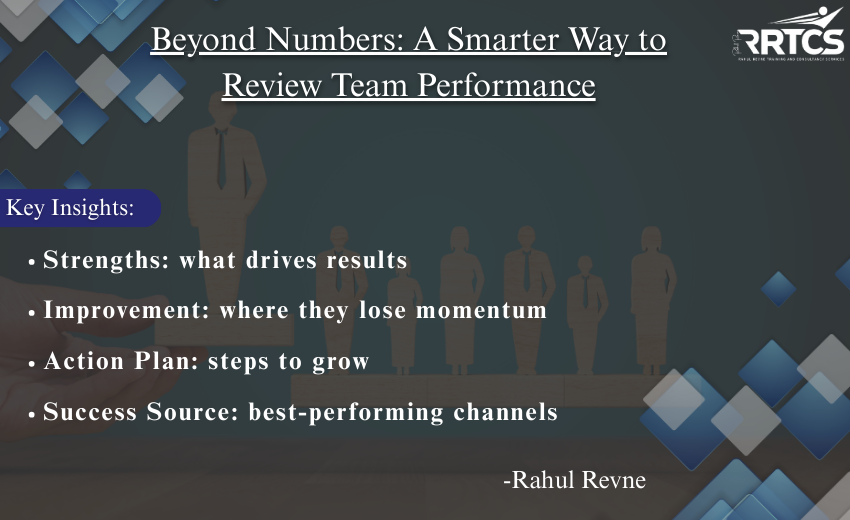
When it comes to evaluating team performance, most leaders rely heavily on numbers—targets achieved, leads closed, projects completed. While these metrics are important, they don’t tell the full story. Numbers alone can’t explain why a team member is excelling in one area but struggling in another, nor can they guide you on how to nurture their strengths. A better approach is to create a structured performance report that doesn’t just measure outcomes, but also analyzes how those outcomes were achieved. One simple but powerful tool for this is a table with the following columns: Employee Strengths Areas of Improvement Action Plan Source of Success How to Fill This Table Why This Approach Works Great leaders don’t just count the results. They analyze the process, understand the person behind the numbers, and create a structured plan for growth. By using this table, you’ll not only improve individual performance but also build a culture of confidence, clarity, and continuous improvement.

Blog

The Magic within you: The Magic of Saying Thank You

Have you ever noticed how a simple “Thank You” can completely change the way you feel?Gratitude isn’t just about being polite — it’s a powerful practice that transforms your emotions, relationships, and even your career. 💔 Why Gratitude Matters in Life We all go through moments where things feel heavy: These challenges make us believe something is missing. But the truth is, the key lies in how we perceive and appreciate what we already have. ✨ The Magic of Thank You When you say thank you for something, two things happen: It’s not just a word. It’s an energy shift.The more you practice gratitude, the more happiness, love, and success flow back into your life. 🌅 Gratitude in the Morning = A Happier Day Mornings set the tone for the entire day.If you start your day with gratitude — by saying thank you for your health, family, job, or even the sunrise — you create a happy state of mind. And when your day begins with positivity, it naturally leads to better results, smoother interactions, and a confident mindset. 💡 Why Gratitude Transforms Everything Thank You may be a small word, but it carries a deep impact — one that can truly change your life. 🌟 Ready to Experience the Magic? Gratitude isn’t just a feel-good practice; it’s a tool for transformation.If you want to discover how to apply it in your relationships, career, and personal growth — 👉 Join our FREE Webinar: The Magic within you ( 1st to 10th sept, 2025) Because once you start practicing gratitude, life starts practicing magic for you. ✨  

Business Growth

Mission and Vision: The Compass for Growth

Imagine standing in front of a tree filled with different fruits. If you know you want the mango, you can focus your arrow directly at it and hit your target. But if you’re just throwing arrows randomly, hoping to get “something,” chances are you’ll waste your energy, miss the mark, and walk away empty-handed. That’s exactly what happens in life and business when there’s no clear vision and mission. Vision: Your Long-Term Plan A vision is your big picture, your long-term plan. It defines where you want to go and what you ultimately want to achieve. Vision provides clarity—it’s the “why” behind everything you do. Without it, distractions and confusion creep in, pulling you in different directions, and eventually keeping you stuck where you are. When your vision is strong, it helps you: Employees, too, find confidence and security in a company with a defined vision. They see growth opportunities for themselves because they know the organization is moving forward, not standing still. Mission: Your Short-Term Plan While vision is about the destination, mission is about the journey. It’s the short-term plan—the steps and actions you’ll take today to move closer to your vision tomorrow. Mission answers the “how.” How will you achieve your long-term dream? What practical strategies will you apply? When you break your vision into actionable missions, your efforts become focused, intentional, and effective. Why Vision and Mission Matter Just like aiming at the right fruit ensures you don’t waste your arrows, having a strong vision and mission ensures you don’t waste your time and energy. When you know what you want in the long term (vision) and have a plan to achieve it in the short term (mission), growth is not just possible—it’s inevitable.

Business Growth

The Underrated Power of Retailers in FMCG: Why Tertiary Sales Matter Most

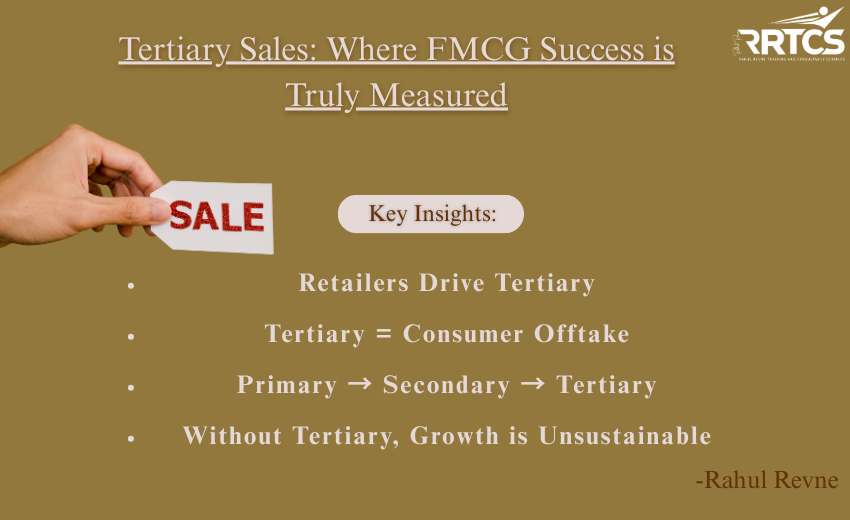
In the dynamic world of Fast-Moving Consumer Goods (FMCG), there’s a critical and often underappreciated stage in the distribution chain—tertiary sales. This stage is where retailers transform stock into actual consumer consumption, making them the hidden supporters of every brand’s success. 1. Understanding the FMCG Sales Phases To understand why tertiary sales matter, it’s important to first know the three phases: 👉 Tertiary sales represent the final and most important stage — when products are actually purchased and consumed by the end customer. 2. Why Tertiary Sales Drive Real Success 3. Retailers: The Hidden Supporters Retailers act as the bridge between your brand and your consumers. They are the ones ensuring: In short, while distributors and logistics push products forward, retailers pull products through to the final consumer, completing the cycle of sales. 4. In Summary: Tertiary Sales Are What Truly Matter Insight Takeaway Retailers drive this phase They execute the last-mile sale. Consumer offtake = Real Success Only tertiary sales prove genuine demand. In FMCG, success is not measured by how much stock you push into the market, but by how much stock actually reaches consumers’ hands. That is the essence of tertiary sales. And at the heart of this stage are your retailers — the true enablers of consumer offtake and the silent force behind your brand’s growth.

Business Growth

Implied Needs vs Explicit Needs: When Buyers Are Truly Ready to Purchase

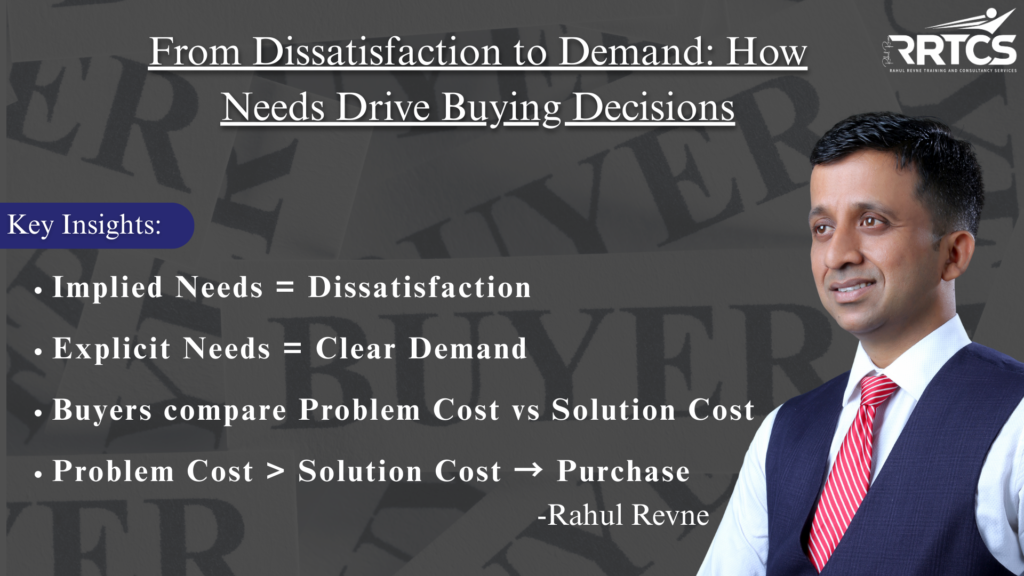
In sales and marketing, understanding customer needs is the key to driving conversions. But not all needs are created equal. Some are subtle and hidden beneath the surface, while others are clear, strong, and ready for action. These two categories are known as Implied Needs and Explicit Needs. Knowing the difference—and how to move a customer from one stage to the other—is what separates average sellers from top performers. What Are Implied Needs? Implied needs are the starting point of every buying journey. They often appear as dissatisfaction, concerns, or vague problems a buyer is experiencing. At this stage, the buyer knows something isn’t right, but they haven’t fully defined it or decided to fix it. For example: These statements are signals of dissatisfaction. However, they are not yet strong enough to drive a purchase. Why? Because implied needs are not accurate or urgent—they simply highlight that there’s a problem. What Are Explicit Needs? Explicit needs are when the buyer clearly defines the problem and expresses a strong desire for a solution. They are no longer just dissatisfied; they want change—and soon. For example: Notice how explicit needs are specific, measurable, and solution-driven. At this point, buyers are no longer just thinking about the problem—they are actively looking for a way to fix it. From Implied Needs to Explicit Needs The real skill in sales is helping customers transition from implied needs to explicit needs. Until you do this, a sale is unlikely to happen. Here’s how that process usually works: Why Smart Buyers Compare Costs One of the most critical shifts in the buying process happens when buyers realize:👉 The cost of the problem is bigger than the cost of the solution. At this moment, hesitation fades. Investing in your product or service becomes the logical and necessary choice. If the buyer doesn’t yet see the cost of the problem, they will stall. That’s why great sellers don’t just talk about features—they magnify the pain of inaction until the buyer sees solving the problem as the only option. When Is the Buyer Ready to Purchase? The buyer is ready when: Until this shift happens, you’re not really selling—you’re only building awareness. Understanding implied and explicit needs is crucial for any business. Implied needs highlight dissatisfaction, but explicit needs create action. Your role is to guide the buyer through that transformation. The formula is simple:👉 Dissatisfaction → Problem Recognition → Cost of Problem > Cost of Solution → Explicit Need → Purchase When you master this process, you’ll not only close more sales but also build deeper trust with your customers.  

Business Growth

Why Customer Attention Is the Secret Ingredient for Repeat Business

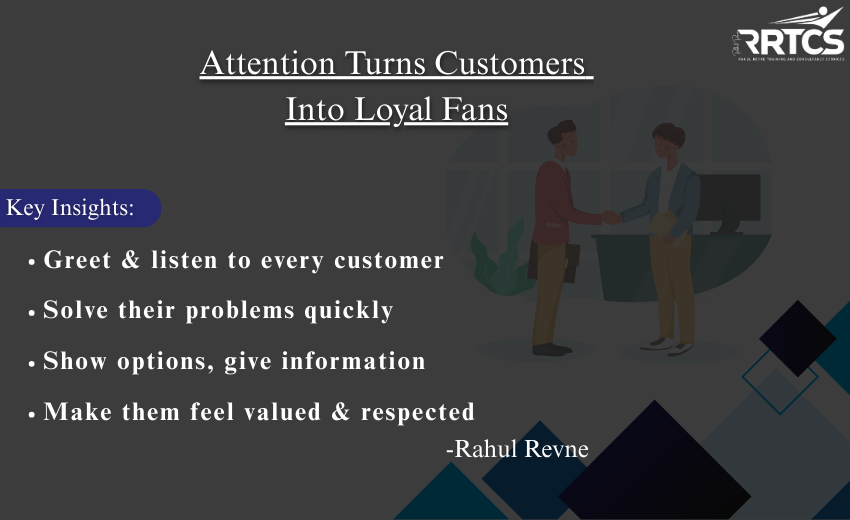
In today’s fast-moving world, customers aren’t just buying products — they’re looking for experiences.And one of the most powerful yet often overlooked ingredients in creating a great customer experience is attention. When customers feel valued at your place of business — when you greet them warmly, listen to their needs, and handle their concerns — they’re far more likely to come back again and again. What Happens When Customers Don’t Get Attention? If a customer walks into your store and doesn’t receive proper attention, there’s a high chance they might leave without buying anything. The reasons can be surprisingly simple: How One Step Can Change Everything Giving attention isn’t complicated — it’s often about small, genuine gestures. A single proactive step can open the door to a much better customer relationship: These actions don’t just help the customer in the moment — they create a “wow” experience they’ll remember. The Power of Feeling Valued When customers get attention, something remarkable happens:They feel valued. They feel connected. And they’ll return, not just for the product, but for the way you made them feel. After all, as humans, our emotions and our need for attention play a huge role in where and how we choose to spend our money.A small investment of your time and focus today can bring loyal customers — and lasting success — tomorrow.  

Business Growth

Why Your Shop’s Interior is Your Silent Salesperson

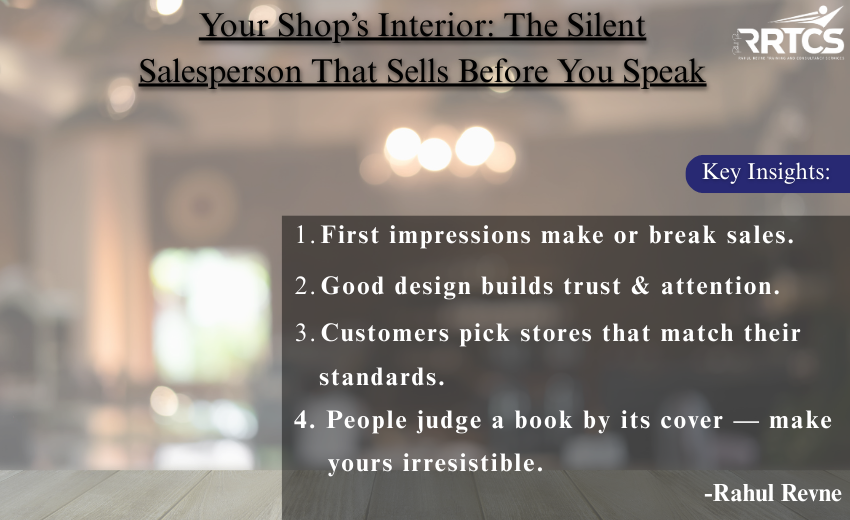
In today’s competitive retail environment, simply offering great products is not enough. You may have the latest clothing trends, cutting-edge gadgets, or the freshest baked goods — but if your shop’s interior does not reflect quality, style, and care, many customers may never give you the chance to serve them. Your shop’s interior is more than decoration. It’s a direct reflection of your brand. It’s the first handshake you offer your customer before a single word is spoken. First Impressions: The Harsh Truth We all know the saying “Don’t judge a book by its cover.” Unfortunately, in business, most people do exactly that. Imagine this scenario: But… When customers see this, they make an instant judgment — and often, they walk away before even exploring your products. In an industry where many competitors sell similar items, your store’s visual appeal can be the deciding factor for whether someone steps in or keeps walking. Why Interior Design Matters in Retail 1. It Grabs Attention An attractive, clean, and modern-looking store stands out in a busy market. A good layout and appealing displays naturally draw people in. 2. It Builds Trust and Confidence A well-maintained shop signals that you take pride in your business. Customers assume that if you care for your store, you’ll care for your products and service too. 3. It Enhances the Shopping Experience When customers feel comfortable in your shop, they stay longer, browse more, and are more likely to make a purchase. They leave with a positive impression — and that’s what keeps them coming back. This Applies to Every Type of Business Fashion Stores If you sell clothes, your store is an extension of your style. Customers expect a shopping environment that reflects fashion trends, elegance, and creativity. A poorly presented space can send the wrong message, no matter how trendy your stock is. Cafés and Bakeries When people visit cafés, they come not only for food and drinks but for the atmosphere. A cozy, welcoming space encourages them to spend time — and spend more. Even if it’s a bakery focused on takeaway sales, a neat, fresh, and attractive interior communicates cleanliness and quality. Specialty Stores Whether you sell handmade crafts, electronics, or home décor, your product deserves to be presented in a space that makes it shine. If your interior looks outdated or cluttered, it diminishes the perceived value of your products. It’s Not Just About Looks — It’s About Perception The way your shop looks tells customers what kind of experience they can expect. Customers often choose a store that matches their own lifestyle and values. If you want to position yourself as a premium, trustworthy brand, your interior must reflect that image. Real-World Example Think of two bakeries side by side: Even without tasting the bread, most customers will choose Bakery B. Why? Because people do judge a book by its cover — especially when food, fashion, or lifestyle products are involved. A strong interior design isn’t just decoration — it’s marketing. It works for you even when you’re not speaking to a customer. It attracts attention, builds trust, and creates an experience that customers will remember and talk about. In business, your shop is your cover, and yes, customers will judge it. If you want them to open the book — to step inside, explore, and buy — then make sure that cover is worth a second look.

Case Study

Why Local Retailers Still Outpace E-Commerce in Key Ways

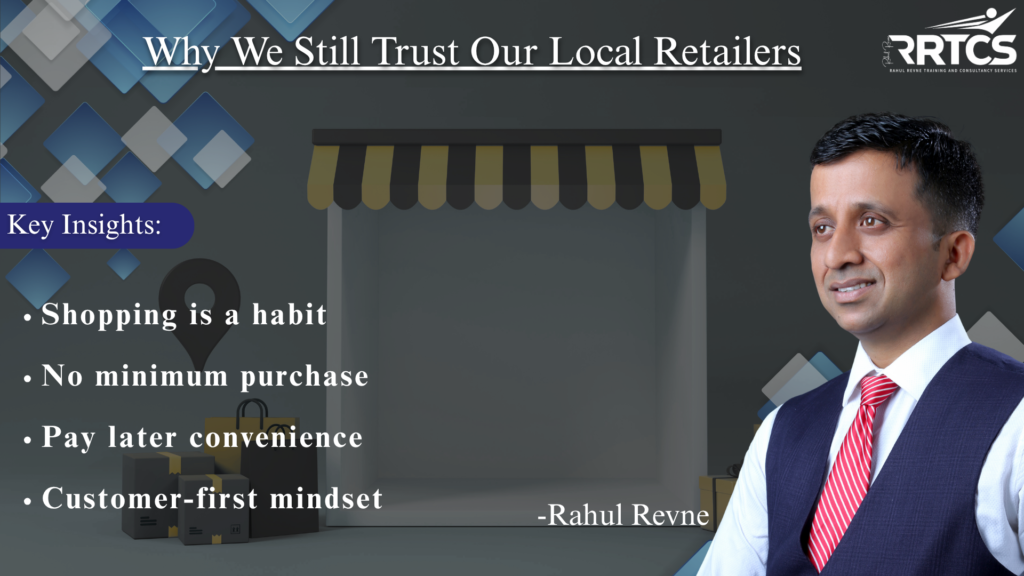
💡 E-commerce is fast, convenient, and everywhere… so why are local retailers still thriving? Because they’ve mastered something online platforms can’t—human connection, flexibility, and community trust. 1️⃣ Shopping as a Habit, Not Just a Transaction For many families, visiting a local store is part of life’s rhythm. These aren’t just purchases—they’re memories. E-commerce can deliver goods, but not the warmth of these everyday rituals. 2️⃣ The “Micro-Bank” Role in Communities Local retailers often act as informal credit providers: This trust-based system is deeply personal—and something instant-payment apps simply can’t replicate. 3️⃣ Variety and Flexibility You Can’t Click E-commerce often limits your choices: Local retailers solve this. Need 10 packets of ₹10 snacks? Done. Want a rare flavor? They’ll get it for you. And they’ll deliver it faster than most apps. 4️⃣ The Magic of In-Store Discovery Online, algorithms keep showing you what you’ve already bought.Offline, your eyes wander—spotting: This kind of spontaneous discovery fuels sales and keeps shopping fun. 5️⃣ Personalized Care and Support This is where local retailers truly shine: E-commerce treats customers as transactions; retailers treat them as people. And that personal commitment is not replaceable. E-commerce will keep growing. But local retailers aren’t going anywhere.They’re evolving—leveraging trust, variety, flexibility, and real-world experiences that digital platforms can’t match. 💬 Question for you: When was the last time your local shop went the extra mile for you?

Scroll to Top