Business Growth

Business Growth

Why Customer Attention Is the Secret Ingredient for Repeat Business

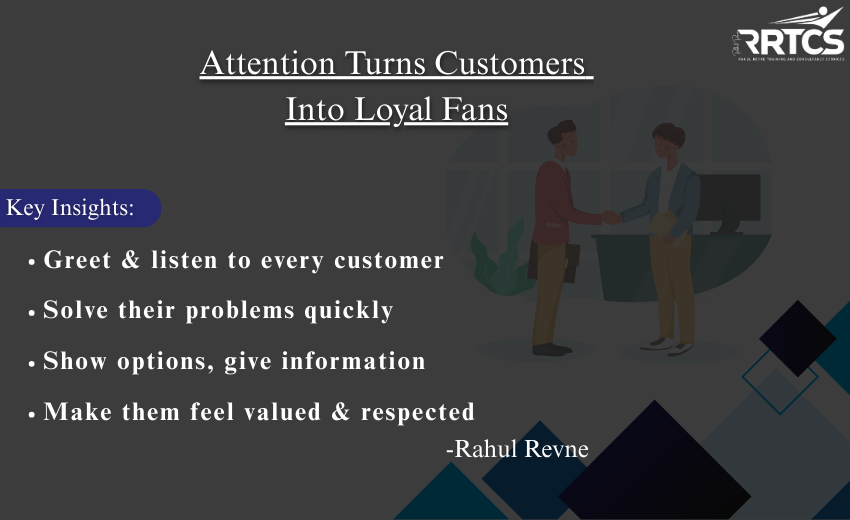
In today’s fast-moving world, customers aren’t just buying products — they’re looking for experiences.And one of the most powerful yet often overlooked ingredients in creating a great customer experience is attention. When customers feel valued at your place of business — when you greet them warmly, listen to their needs, and handle their concerns — they’re far more likely to come back again and again. What Happens When Customers Don’t Get Attention? If a customer walks into your store and doesn’t receive proper attention, there’s a high chance they might leave without buying anything. The reasons can be surprisingly simple: How One Step Can Change Everything Giving attention isn’t complicated — it’s often about small, genuine gestures. A single proactive step can open the door to a much better customer relationship: These actions don’t just help the customer in the moment — they create a “wow” experience they’ll remember. The Power of Feeling Valued When customers get attention, something remarkable happens:They feel valued. They feel connected. And they’ll return, not just for the product, but for the way you made them feel. After all, as humans, our emotions and our need for attention play a huge role in where and how we choose to spend our money.A small investment of your time and focus today can bring loyal customers — and lasting success — tomorrow.  

Business Growth

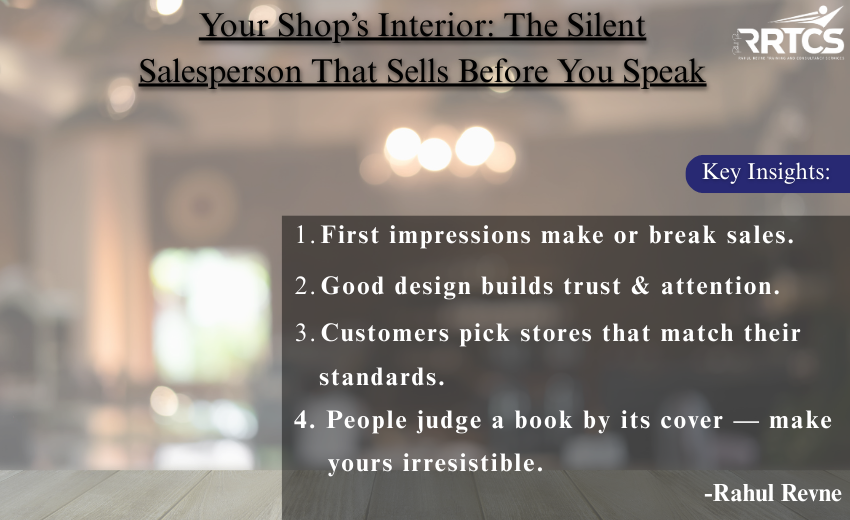
Why Your Shop’s Interior is Your Silent Salesperson

In today’s competitive retail environment, simply offering great products is not enough. You may have the latest clothing trends, cutting-edge gadgets, or the freshest baked goods — but if your shop’s interior does not reflect quality, style, and care, many customers may never give you the chance to serve them. Your shop’s interior is more than decoration. It’s a direct reflection of your brand. It’s the first handshake you offer your customer before a single word is spoken. First Impressions: The Harsh Truth We all know the saying “Don’t judge a book by its cover.” Unfortunately, in business, most people do exactly that. Imagine this scenario: But… When customers see this, they make an instant judgment — and often, they walk away before even exploring your products. In an industry where many competitors sell similar items, your store’s visual appeal can be the deciding factor for whether someone steps in or keeps walking. Why Interior Design Matters in Retail 1. It Grabs Attention An attractive, clean, and modern-looking store stands out in a busy market. A good layout and appealing displays naturally draw people in. 2. It Builds Trust and Confidence A well-maintained shop signals that you take pride in your business. Customers assume that if you care for your store, you’ll care for your products and service too. 3. It Enhances the Shopping Experience When customers feel comfortable in your shop, they stay longer, browse more, and are more likely to make a purchase. They leave with a positive impression — and that’s what keeps them coming back. This Applies to Every Type of Business Fashion Stores If you sell clothes, your store is an extension of your style. Customers expect a shopping environment that reflects fashion trends, elegance, and creativity. A poorly presented space can send the wrong message, no matter how trendy your stock is. Cafés and Bakeries When people visit cafés, they come not only for food and drinks but for the atmosphere. A cozy, welcoming space encourages them to spend time — and spend more. Even if it’s a bakery focused on takeaway sales, a neat, fresh, and attractive interior communicates cleanliness and quality. Specialty Stores Whether you sell handmade crafts, electronics, or home décor, your product deserves to be presented in a space that makes it shine. If your interior looks outdated or cluttered, it diminishes the perceived value of your products. It’s Not Just About Looks — It’s About Perception The way your shop looks tells customers what kind of experience they can expect. Customers often choose a store that matches their own lifestyle and values. If you want to position yourself as a premium, trustworthy brand, your interior must reflect that image. Real-World Example Think of two bakeries side by side: Even without tasting the bread, most customers will choose Bakery B. Why? Because people do judge a book by its cover — especially when food, fashion, or lifestyle products are involved. A strong interior design isn’t just decoration — it’s marketing. It works for you even when you’re not speaking to a customer. It attracts attention, builds trust, and creates an experience that customers will remember and talk about. In business, your shop is your cover, and yes, customers will judge it. If you want them to open the book — to step inside, explore, and buy — then make sure that cover is worth a second look.

Business Growth, Case Study

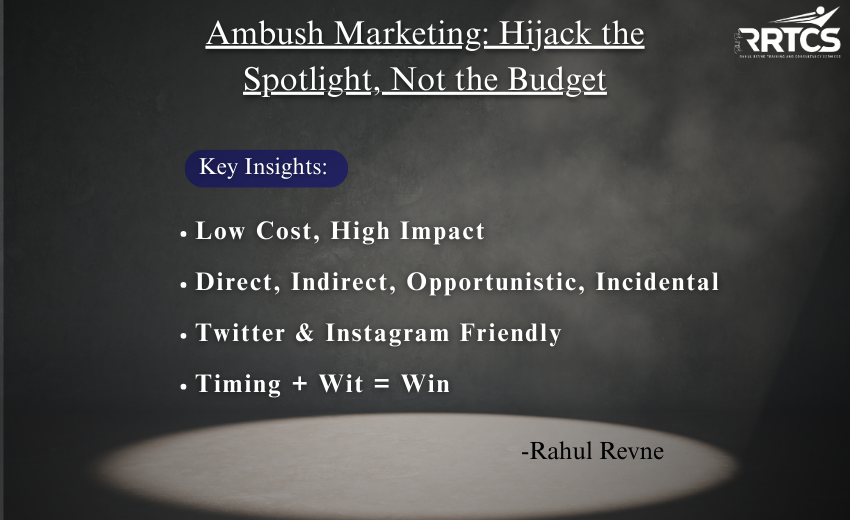
Hijack the Spotlight: The Art of Ambush Marketing

In today’s hyper-competitive market, grabbing attention isn’t always about ad budgets—sometimes, it’s about bold creativity. Welcome to ambush marketing, where brands steal the limelight with timing, wit, and zero permission. 📢 First Things First: What Is Marketing? Think of marketing as your brand’s megaphone.You might have a brilliant product—but if no one knows about it, it might as well not exist. “Good marketing makes the company look smart. Great marketing makes the customer feel smart.” – Joe Chernov That’s the trick with ambush marketing: it lets your customers feel clever for being in on it. 🚀 Why Do We Market, Anyway? Simple—because brands that don’t market, vanish. Here’s what great marketing does: Marketing helps you ride the trend—or better yet, start one. 📚 Marketing in All Its Flavors Before we deep-dive into ambush marketing, let’s look at a few standout strategies: 🕶️ So, What Is Ambush Marketing? Picture this:💃 Dancing to someone else’s music🚀 Riding the buzz from another brand’s campaign🛩️ Earning attention—without spending a dime on the spotlight Ambush marketing is unofficial, clever, and unforgettable. A rebel strategy for brands that move fast and think faster. 🎯 Types of Ambush Marketing 📌 Case Studies: When Brands Played Smart 1. Jio Hijacks VI’s Launch VI: “Bringing people together.”Jio: “Been doing that since 2016.”💡 Positioned itself as the original—without saying much. 2. Amazon Parody Roasts Zomato Zomato drops a new logo. Internet trolls it.Parody account @Aurdikhao: “Aur logo dikhado?”💡 Timing > Budget. Even a parody brand went viral. 3. Samsung Takes a Shot at OnePlus OnePlus: “The speed you need.”Samsung: “We already gave you the speed you need.”💡 Direct. Bold. Memorable. 4. Zomato’s Self-Aware Tweet Brands tweeting about other brands? Zomato quips:“Kabhi kabhi khud ka bhi tweet kar lo.”💡 Hijacked the trend of trend-hijacking. ✅ Why Ambush Marketing Works 📱 Best Played on Twitter & InstagramThese platforms love trends, speed, and sass—perfect ground for brand one-liners and visual ambushes. ⚠️ But… A Word of Caution Ambush marketing isn’t trolling for clicks.It’s about being smart, swift, and socially aware. When done right, it can create iconic brand moments—without spending a rupee on media. 💡 Pro Tips to Master the Ambush Game Don’t wait for the spotlight. Steal it—with style.

Business Growth, Case Study

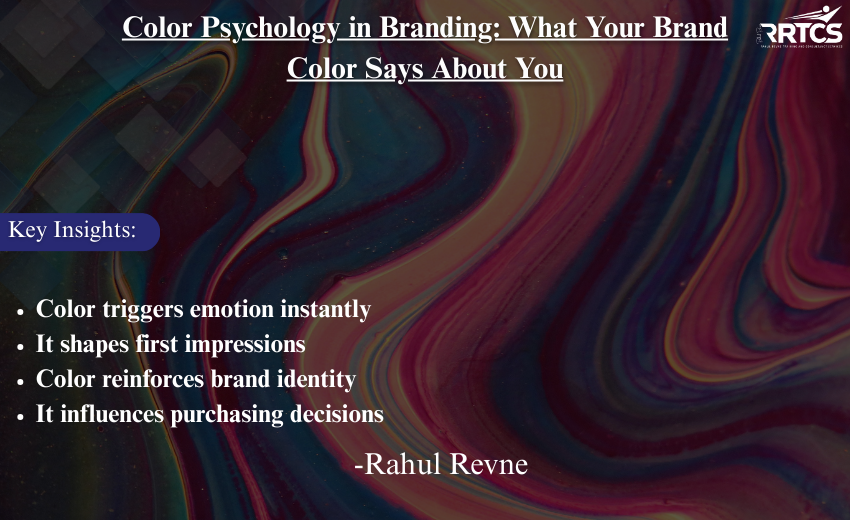
The Psychology of Colors in Branding: How Colors Influence Emotions and Buying Decisions

Color is far more than a visual element—it’s a silent communicator that influences how we feel, think, and decide. In branding, the choice of color isn’t random. It’s a strategic decision designed to evoke specific emotions, create associations, and ultimately drive consumer behavior. Let’s explore how different colors shape perceptions and why some of the most successful brands rely on color psychology to make lasting impressions. 🔴 Red: The Color of Appetite and Urgency Red is bold, stimulating, and attention-grabbing. Psychologically, it evokes energy and passion—and it’s particularly effective in food and retail branding. 🔵 Blue: The Trust Builder Blue is calm, stable, and dependable. It communicates trust, intelligence, and professionalism. ⚫ Black: Sophistication and Authority Black is powerful, elegant, and timeless. It symbolizes control, prestige, and luxury. ⚪ White: Purity and Simplicity White is clean, pure, and peaceful. It gives a sense of clarity and minimalism. 💚 Green: Nature and Calm Green symbolizes growth, tranquility, and balance. It’s deeply connected with nature and health. 🟠 Orange: Energy and Enthusiasm Orange blends the cheer of yellow with the energy of red. It’s vibrant, friendly, and invigorating. 🎯 Why Color Psychology Matters in Branding Your brand’s color palette is part of its voice. It affects first impressions, strengthens brand recognition, and influences purchasing decisions—often before a single word is read. When used strategically, color becomes a branding superpower. It’s not just about looking good; it’s about feeling right. In branding, color is emotion. From McDonald’s appetite-inducing red to Apple’s minimalist black-and-white sophistication, successful companies use color to reinforce their values and connect with audiences on a deeper level.

Business Growth

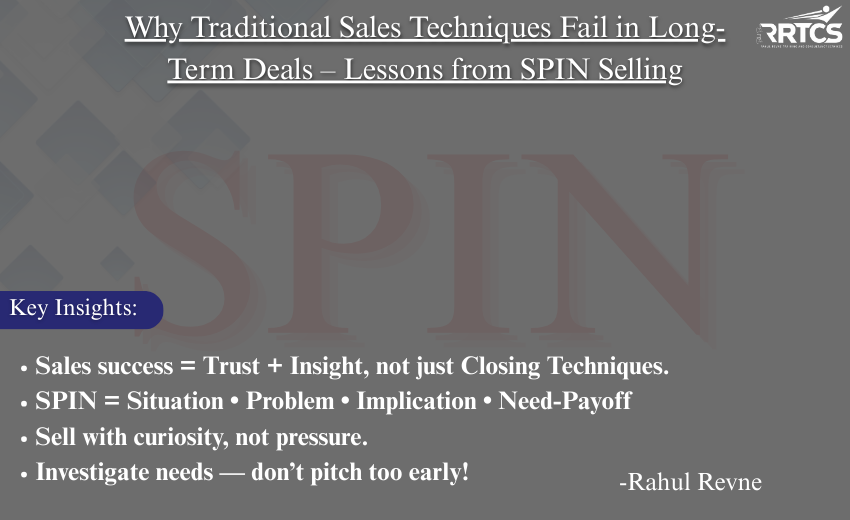
Rethinking Sales: My Biggest Takeaway from Chapter 1 of SPIN Selling

As someone continuously exploring ways to grow professionally, I recently revisited SPIN Selling by Neil Rackham — a groundbreaking book that completely redefined how I understand sales, especially long-term, complex ones. Here’s what struck me most from Chapter 1: Sales Behavior and Sales Success — and why it matters. 🚀 Traditional Sales Tactics Don’t Work for Long-Term Success Most of us are taught the classic sales sequence:Open the call → Investigate needs → Give benefits → Handle objections → Close. But Rackham’s research, based on analyzing thousands of sales calls, reveals this simply doesn’t hold up for larger or long-term sales. These techniques may work for quick, one-call closes — but applying them blindly to more complex sales can actually backfire. In long-term sales, success isn’t about slick pitches or clever closes. It’s about building relationships, trust, and deeper understanding. 🧠 Four Stages That Actually Matter Rackham identifies four essential stages in any sale: But again — the key is adapting your approach based on whether it’s a short or long sales cycle. 🔍 SPIN: A Smarter Way to Sell Here’s where it gets practical. The SPIN questioning model is the heart of Rackham’s strategy, especially for complex sales: This approach isn’t about pushing a product — it’s about guiding a customer to understand their own needs more clearly, and positioning your solution as the answer. 🌱 My Key Takeaway Sales isn’t about closing — it’s about opening a conversation that creates long-term value. Understanding this changed how I think about selling, especially when working with high-value clients or long-term deals. It’s about curiosity over pitch, trust over tactics, and insight over impulse. If you’re in B2B, consultative, or high-stakes sales — I highly recommend diving into SPIN Selling. It’s not just a method — it’s a mindset shift. Author Bio Mr. Rahul RevneFounder of RRTCS (Rahul Revne Training & Consultancy Services), Mr. Rahul Revne brings over 20 years of experience in HR, Sales, Strategy, and end-to-end business consulting. Known for turning struggling ventures into thriving enterprises, he helps entrepreneurs master the art of meaningful customer connection, emotional intelligence in sales, and purpose-driven business growth.Author of Entrepreneurial Series and Spirit of Inspiration, Mr. Revne continues to empower leaders with clarity, courage, and customer focus.

Business Growth

💡 Think Like an Owner: A Powerful Shift in Managerial Mindset

What if every manager in your organization approached their role as if they were running their own company? This isn’t a formal program or a mandated initiative—just a simple but powerful idea: “Think Like an Owner.” It’s a mindset that has the potential to reshape how managers lead, decide, and influence those around them. 🔄 A Mindset Shift That Matters Imagine this: A team member brings a complaint, a recurring issue, or a process inefficiency to a manager. The typical response? Escalate. Forward. Discuss. Delay. But what if, instead, we asked the manager: “If this were your company, what would you do?” This question reframes the entire situation. It removes the safety net of hierarchy and puts leadership, decision-making, and accountability squarely in the manager’s hands. 🧭 Ownership Changes the Game When managers adopt an ownership mindset, they stop seeing problems as someone else’s to fix. They begin to: It’s not about overstepping or pretending to be the CEO. It’s about internalizing the company’s mission and acting with the care, urgency, and foresight of someone who truly owns the outcome. 👥 Why Start With Managers? Managers already have the visibility and influence to model this way of thinking. When they lead with ownership, it naturally cascades down to their teams—creating a culture where people feel more responsible, engaged, and empowered. 🔍 Key Reflections for Managers 🌱 Planting the Seeds of Ownership “Think Like an Owner” doesn’t require a rollout or policy. It’s a leadership thought—something to explore, encourage, and cultivate in everyday moments. When embraced, it can lead to stronger decision-making, reduced reliance on escalation, and a more committed workplace culture. Author Bio Mr. Rahul Revne Founder of RRTCS (Rahul Revne Training & Consultancy Services), Mr. Rahul Revne brings over 20 years of experience in HR, Sales, Strategy, and end-to-end business consulting. Known for turning struggling ventures into thriving enterprises, he helps entrepreneurs master the art of meaningful customer connection, emotional intelligence in sales, and purpose-driven business growth. Author of Entrepreneurial Series and Spirit of Inspiration, Mr. Revne continues to empower leaders with clarity, courage, and customer focus

Business Growth, Case Study

Sales with Empathy: What Customers Truly Want

In today’s fast-paced business world, where every brand is trying to sell, one truth stands tall: Customers don’t want a pitch — they want a connection. At RRTCS (Rahul Revne Training & Consultancy Services), we’ve seen businesses transform simply by changing how they engage with customers — from selling to them, to understanding with them. Here’s what modern customers truly want — and how empathetic sales can lead to real results. 1. Customers Don’t Want a Script — They Want Sincerity People can smell a scripted pitch from miles away. Whether it’s a cold call, a showroom demo, or a business presentation, customers don’t want to feel like they’re part of a rehearsed routine. Instead, they’re looking for: A sales script might help you remember key points, but genuine human interaction is what keeps the customer engaged. 2. They Want to Be Heard, Not Talked At A successful business understands that listening is selling. Customers have problems, doubts, fears, and needs. When you take the time to truly listen — without interrupting, without rushing — you begin to build trust. And trust is the currency of every sale. Ask yourself: 3. They Crave Connection, Not Just Communication In a world flooded with sales messages, ads, and popups, people are craving genuine connection. When your brand or team makes them feel seen, respected, and valued — that’s when they truly listen. Connection turns into conversation. Conversation turns into conversion. 4. Understanding Drives Influence When customers feel that you understand their world, their challenges, and what success looks like for them, they’re far more likely to choose you. Understanding means: Remember: Empathy over ego. Solutions over selling. 5. Empathy is the Ultimate Sales Strategy At RRTCS, we always say: “Sales is effective when it’s backed by empathy.” Empathy builds bridges. It shows your client that you’re not just interested in making a sale — you’re invested in solving a problem. It’s not about closing deals — it’s about opening relationships. If you want to grow your business, don’t just train your team on products. Train them on people skills. On empathy. On listening. On connection. Because the truth is simple: When customers feel heard and understood — sales become effortless. Author Bio Mr. Rahul RevneFounder of RRTCS (Rahul Revne Training & Consultancy Services), Mr. Rahul Revne brings over 20 years of experience in HR, Sales, Strategy, and end-to-end business consulting. Known for turning struggling ventures into thriving enterprises, he helps entrepreneurs master the art of meaningful customer connection, emotional intelligence in sales, and purpose-driven business growth.Author of Entrepreneurial Series and Spirit of Inspiration, Mr. Revne continues to empower leaders with clarity, courage, and customer focus.

Business Growth

Emotional Marketing: The Subtle Tricks That Win Customer Hearts

In the dynamic world of business, where strategies and competition evolve daily, one factor remains timeless — human emotion. Whether you’re a small shopkeeper or a multinational brand, the ability to connect emotionally with your customer can be the difference between a one-time sale and lifelong loyalty. At RRTCS (Rahul Revne Training & Consultancy Services), we believe that success in business is not just about great products — it’s about understanding human behavior and building meaningful connections. Let’s explore how smart marketing techniques, both simple and sophisticated, are designed to win hearts — and why your business must pay attention. 1. The Shopkeeper’s Trick: Psychology at Eye-Level Ever noticed how chocolates and candies are placed right at the eye level of children in supermarkets or local stores? That’s not a coincidence. It’s a classic example of consumer psychology in action. Children are naturally attracted to colorful packaging and sweet treats. By placing these items where children can easily see them, shopkeepers increase the chance of a purchase — often driven by impulse and emotional pressure on parents. This is micro-marketing, and when used strategically, it can significantly boost sales. As a business owner, ask yourself: What’s at eye level for your customers? Are you positioning your most emotionally appealing offerings where they’ll be seen first? 2. Celebrities and Emotions: Building Trust through Familiar Faces Big brands invest crores to bring celebrities onboard — not just for glamour, but for emotional association. When we see our favorite actor or cricketer endorsing a product, we subconsciously transfer our trust and admiration for them to the brand. This emotional marketing technique helps in: Even if you don’t have a celebrity budget, think about your brand ambassadors — satisfied clients, employees, or community influencers. Authentic stories and relatable faces can often outperform traditional ads in impact. 3. Nostalgia in Advertising: Memories That Sell Some advertisements stay with us forever — not because of the product, but because of the memories they evoke. Think of ads that remind us of childhood, family moments, or simpler times. These nostalgic elements tap into emotions like love, safety, and happiness, making the brand feel like a part of our lives. For example: These campaigns aren’t just selling products — they’re selling feelings. And feelings convert far better than features. Emotional Marketing: A Game-Changer for Growing Businesses As a business consultant, I often tell entrepreneurs: “Marketing is not manipulation — it’s connection.” By paying attention to small details and understanding emotional triggers, businesses can craft a unique brand identity that resonates deeply with customers. Here are a few quick takeaways: At RRTCS, we help businesses uncover these emotional touchpoints and integrate them into powerful marketing strategies that drive sustainable growth. In the end, people may forget what you said, but they’ll never forget how your brand made them feel. Let your marketing speak the language of emotion — and watch your business transform. Author Bio Mr. Rahul RevneFounder of RRTCS (Rahul Revne Training & Consultancy Services), Mr. Rahul Revne is a powerhouse of business transformation with over 20 years of expertise in HR, Sales, Strategy, and business consulting. Renowned for turning struggling ventures into multi-crore success stories, he’s a trusted growth architect for entrepreneurs. As the author of the acclaimed Entrepreneurial Series and Spirit of Inspiration, his mission is to ignite purpose, performance, and innovation in today’s business leaders.

Business Growth

The True Power of Managers: More Than Just Taskmasters

In every organization, there exists a community that quietly but powerfully shapes its future — managers. Go beyond the textbook definition — a manager is not just someone who “handles responsibilities.” They are leaders, connectors, mentors, strategists, and the backbone of every successful team. Their influence doesn’t stop at checklists or meetings. A great manager can shift the direction of an entire organization. Why Managers Matter More Than Ever? A well-positioned manager can transform not just productivity but culture, morale, and business outcomes. Here’s how: ✅ 1. They Don’t Just Work — They Lead Managers are the first line of leadership employees experience every day. Their words set direction, and their actions set the tone. Teams naturally follow the example set by their manager. ✅ 2. They Represent the Organization To their team, the manager is the company. Their behavior reflects the larger culture. Their communication, empathy, and values directly impact how employees perceive the brand they work for. ✅ 3. They Are Strategic Executors Behind every successful project, there’s a manager turning vision into action. They bridge the gap between planning and doing — ensuring things not only start but finish strong. The Key Responsibilities of a Great Manager A manager’s role goes beyond task allocation and deadline reminders. Here’s what defines an impactful manager: 🔍 Talent Identifier & Shaper They don’t just manage resources — they spot potential. A good manager identifies strengths within the team and aligns them with the right opportunities to grow. 🔁 Retention Champion People often say, “Employees don’t leave companies; they leave managers.” The opposite is true, too — strong managers retain talent by creating a positive, trusting environment. 🧱 Backbone of the Team Managers provide structure, support, and energy. When challenges arise, they hold the team together — balancing pressure from above and stress within the team with resilience and direction. A Call to All Organizations: Invest in Your Managers Want better performance? Start with your managers. Want better retention, innovation, and culture? Again — focus on your managers. They are the catalysts of change, the connectors of people and purpose, and the leaders who shape what your organization becomes. A manager isn’t just a title. It’s a role with the power to inspire, shape, and transform. Develop them. Trust them. Empower them.Because when managers grow, so does your entire organization.

Business Growth

Employer Branding: Turning Your Employees into Your Greatest Brand Advocates

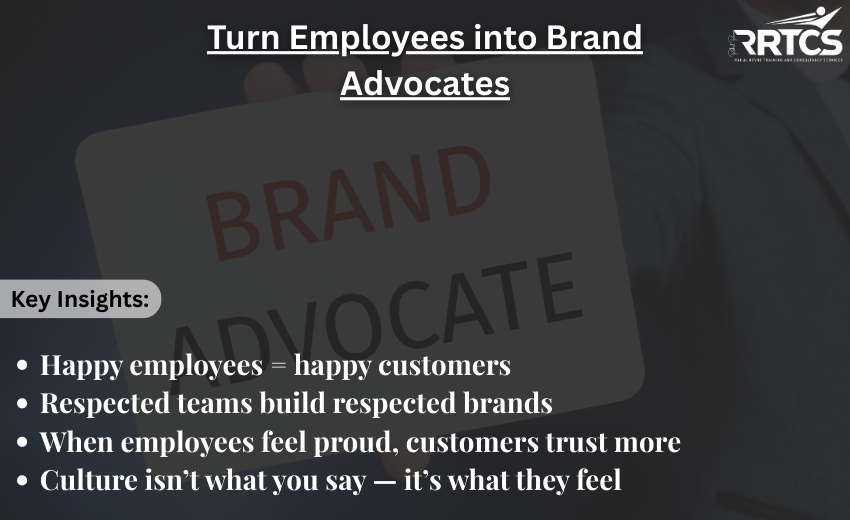
In today’s hyper-connected world, your brand isn’t just what you say it is — it’s what people feel about working with and for you. And who feels it the most? Your employees. When employees are respected, empowered, and truly connected to your company’s culture, they naturally become your strongest brand advocates. This is where employer branding steps in — not as a marketing gimmick, but as a powerful strategy that starts within and radiates outward. What Is Employer Branding? Employer branding is about shaping your company’s reputation as a workplace. It’s not just about the salaries or perks — it’s about how your employees feel about being a part of your organization. When done right, employer branding builds a culture where employees: In short: your culture becomes your brand, and your employees become your ambassadors. Why Employer Branding Matters 1. It Enhances Customer Experience A well-treated employee treats customers well. It’s that simple. When your people feel heard and supported, they pass that energy to your customers. This leads to positive interactions, better service, and ultimately, customer loyalty. 2. Employee Appreciation Builds Consumer Trust When your team proudly talks about your products or services, people listen. If the ones building the product are genuinely excited about it, customers are more likely to believe in it too. 3. Loyal Employees Attract Loyal Customers When employees stick around for years, customers notice. Familiar faces build trust. Long-term employee retention not only stabilizes your team but strengthens your brand image in the eyes of your audience. 4. Your Reputation Grows A company that treats its people well becomes a magnet for top talent. Word spreads — through social media, reviews, and most importantly, through authentic human interactions. This boosts your company’s prestige and competitive edge. How to Build a Culture That Creates Brand Advocates Creating a strong employer brand isn’t about flashy benefits or ping-pong tables in the office. It’s about creating a culture that genuinely cares. Here’s how: ✔️ Respect Their Opinions Involve employees in decision-making. Listen to their feedback. When they feel their voice matters, their connection deepens. ✔️ Offer Consistent Mentorship Employees thrive when they know they’re growing. Regular mentorship sessions help them build confidence and skills — both of which reflect in their work and attitude. ✔️ Focus on Personal Growth Beyond job roles, support their individual goals. Workshops, certifications, side-project support — all help build a sense of purpose and achievement. ✔️ Involve Their Families True loyalty is built when employees see you care about their lives beyond the office. Include their families in wellness programs, education drives for kids, skill-building for housewives, or elder care awareness for parents. When families feel the impact, employees feel truly connected. The Ripple Effect: Energy That Travels The energy you give your employees doesn’t stop at the office door. It travels. It reaches customers, partners, future employees, and communities. When people are empowered, appreciated, and included — they naturally carry and spread that positivity. In essence, your people are your brand. Nurture them, and they will proudly carry your message forward. Start inside. Build your brand from the core. And watch the world respond.

Scroll to Top