
Blog

Your blog category

Blog

Thriving in Sales: Mastering the New VUCA World

The sales landscape is more unpredictable than ever. Market conditions fluctuate rapidly, customer expectations are evolving, and competition is fierce. Sales professionals can no longer rely on traditional approaches. To succeed, they must embrace adaptability, strategic thinking, and proactive action. The concept of VUCA—Volatility, Uncertainty, Complexity, and Ambiguity—defines today’s business challenges. But what if you could turn VUCA into a sales advantage? This article explores how to shift VUCA into Versatility, Understanding, Competence, and Action to drive sales success. Understanding VUCA: The Business Context The term VUCA originates from the military but has become a key framework for business leaders navigating uncertain environments. Volatility – Market trends shift quickly, making it difficult to predict demand. Uncertainty – Buyers’ needs and decisions are unpredictable. Complexity – A wide range of factors influence purchasing behavior. Ambiguity – The best sales approach is not always clear. Sales professionals who cling to old methods risk falling behind. Instead, they need a new mindset and strategy to turn these challenges into opportunities. The VUCA Shift: A New Sales Mindset Rather than seeing VUCA as a threat, redefine it to gain a competitive edge: Versatility – Adapt quickly to changing market conditions. Adjust sales pitches, product offerings, and engagement strategies to meet new demands. Understanding – Deeply know your customers’ industries, pain points, and goals. The better you understand them, the more value you can provide. Competence – Equip yourself with modern sales tools, digital solutions, and data-driven insights to make informed decisions. Action – Be proactive. Follow up fast, close deals efficiently, and continuously refine your approach based on feedback. Example: A Sales Team Adapting to VUCA A leading software company faced declining sales due to market volatility and shifting customer expectations. Instead of sticking to old sales tactics, they embraced the new VUCA approach: Versatility – They adapted their sales process by integrating AI-driven insights for personalized customer engagement. Understanding – They invested in deeper customer research to understand pain points before pitching solutions. Competence – They upskilled their sales team in digital selling, CRM tools, and automation. Action – They shortened follow-up cycles, improving lead conversion rates by 30%. By shifting their mindset, they not only survived but thrived in an uncertain market. Practical Strategies for Sales Professionals ✅ Be Customer-Centric – Shift from selling products to solving problems. Ask insightful questions to uncover real customer needs. ✅ Leverage Digital Tools – Use AI-powered CRM systems, email automation, and LinkedIn for smart prospecting. ✅ Sell with Insights – Position yourself as an industry expert by sharing valuable data, trends, and case studies with prospects. ✅ Speed Wins Deals – Shorten response times and ensure faster follow-ups to increase conversion rates. ✅ Master Storytelling – Use real customer success stories to illustrate the value of your product/service. ✅ Stay Resilient – Expect rejections but learn from them. Continuous improvement is the key to long-term success. Key Takeaways VUCA is the new reality in sales, but it doesn’t have to be a disadvantage. By shifting VUCA from Volatility, Uncertainty, Complexity, and Ambiguity to Versatility, Understanding, Competence, and Action, salespeople can gain an edge. Successful sales professionals embrace change, leverage technology, and focus on providing value to customers. To stay ahead, start applying these strategies today and turn challenges into opportunities! Ready to level up your sales strategy? Start by assessing your sales process: ✅ Identify areas where you need more versatility, understanding, competence, or action. ✅ Implement at least one new strategy from this article today. ✅ Stay connected for more insights—subscribe to our newsletter for expert sales tips! About the Author Rahul Revne is a management consultant and sales strategist with extensive experience helping businesses scale their sales teams and improve operational efficiency. Through his consulting firm, RRTCS (Rahul Revne Training and Consultancy Services), he has worked with organizations to transition from individual-driven to system-driven business models. For more insights and consulting services, visit www.rahulrevne.com. References Rackham, N. (1988). SPIN Selling. McGraw-Hill. Kotler, P. (2021). Marketing 5.0: Technology for Humanity. Wiley. Harvard Business Review (2023). How Sales Teams Can Adapt to an Uncertain Market. Sales champions don’t fear change—they embrace it and thrive. Are you ready? 🚀

Blog

A Journey Through The Greatest Salesman in the World

After turning the final page of Og Mandino’s timeless masterpiece, I felt as if I had unlocked a treasure chest of wisdom—one that goes beyond sales and touches every aspect of life. This book isn’t just about selling; it’s about mastering oneself, building unshakable discipline, and cultivating the mindset of a true champion. If you’re an entrepreneur, a dreamer, or someone looking for purpose, this book is a must-read. Here’s what I learned and why I think everyone should read it: 1. The Power of a New Beginning (Scroll 1 – “Today, I begin a new life.”) Every day is a fresh start. No matter how many times we fail, the past does not define us. We have the power to rewrite our story—all we need to do is take the first step. ✅ Lesson: Let go of regrets, start again, and focus on what you can do today. 2. Love is the Secret Weapon (Scroll 2 – “I will greet this day with love in my heart.”) Success isn’t just about skills or strategy; it’s about how we connect with people. When we approach every situation with love, we naturally attract trust, opportunities, and growth. ✅ Lesson: Whether in business or personal life, act with kindness, empathy, and genuine care. 3. Persistence Beats Talent (Scroll 3 – “I will persist until I succeed.”) Most people quit too soon. The ones who keep going—despite rejection, failure, and frustration—are the ones who win in the end. ✅ Lesson: Success is not for the most talented but for those who refuse to give up. 4. You Are Unique—Own It! (Scroll 4 – “I am nature’s greatest miracle.”) There’s no one else like you in the world. Your strengths, experiences, and ideas are your greatest assets. Stop comparing yourself to others and focus on your own greatness. ✅ Lesson: Be authentic, believe in your abilities, and maximize your potential 5. Live Every Day Like It’s Your Last (Scroll 5 – “I will live this day as if it is my last.”) Time is the most valuable currency we have. Instead of wasting it in worry, anger, or procrastination, make every moment count. ✅ Lesson: Stop waiting for the “perfect time”—act now, live fully, and make an impact. 6. Control Your Emotions—Don’t Let Them Control You (Scroll 6 – “I will be master of my emotions.”) Emotions are powerful, but we must learn to control them rather than react blindly. Anger, fear, and doubt will come—but we decide whether to let them rule us. ✅ Lesson: Develop emotional intelligence. Stay calm, be mindful, and respond wisely. 7. Laughter is the Best Strategy (Scroll 7 – “I will laugh at the world.”) Life is unpredictable. Sometimes, things will go wrong. Instead of stressing, learn to laugh, adapt, and move forward. ✅ Lesson: Take your goals seriously, but don’t take life too seriously. Keep a light heart! 8. Constant Growth = Ultimate Success (Scroll 8 – “Today, I will multiply my value a hundredfold.”) The key to lasting success is continuous improvement. If we get 1% better every day, over time, we become unstoppable. ✅ Lesson: Never stop learning, growing, and evolving. 9. Stop Overthinking—Take Action Now! (Scroll 9 – “I will act now.”) Dreaming and planning are great, but nothing happens until we take action. Excuses and delays kill success faster than failure ever will. ✅ Lesson: Whatever you want to do, start today! The right time is NOW. 10. Seek Guidance and Stay Humble (Scroll 10 – “I will pray for guidance.”) No one succeeds alone. Whether through mentors, books, or faith, always seek wisdom beyond yourself. Stay humble, stay open, and trust the process. ✅ Lesson: Learn from others, stay grateful, and keep your ego in check. Final Thought: This Book is More Than Just a Read—It’s a Life Philosophy! Each of these scrolls holds a timeless truth—one that, if followed daily, can lead to unstoppable success and fulfillment. Whether you’re in business, leadership, or just striving to live better, these principles work. 💡 Would I recommend this book? Absolutely! 📖 Who should read it? Anyone who wants to grow, succeed, and live with purpose! If you haven’t read The Greatest Salesman in the World yet, do yourself a favor—start today! What’s next for me? More books, more learning, and more growth. 📚 Any recommendations for my next read? Let me know!

Blog

Avoiding Entrepreneurial Pitfalls: Key Mistakes & Solutions

Starting a business is an exciting but challenging journey. First-time entrepreneurs often encounter pitfalls that can hinder their success. Understanding these common mistakes and learning how to avoid them can significantly enhance the chances of building a sustainable and thriving business. This article outlines the most frequent missteps entrepreneurs make, provides insights into their implications, and offers practical strategies to overcome them. Key Mistakes First-Time Entrepreneurs Make 1. Failing to Validate the Business Idea Background Information: Many entrepreneurs dive into business without ensuring there is a market demand for their product or service. Main Points: Assumptions about market need can lead to wasted resources. Lack of customer validation increases the risk of failure. Practical Advice: Conduct thorough market research, engage with potential customers, and launch small-scale tests to validate your idea before scaling. 2. Ignoring Financial Management Background Information: Poor financial planning is a leading cause of business failure. Main Points: Entrepreneurs often underestimate costs or fail to track cash flow. Overestimating revenue can lead to financial instability. Practical Advice: Create a detailed financial plan, track all income and expenses, and maintain a cash reserve for emergencies. Use accounting tools or consult a financial advisor. 3. Trying to Do Everything Alone Background Information: Many entrepreneurs feel they must handle all aspects of their business, leading to burnout and inefficiency. Main Points: Lack of delegation stifles growth and limits expertise. Overextending yourself reduces focus on strategic tasks. Practical Advice: Build a supportive team and delegate responsibilities to experts or team members. Focus on areas where you add the most value. 4. Poor Marketing Strategy Background Information: A weak or non-existent marketing plan can prevent even the best products from reaching customers. Main Points: Assuming “build it, and they will come” often results in limited visibility. Ineffective campaigns waste resources without results. Practical Advice: Develop a targeted marketing strategy tailored to your audience. Leverage cost-effective methods like social media, SEO, and email campaigns. 5. Scaling Too Quickly Background Information: Rapid growth without a stable foundation can overwhelm resources and operations. Main Points: Expanding prematurely can lead to financial and operational challenges. Customer satisfaction may suffer if processes are not optimized. Practical Advice: Focus on perfecting your product or service and building a loyal customer base before scaling operations. Real-Life Examples Case Study: A tech startup invested heavily in marketing without validating their product. By shifting to small-scale pilot tests, they refined their offering and eventually achieved sustainable growth. Example: A food delivery business avoided premature expansion by first streamlining operations and ensuring consistent customer satisfaction. Key Takeaways and Recommendations Validate your business idea through market research and customer feedback. Maintain strong financial discipline and realistic revenue projections. Delegate tasks to focus on strategic growth. Build a targeted marketing plan to reach your audience effectively. Scale your business only after establishing a stable foundation. Action Steps: Test your product or service with a small audience before launching. Use financial management tools to track income and expenses. Create a marketing plan that includes low-cost, high-impact strategies. Build a strong support network and hire for key roles as needed. Author Bio Rahul Revne is a business consultant and founder of RRTCS (Rahul Revne Training and Consultancy Services), specializing in helping entrepreneurs build scalable, system-driven organizations. With years of experience in HR, business development, and consulting, Rahul has a proven track record of guiding startups and small businesses to success. References “Why Startups Fail: A  Data-Driven Approach” – Harvard Business Review. Neil Rackham, SPIN Selling. Small Business Administration (SBA): Financial Management for Small Businesses.

Blog

Atomic Habits: Transforming Small Actions into Big Wins

In the fast-paced business world, the difference between mediocrity and excellence often boils down to habits. James Clear’s “Atomic Habits” sheds light on the powerful role habits play in personal and professional growth. This article explores how small, consistent actions can lead to significant improvements and offers actionable steps for building effective habits and breaking bad ones. Why Habits Matter Success is not a one-time event but a result of small actions repeated consistently over time. By focusing on systems instead of goals, we can achieve sustained growth. Clear’s principle of becoming “1% better every day” illustrates how incremental progress leads to exponential results—improving by 37.78% in just one year. For business leaders and entrepreneurs, mastering habits is key to enhancing productivity, fostering teamwork, and achieving organizational goals. Breaking Down the Habit Loop 1. Cue: Make It Obvious Habits start with a trigger. To develop good habits: List your daily habits: Categorize them as positive, negative, or neutral. Use habit stacking: Pair a new habit with an existing routine (e.g.,”After my morning coffee, I will review my daily tasks”). Redesign your environment to support habits (e.g., place healthy snacks on your      desk to encourage better eating). 2. Craving: Make It Attractive To sustain a habit, it must appeal to you: Bundle temptations: Combine habits with something enjoyable (e.g., “Listen to your favorite podcast while exercising”). Surround yourself with peers whose behavior inspires you. Develop a motivation ritual, such as a pre-work routine that energizes you. 3. Response: Make It Easy The simpler the action, the easier it is to form a habit: Focus on repetition, not perfection. Consistency matters more than intensity. Apply the 2-minute rule: Begin with a small, manageable version of the habit. Automate processes wherever possible (e.g., scheduling recurring tasks). 4. Reward: Make It Satisfying Reinforce habits with positive outcomes: Celebrate small wins immediately (e.g., check off completed tasks on a habit      tracker). Use incentives to stay motivated (e.g., treat yourself after achieving weekly      goals). Avoid pitfalls like relying solely on metrics, which may distort true progress. How to Break Bad Habits Reduce exposure: Identify and eliminate triggers for harmful habits. Reframe your mindset: Focus on the benefits of avoiding bad habits (e.g., more time, better health). Increase friction: Add barriers to make bad habits harder to perform. Create accountability: Use social contracts or public commitments to discourage harmful behaviors. Habit Transformation in Action Rahul Revne, founder of RRTCS, implemented Clear’s habit strategies to transform his consulting business. By automating routine tasks and habit stacking, Rahul significantly improved his productivity. He paired his daily review with his morning tea, ensuring consistency, and used a habit tracker to monitor progress. These small changes helped him scale his business, making it system-driven rather than individual-driven. Practical Tips for Building Winning Habits Start small: Focus on one habit at a time. Leverage your environment: Align your surroundings with your goals. Track your progress: Use apps or journals to monitor habits. Involve others: Collaborate with peers or mentors for accountability. Key Takeaways Habits are the foundation of success—focus on systems, not just goals. Build good habits by making them obvious, attractive, easy, and satisfying. Break bad habits by reducing exposure, reframing their appeal, and creating      accountability. Small, consistent improvements compound over time, leading to massive results. The principles of “Atomic Habits” aren’t just for individuals; they’re a roadmap for businesses to foster innovation, efficiency, and growth. Transform your organization with RRTCS! Learn how to implement habit-driven strategies to make your business people, data, and system-driven. Visit www.rahulrevne.com today and start your journey toward excellence. About the Author Rahul Revne is the founder of RRTCS, a company that specializes in organizational transformation and business consulting. With years of experience creating system-driven businesses, Rahul helps entrepreneurs and companies achieve sustained success through actionable strategies and innovative practices. References Clear, J. (2018). Atomic Habits: An Easy & Proven Way to Build Good Habits & Break Bad Ones.

Blog

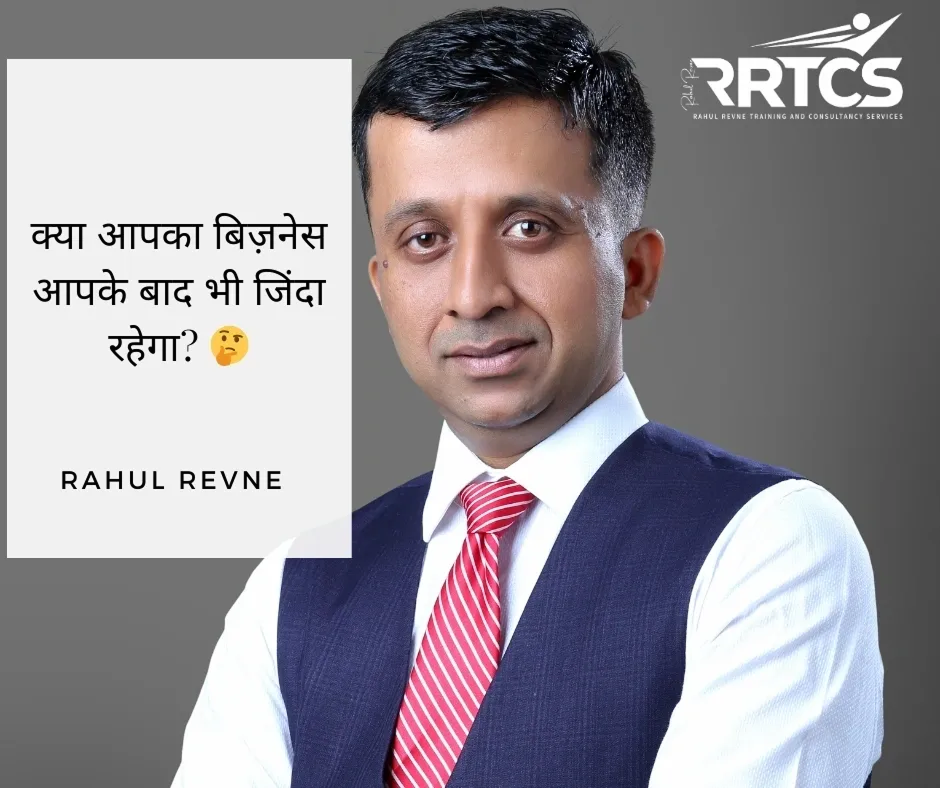
क्या आपका बिज़नेस आपके बाद भी जिंदा रहेगा?

हर founder चाहता है कि उसका बिज़नेस सालों-साल चले, लेकिन हकीकत ये है कि अधिकतर बिज़नेस एक generation भी नहीं टिकते। ❌ वजह सिर्फ market competition या बदलते trends नहीं हैं। ❌ असली वजह है सिर्फ profits पर ध्यान देना और purpose को भूल जाना। जब कोई बिज़नेस शुरू होता है, तो उसमें एक passion होता है, एक vision होता है। लेकिन धीरे-धीरे फोकस बदल जाता है: 🔄 मकसद → मुनाफा 🔄 लंबे समय की सोच → छोटे-छोटे फायदे और यही से उसकी जड़ें कमजोर होने लगती हैं। सिर्फ मुनाफा ही सबकुछ नहीं होता! ✅ Profit ज़रूरी है, लेकिन सिर्फ numbers से बिज़नेस नहीं चलता। ✅ अगर सिर्फ कमाने पर ध्यान देंगे, तो customers और employees इसे महसूस करेंगे। ✅ और धीरे-धीरे बिज़नेस बस एक नाम बनकर रह जाएगा। जो बिज़नेस सालों तक टिकते हैं, उनकी एक खासियत होती है: वो सिर्फ पैसे के लिए नहीं, बल्कि एक मकसद के लिए काम करते हैं। अगर आप सच में एक legacy बनाना चाहते हैं, तो खुद से ये सवाल पूछिए: 💡 मेरा बिज़नेस सिर्फ पैसे कमाने के लिए है या कुछ बड़ा मकसद भी है? 💡 हमारी असली values क्या हैं? 💡 क्या हम कुछ ऐसा बना रहे हैं जो हमें भी survive करेगा? क्योंकि जो बिज़नेस purpose को priority देता है, वही सालों तक grow करता है। 🚀🔥 ✨ आप अपने बिज़नेस को किस दिशा में ले जा रहे हैं? अपने विचार साझा करें!

Blog

Remembering Mahatma Gandhi: Lessons for Entrepreneurs

Today marks the death anniversary of Mahatma Gandhi, a figure so well-known that introducing him feels unnecessary. Everyone knows who he was and what he did for this country. Yet, the brutal truth is that, for many, remembering him is limited to sending messages or posting tributes on social media on his birth and death anniversaries. But have we truly absorbed and implemented his teachings in our lives? Especially as entrepreneurs, are we practicing the principles that made him a leader of extraordinary impact? Gandhiji’s life was not just about political freedom; it was about self-discipline, leadership, and ethical business practices—qualities essential for any entrepreneur. I would like to share some lessons I have learned from him and how I apply them in my entrepreneurial journey. 1. The Power of a Clear Vision Gandhiji had a single, unwavering vision: India’s independence. He dedicated his entire life to this goal, facing countless obstacles but never losing sight of his mission. Entrepreneurial Lesson: An entrepreneur must have a clear vision for their business. Challenges will come, but staying committed to the long-term goal will lead to success. Define your purpose, believe in it, and work relentlessly towards it. 2. Self-Reliance and Swadeshi Movement Gandhiji promoted self-reliance through the Swadeshi movement, urging people to use indigenous products and build local industries. Entrepreneurial Lesson: Businesses should focus on sustainability and self-sufficiency. Instead of depending on external factors, entrepreneurs should develop in-house capabilities, create local employment, and build businesses that contribute to the economy. 3. Simplicity and Minimalism Despite being one of the most influential leaders, Gandhiji lived a simple life, free from excess materialism. Entrepreneurial Lesson: Entrepreneurs often get caught up in the illusion of success—expensive offices, luxury cars, and flashy branding. But true success comes from efficiency, not extravagance. Focus on keeping costs low, reinvesting profits wisely, and maintaining financial discipline. 4. Leadership Through Service Gandhiji led by example. He was always the first to embrace hardships, whether it was fasting for a cause or spinning the charkha himself. Entrepreneurial Lesson: A true leader serves his team, not just commands them. Entrepreneurs should be willing to get their hands dirty, understand the ground realities, and inspire their teams through action, not just words. 5. Resilience in the Face of Failure Gandhiji faced prison, opposition, and immense criticism. Yet, he never gave up. He adapted, changed strategies when needed, but remained firm on his values. Entrepreneurial Lesson: Failure is a part of entrepreneurship. Businesses will face setbacks—financial losses, market downturns, failed products. The key is to persist, learn from mistakes, and keep moving forward without compromising on core values. 6. Ethical Business Practices Gandhiji’s approach to life was rooted in truth and non-violence (Ahimsa). He believed that means are as important as the end. Entrepreneurial Lesson: Shortcuts, dishonesty, and unethical practices may bring temporary gains but will lead to long-term failure. Entrepreneurs should focus on building businesses with integrity, fair practices, and respect for customers and employees. 7. The Power of Community Building Gandhiji did not fight alone. He built a movement, uniting people from different backgrounds with a common goal. Entrepreneurial Lesson: Successful businesses thrive on strong networks. Build meaningful relationships with employees, customers, partners, and society. Collaboration and trust are key to sustainable growth. 8. Adaptability and Innovation While Gandhiji believed in traditional values, he was not rigid. He adapted his methods based on the situation, whether it was the Non-Cooperation Movement, Dandi March, or Quit India Movement. Entrepreneurial Lesson: Businesses must be flexible and open to change. Markets evolve, customer preferences shift, and technology advances. Entrepreneurs must be willing to innovate and pivot when necessary. Mahatma Gandhi’s legacy is not just about political independence; it is a treasure trove of wisdom that applies to entrepreneurship and leadership. His teachings are timeless—focus on a strong vision, lead with integrity, serve your people, adapt to change, and never give up. Instead of just remembering him through social media posts, let’s implement his principles in our businesses and daily lives. That would be the true tribute to the Mahatma. What lessons from Gandhiji do you apply in your business? Let’s keep the conversation alive and make his philosophy a part of our entrepreneurial journey.

Blog

Starting Salespeople Off Right: The Key to Long-Term Success

As businesses strive to excel in today’s competitive market, the onboarding process for new salespeople becomes increasingly critical. Many organizations face challenges not because their products or services are lacking, but because they struggle to effectively prepare and integrate their sales teams. This article delves into the essential functions of starting new salespeople off on the right foot and offers practical insights into how sales managers can drive success through thorough training, effective product knowledge, and proper onboarding strategies. 1. The Significance of a Strong Start The adage “well begun is half done” holds particularly true for new salespeople. Research shows that the way a salesperson begins their role significantly impacts their performance not only in the early weeks and months but also five to ten years down the line. Therefore, establishing a solid foundation from day one is paramount. A well-structured onboarding process sets the stage for sustained success and enables new hires to feel confident and competent in their roles. 2. Comprehensive Sales Skills Development Sales skills are a cornerstone of effective performance: Thorough Training:     Many organizations, such as IBM, invest substantial time—often up to      eighteen months—in training new salespeople. This comprehensive training      is vital before they are sent out into the field. Dual Training Approach:     Successful onboarding involves both classroom training and practical field      experience. New hires must first grasp essential sales concepts before      interacting with customers. 3. Importance of Product Knowledge Product knowledge is critical for sales success: Understanding the Product:     A significant number of sales organizations in America focus solely on      product training without providing the necessary sales skills training.      New salespeople must thoroughly understand the products they are selling      to engage effectively with customers. Boosting Confidence and Credibility:     Good product knowledge enhances the salesperson’s confidence and      credibility. Being able to pass a product knowledge examination is a sign      that the new hire is well-prepared to engage with prospects. 4. Emphasizing Task-Relevant Maturity New salespeople often enter their roles with “low task-relevant maturity,” meaning they may have experience in sales but lack specific knowledge about the company’s products and customers. Sales managers must treat new hires as if they are completely new to the sales process, providing them with the guidance and resources they need to build their understanding and capabilities. 5. Structured Onboarding and Continuous Feedback To ensure ongoing success, the onboarding process should include: Regular Assessments:     Continuous feedback and assessment are crucial for helping new hires      develop their skills and align with the company’s objectives. Motivational Strategies:     Implementing motivational strategies, such as paying commissions quickly      and recognizing early achievements, can significantly boost morale and      performance. Practical Insights for Sales Managers To enhance the onboarding experience and ensure new salespeople thrive, sales managers should consider the following recommendations: Invest in Comprehensive Training:     Prioritize a balanced training program that includes both theoretical      knowledge and practical application. Foster a Supportive Environment:     Create an environment where new hires feel comfortable asking questions      and seeking help, which can enhance their learning experience. Implement Continuous Development:     Establish a framework for ongoing development that includes regular      check-ins, feedback sessions, and skills enhancement opportunities. In conclusion, effectively onboarding new salespeople is essential for long-term success. By prioritizing thorough training, product knowledge, and ongoing support, sales managers can create a high-performing sales team poised for sustainable growth and success. Are you a sales manager looking to enhance your team’s performance and achieve sales excellence?Contact us to learn how our consultancy services can help you implement strategic planning, develop your team, and optimize your sales processes for sustained success. Author Bio:Rahul Revne is the Founder and CEO of Rahul Revne Training & Consultancy Services (RRTCS). With extensive experience in sales management and business strategy, Rahul specializes in helping organizations optimize their sales processes, develop high-performing teams, and achieve sustainable growth. His expertise spans various industries, and he is dedicated to empowering businesses to reach their full potential through strategic insights and effective management practices.

Blog

Mahatma Gandhi’s Wisdom for Modern Entrepreneurs

As we celebrate the birth anniversary of Mahatma Gandhi on 2nd October, it is essential to reflect not just on his role as the Father of the Nation, but also on the wisdom he imparted that resonates with modern-day entrepreneurship. Gandhiji may not have been an entrepreneur in the conventional sense, but his leadership, values, and philosophy offer timeless lessons for today’s business leaders and entrepreneurs. 1. Visionary Leadership Mahatma Gandhi had a clear and compelling vision – the independence of India through non-violent means. Entrepreneurs too need a vision, a dream that drives their business. A strong vision motivates teams, attracts customers, and sustains the organization through challenges. Gandhiji’s commitment to his cause was unwavering, and similarly, entrepreneurs must remain committed to their business vision, even when the road seems tough. 2. Innovation in Simplicity Gandhiji championed simple living and self-reliance, which can be seen in his promotion of the Charkha(spinning wheel) as a symbol of economic independence. This simplicity was his innovation – he empowered the masses to spin their own cloth, making them self-sufficient and less reliant on foreign goods. Entrepreneurs can learn the value of simplicity and innovation in creating products or services that solve everyday problems efficiently. Like Gandhiji, entrepreneurs should focus on creating value for people, particularly for underserved markets. 3. Ethics and Integrity One of the most important lessons from Gandhiji’s life is his deep commitment to truth and ethics, encapsulated in his principle of **Satyagraha** – the force of truth. In the world of entrepreneurship, ethics and integrity should form the foundation of every business. Trust is a crucial component of any successful venture, and maintaining ethical standards ensures long-term success. Entrepreneurs who adhere to transparency, honesty, and ethical practices build loyal relationships with customers, employees, and partners. 4. Perseverance in the Face of Challenges Gandhiji’s journey to Indian independence was not easy. He faced imprisonment, opposition, and criticism. Yet, his perseverance and calm in the face of adversity were unwavering. Entrepreneurs often face similar challenges, be it financial hurdles, market competition, or personal setbacks. Gandhi’s life reminds us that resilience, patience, and faith in one’s purpose are critical in overcoming obstacles. Entrepreneurs must stay focused, adapt to changes, and persist through hardships to reach their goals. 5. Empowerment of Others Gandhiji was not just a leader; he was a mentor who empowered others to take responsibility and lead by example. Entrepreneurs can learn to create businesses that not only grow themselves but also empower their teams, communities, and even customers. A successful entrepreneur is one who uplifts others, enabling them to reach their potential. Just as Gandhiji mobilized the masses for the greater good, today’s business leaders can create positive social impact by providing opportunities for others to succeed. 6. Sustainability and Social Impact Gandhiji’s philosophy of self-reliance, minimalism, and care for the environment aligns with the growing focus on **sustainable business practices** today. Entrepreneurs should strive to build businesses that are environmentally responsible and socially conscious. Gandhiji’s idea of Swadeshi—promoting local goods and services—highlights the importance of supporting local economies and sustainable practices, principles that modern businesses can embrace for long-term success and social good. 7. Servant Leadership Gandhiji was the epitome of a servant leader. He believed in serving the people, not in ruling over them. This leadership style is vital for entrepreneurs in today’s world. A servant leader prioritizes the well-being and growth of their employees, customers, and community. Entrepreneurs who adopt this approach build stronger teams, foster innovation, and create a company culture that is rooted in respect and care for others. Mahatma Gandhi’s life provides an enduring legacy for entrepreneurs. His values of simplicity, ethics, perseverance, and servant leadership are as relevant today as they were in the past. As we commemorate Gandhiji’s birth anniversary, let us remember that entrepreneurship is not just about profits but about creating a lasting positive impact on society. Entrepreneurs who embody Gandhian principles can build businesses that are not only successful but also meaningful and transformative. In the words of Gandhiji himself, “Be the change you wish to see in the world.” Entrepreneurs are indeed agents of change, and by following these principles, they can shape a brighter and more ethical future for all.

Blog

The Role of the Sales Manager: Insights for Achieving Sales Excel

As businesses strive to excel in today’s competitive market, the role of the sales manager becomes increasingly critical. Many organizations face challenges not because their products or services are lacking, but because they struggle to optimize their sales processes and teams effectively. This article delves into the essential functions of a sales manager and offers practical insights into how they can drive sales success through strategic planning, team development, and efficient processes. 1. The Sales Manager’s Core Responsibility: Driving Sales A sales manager’s primary responsibility is to ensure that the sales levels required for the company’s survival and growth are met. This involves setting realistic sales targets and leading a team towards these goals. Achieving this requires not only understanding market dynamics but also aligning the team’s efforts with the company’s strategic objectives. Sales managers must be adept at navigating the complexities of the sales environment to drive sustainable growth. 2. Strategic Sales Goals and Planning Effective sales management is rooted in strategic planning: Goal Setting: Sales managers need to establish clear and achievable goals for different timeframes—daily, weekly, monthly, quarterly, and annually. These goals should be specific, measurable, and aligned with broader company objectives. Actionable Steps: Goals must be broken down into actionable steps. This involves detailing the necessary actions, allocating resources effectively, and setting deadlines to ensure progress. Resource Allocation:     Success depends on strategic resource management. Sales managers must allocate the right people, resources, and budgets to meet sales quotas,      ensuring every aspect of the sales process is optimized for maximum performance. 3. Building and Developing a High-Performing Sales Team A crucial aspect of a sales manager’s role is assembling and nurturing a high-performing team: Recruitment and Training:     Hiring individuals who fit the company’s values and objectives is essential. Investing in training helps develop their skills and prepares them to meet sales targets effectively. Ongoing Development:     Regular assessment and feedback are vital. Continuous development ensures that team members remain motivated and aligned with the company’s goals,      enhancing their productivity and contribution. 4. Embracing the Factory Model for Process-Driven Sales Management Brian Tracy’s factory model offers valuable insights into process-driven sales management: Systematic Approach:     This model emphasizes the need for a structured approach, where inputs      (resources, budgets, trained salespeople) are systematically converted into outputs (sales). Implementing efficient systems and processes ensures better results and streamlined operations. Process Optimization:     By applying a process-oriented approach, sales managers can enhance efficiency, reduce errors, and achieve better performance, leading to optimized sales outcomes. 5. Focusing on Value and Revenue Creation Sales managers must concentrate on activities that drive value and revenue: Prioritization:     According to Tracy, 80% of a sales manager’s time should be dedicated to revenue-generating activities. This focus helps in avoiding distractions like excessive administrative tasks and ensures that efforts are aligned with revenue goals. Competitive Advantage:     Prioritizing value creation and revenue generation enables sales managers to achieve superior results and maintain a competitive edge in the market. As businesses strive to excel in today’s competitive market, the role of the sales manager becomes increasingly critical. Many organizations face challenges not because their products or services are lacking, but because they struggle to optimize their sales processes and teams effectively. This article delves into the essential functions of a sales manager and offers practical insights into how they can drive sales success through strategic planning, team development, and efficient processes. 1. The Sales Manager’s Core Responsibility: Driving Sales A sales manager’s primary responsibility is to ensure that the sales levels required for the company’s survival and growth are met. This involves setting realistic sales targets and leading a team towards these goals. Achieving this requires not only understanding market dynamics but also aligning the team’s efforts with the company’s strategic objectives. Sales managers must be adept at navigating the complexities of the sales environment to drive sustainable growth. 2. Strategic Sales Goals and Planning Effective sales management is rooted in strategic planning: Goal Setting: Sales managers need to establish clear and achievable goals for different timeframes—daily, weekly, monthly, quarterly, and annually. These goals should be specific, measurable, and aligned with broader company objectives. Actionable Steps: Goals must be broken down into actionable steps. This involves detailing the necessary actions, allocating resources effectively, and setting deadlines to ensure progress. Resource Allocation:     Success depends on strategic resource management. Sales managers must allocate the right people, resources, and budgets to meet sales quotas,      ensuring every aspect of the sales process is optimized for maximum performance. 3. Building and Developing a High-Performing Sales Team A crucial aspect of a sales manager’s role is assembling and nurturing a high-performing team: Recruitment and Training:     Hiring individuals who fit the company’s values and objectives is essential. Investing in training helps develop their skills and prepares them to meet sales targets effectively. Ongoing Development:     Regular assessment and feedback are vital. Continuous development ensures that team members remain motivated and aligned with the company’s goals,      enhancing their productivity and contribution. 4. Embracing the Factory Model for Process-Driven Sales Management Brian Tracy’s factory model offers valuable insights into process-driven sales management: Systematic Approach:     This model emphasizes the need for a structured approach, where inputs      (resources, budgets, trained salespeople) are systematically converted into outputs (sales). Implementing efficient systems and processes ensures better results and streamlined operations. Process Optimization:     By applying a process-oriented approach, sales managers can enhance efficiency, reduce errors, and achieve better performance, leading to optimized sales outcomes. 5. Focusing on Value and Revenue Creation Sales managers must concentrate on activities that drive value and revenue: Prioritization:     According to Tracy, 80% of a sales manager’s time should be dedicated to revenue-generating activities. This focus helps in avoiding distractions like excessive administrative tasks and ensures that efforts are aligned with revenue goals. Competitive Advantage:     Prioritizing value creation and revenue generation enables sales managers to achieve superior results and maintain a competitive edge in the market. Practical Insights for Sales Managers To excel in their role, sales managers should consider the following practical recommendations: Set Clear Goals: Break down larger sales targets into smaller, actionable daily and weekly goals. This approach helps in tracking progress and maintaining motivation. Invest in Team Development: Focus

man using MacBook
Blog

Entrepreneurial Freedom: Myth or Reality?

As India proudly celebrates its Independence Day, the nation reflects on its journey towards freedom and progress. However, for many Indian entrepreneurs, the promise of freedom in their businesses remains unfulfilled. Trapped in the daily grind, burdened by the need to handle everything themselves, and limited by a lack of vision and clear purpose, they find themselves struggling to scale and grow. This article explores these challenges and highlights how Rahul Revne Training & Consultancy Services (RRTCS) can help entrepreneurs break free, transform their businesses from individual-driven to people-driven, and achieve sustainable growth through strategic development, SOPs, and data-driven decision-making. 1. The Busy Entrepreneur: Trapped in Day-to-Day Operations Many entrepreneurs start their businesses with dreams of autonomy and success but often find themselves mired in the minutiae of day-to-day operations. They handle everything from client relations to bookkeeping, leaving little time for strategic planning and growth. This constant busyness not only drains their energy but also limits their business’s potential. Without the ability to step back and focus on the bigger picture, these entrepreneurs find it challenging to scale their operations and achieve long-term success. 2. The Importance of Shifting from Individual-Driven to People-Driven One of the most significant barriers to entrepreneurial freedom is the reliance on the entrepreneur as the sole driver of the business. When everything depends on one person, growth is constrained, and the risk of burnout is high. Transitioning to a people-driven model, where the business is powered by a capable and empowered team, is crucial for sustainable growth. This shift allows entrepreneurs to delegate responsibilities, leverage collective expertise, and ensure that the business can thrive even in their absence. 3. The Power of Delegation, SOPs, and Team Development Effective delegation is key to building a people-driven business. Entrepreneurs must create clear Standard Operating Procedures (SOPs) that empower their teams to take on tasks with confidence and consistency. SOPs streamline operations, reduce errors, and free up the entrepreneur’s time to focus on strategic initiatives. Additionally, investing in team development ensures that employees are not only capable but also motivated to contribute to the business’s success. A well-developed team can drive innovation, improve customer service, and support the company’s growth objectives. 4. The Role of Vision and Purpose in Scaling a Business A business without a clear vision is like a ship without a compass. Entrepreneurs must have a clear understanding of where they want to take their business and why. This vision guides decision-making, inspires the team, and helps the business stay focused on long-term goals. Clarity in purpose also drives motivation and aligns the team’s efforts towards a common objective. Entrepreneurs who lack this clarity often find their businesses stagnating, as they struggle to make strategic decisions that propel growth. 5. Embracing Data-Driven Decision-Making for Growth In today’s competitive business landscape, intuition alone is not enough. Entrepreneurs need to leverage data to make informed decisions that drive growth. By implementing data-driven strategies, businesses can identify trends, optimize operations, and predict customer behavior. This approach not only improves efficiency but also enhances the ability to respond to market changes swiftly. Entrepreneurs who embrace data-driven decision-making are better equipped to scale their businesses and achieve long-term success. To further enhance the functionality of your website, Conv Practical Tips or Recommendations: Delegate with Confidence: Develop and implement SOPs to ensure your team completes tasks efficiently and consistently. Build a People-Driven Business: Focus on team development and empower your employees to take ownership of their roles. Clarify Your Vision: Define a clear and ambitious vision for your business that guides your decisions and inspires your team. Leverage Data for Growth: Use data-driven insights to make informed decisions that optimize operations and drive growth. Work on Your ‘Why’: Reconnect with the purpose behind your business to maintain motivation and strategic focus. As India celebrates its Independence Day, it’s important to recognize that many entrepreneurs still struggle to achieve true freedom in their businesses. Trapped by the demands of day-to-day operations, lacking a people-driven approach, and without a clear vision or data-driven strategies, they find their growth limited. However, with the right guidance and tools, these challenges can be overcome. Rahul Revne Training & Consultancy Services (RRTCS) is committed to helping entrepreneurs transition from being overburdened individuals to strategic leaders of people-driven, scalable businesses. Are you an entrepreneur feeling weighed down by daily operations and unclear on your business’s future? It’s time to break free. Contact Rahul Revne Training & Consultancy Services today to learn how we can help you delegate effectively, develop your team, and achieve sustainable growth through strategic planning, SOPs, and data-driven decision-making. Author Bio: Rahul Revne is the Founder and CEO of Rahul Revne Training & Consultancy Services (RRTCS). With a passion for helping entrepreneurs succeed, Rahul specializes in business strategy, team development, and organizational transformation. His experience spans across various industries, and he is dedicated to empowering businesses to achieve their full potential through clarity, vision, and data-driven strategies. is offers a range of custom Elementor widgets. These widgets enable you to add various elements and features to your pages, such as testimonials, team profiles, service listings, pricing tables, and more. These pre-designed widgets save you time and effort while ensuring a cohesive and professional look throughout your website. In conclusion, Convis – Consulting WordPress Theme is a powerful and versatile solution for consultants looking to create an impactful online presence. With its extensive customization options, Elementor compatibility, WooCommerce support, multi-language capabilities, and custom Elementor widgets, Convis empowers you to build a visually stunning and highly functional website that attracts and engages your target audience. Don’t settle for mediocrity when you can have excellence with Convis. Take your consulting business to new heights with this exceptional WordPress theme.

Scroll to Top