
Business Growth

Business Growth, Case Study

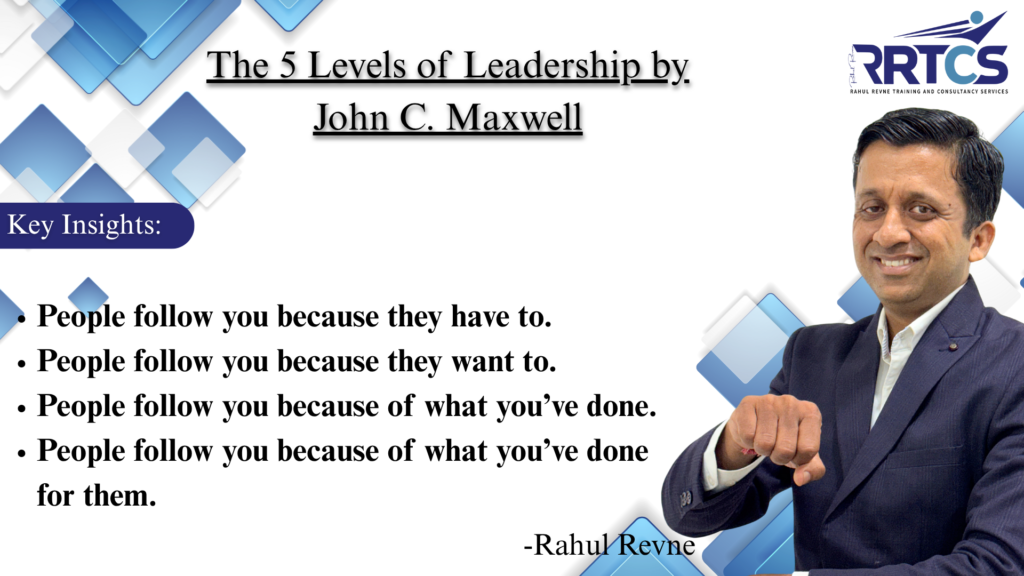
🚀 The Five Levels of Leadership by John Maxwell: A Path to Growth, Influence & Impact

Leadership isn’t just about holding a title — it’s about influence, growth, and legacy.John C. Maxwell, one of the world’s foremost leadership experts, offers a clear and actionable framework through his “Five Levels of Leadership.” Whether you’re just stepping into a leadership role or aiming to leave a legacy, these levels can transform how you lead yourself and others. In this blog, we break down each level with examples and tips to help you apply them in your journey toward becoming a high-impact leader. Level 1: Positional Leadership – People follow you because they have to This is the entry-level of leadership — your influence comes solely from your job title. People comply with your instructions but may not be emotionally or intellectually engaged. Example: A newly promoted team manager who is followed because of hierarchy, not trust or respect.Tip: Earn credibility through consistency, fairness, and respect. Don’t rely on authority — build relationships and show you care. Level 2: Permission Leadership – People follow you because they want to Now you begin leading through relationships. Trust, empathy, and mutual respect become the glue that binds you and your team. Example: A leader who listens actively, understands team dynamics, and fosters genuine rapport with their people.Tip: Practice open communication. Empower your team by involving them in decision-making and showing appreciation regularly. Level 3: Production Leadership – People follow you because of what you’ve done for the organization At this stage, results speak louder than words. You lead by example, driving performance, efficiency, and outcomes. Example: A sales leader who consistently exceeds goals and motivates others to raise their own bar.Tip: Create a high-performance culture. Celebrate wins and model the discipline, focus, and resilience you expect. Level 4: People Development Leadership – People follow you because of what you’ve done for them This level is about multiplying leadership. You grow others, mentor emerging talent, and create leaders within your team. Example: A coach or mentor who’s invested in the long-term growth of their people, helping them climb the ladder.Tip: Offer stretch roles, mentoring, and feedback. Develop career paths for your team and support them as they take the lead. Level 5: Pinnacle Leadership – People follow you because of who you are and what you represent This is the level of legacy. Your leadership impact extends beyond your role or organization. You inspire movements, ideas, and transformation. Example: Think of Nelson Mandela or Steve Jobs — leaders who transcended positions and became symbols of vision, courage, and impact.Tip: Lead with purpose. Influence industries, mentor future leaders, and work toward a mission greater than yourself. Leadership isn’t a position — it’s a progression.By climbing these five levels intentionally, you can elevate not just your career but also the people and systems around you. Whether you’re at Level 1 or Level 4, the journey is ongoing. Keep growing, mentoring, and inspiring — that’s the Maxwell way.

Business Growth

The Jack Welch Way: 11 Measures Entrepreneurs Should Take to Become True Leaders

In the world of entrepreneurship, leadership is more than just a role — it’s a responsibility. The ability to inspire, adapt, and make tough calls can make the difference between a startup that survives and one that scales. Few leaders embody these traits better than Jack Welch, the legendary former CEO of General Electric. His leadership philosophy remains a gold standard for entrepreneurs aiming to build resilient, high-performance ventures. Whether you’re at the beginning of your entrepreneurial journey or scaling your operations, here are 11 leadership principles — the Jack Welch way — that can transform the way you lead your business. 1. Embrace Continuous Learning The best entrepreneurs are lifelong learners. Jack Welch believed in constantly upgrading one’s knowledge and staying ahead of trends. Continuous learning sharpens decision-making, fuels innovation, and ensures entrepreneurs remain relevant in a rapidly evolving world. 2. Foster a Winning Culture Culture isn’t just a buzzword — it’s your company’s heartbeat. Welch built high-performance cultures by encouraging accountability, collaboration, and excellence. As an entrepreneur, build an environment where people are motivated, empowered, and aligned to win. 3. Set Clear Goals & Communicate the Vision Welch advocated for setting bold yet realistic goals — and making sure everyone knows why they matter. Clarity of vision energizes teams. It turns daily tasks into mission-driven efforts. Don’t just manage — inspire. 4. Develop a Strong Network Leadership isn’t a solo sport. Build a network of mentors, advisors, and fellow entrepreneurs. Welch believed in surrounding himself with sharp minds and learning from every conversation. Strategic connections often lead to smarter decisions and faster growth. 5. Encourage Risk-Taking & Innovation Entrepreneurs who play it too safe rarely break new ground. Welch fostered innovation by supporting calculated risk-taking. Create a culture where ideas flow, experiments are welcomed, and failures become learning moments. 6. Nurture Talent Great leaders build great teams. Welch had a reputation for spotting and nurturing top talent. Invest in your people — their growth is your growth. Reward performance, recognize potential, and never settle for mediocrity. 7. Promote Transparency & Trust According to Welch, trust is the glue of any high-functioning team. Be transparent in your communication, open to feedback, and consistent in your values. A transparent environment builds loyalty and long-term commitment. 8. Be Decisive Analysis paralysis kills momentum. Welch believed in collecting data, analyzing smartly, and then acting fast. Entrepreneurs must make informed decisions, even when the path is unclear. Speed and decisiveness often set leaders apart. 9. Embrace Change & Adaptability The only constant in business is change. Welch thrived in transforming environments and encouraged leaders to pivot when needed. Stay agile, question the status quo, and be ready to shift strategy when the market demands it. 10. Adopt a Customer-Centric Mindset Put your customer at the center of everything. Welch taught that meeting — and exceeding — customer expectations leads to loyalty and growth. Build products, services, and experiences that solve real problems and deliver consistent value. 11. Lead by Example Perhaps most importantly, Welch led from the front. Integrity, resilience, humility — these weren’t just ideals; they were non-negotiables. Your team will model what they see. Be the kind of leader you’d want to follow. Entrepreneurial leadership demands courage, vision, and relentless discipline. By following the Jack Welch way, founders can transform not just their businesses, but also their own leadership identity. These 11 measures offer a powerful blueprint — one that promotes clarity, builds trust, drives performance, and ultimately creates ventures that stand the test of time.

Scroll to Top