Business Growth

Business Growth

🧠 Why Business Systems, Not Just Hard Work, Drive Real Growth

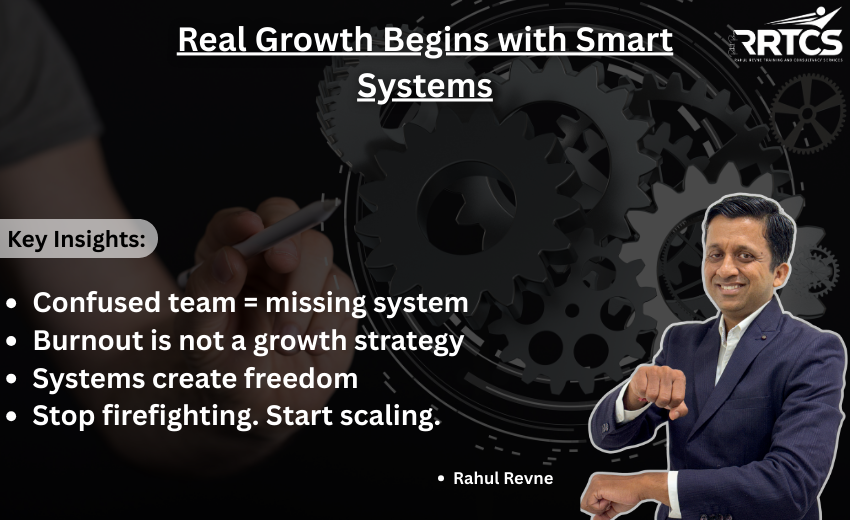
By Rahul Revne | Business Coach & Founder, RRTCS Many entrepreneurs are committed, passionate, and focused.They’re always busy — solving problems, attending meetings, leading from the front. But even with all that effort, the results often feel slow.The team stays confused.The calendar is packed.And the business feels stuck. This is not a capability problem.It’s a lack of business systems, structure, and strategy. 🔍 Build Smart Systems, Not Just Long To-Do Lists 1. 💡 Confusion is a System Problem — Not a People Problem If your team needs you for every small decision, it’s a sign of unclear systems — not weak team members. At RRTCS, we help business owners improve leadership, create clarity, and align operations from the top down. 2. ⏳ Daily Routines Build Long-Term Success Success is not sudden. It’s built through quiet, repeatable routines — the kind most businesses skip. We help install those systems in your business:✅ Daily operations✅ Weekly goals✅ Monthly performance tracking 3. 🚧 Broken Processes Block Big Potential You might have the talent, the team, and the drive.But if your business processes are unclear or manual, growth will always slow down. We fix that.RRTCS helps you unlock your potential by upgrading your processes. 4. 🔥 Burnout Isn’t a Badge — It’s a Warning The world won’t stop just because you’re tired.Burnout limits progress. Poor systems cause burnout. That’s why we help you build a business that runs smoothly — so you can breathe, lead, and grow. 5. ⚙️ Don’t Just Manage Problems — Prevent Them If you spend your day fixing issues, you’re not leading — you’re reacting. We teach you to stop managing problems…and start designing smart systems that prevent them. 6. 🚨 Every Fire You Fight Is a System That Failed Most daily emergencies are not bad luck — they’re system failures. RRTCS helps you fireproof your business by building structure, automation, and accountability into your company’s core. 🚀 From Busy to Scalable: The RRTCS Way You don’t scale by doing more.You scale by building better systems.That’s how you grow — with freedom, not fatigue. ✅ Ready to Build a Business That Grows Without Burning You Out? At RRTCS, we help entrepreneurs and small business owners:✔ Design scalable business systems✔ Improve team performance✔ Move from confusion to clarity✔ Stop firefighting, start scaling Rahul RevneBusiness Coach & Founder, RRTCS

Business Growth

🧠 From Chaos to Control: Why Most Entrepreneurs Stay Stuck — and How to Break Free

By Rahul Revne | Business Coach & Founder, RRTCS Entrepreneurs are often full of passion, purpose, and perseverance.They work hard. They show up every day. They don’t lack commitment. And yet—many still feel stuck. ✅ Their team can’t take a step without them.✅ Their calendar is packed, but progress feels painfully slow.✅ Their business runs them… instead of them running the business. Does that sound familiar? Let’s be clear—this isn’t a question of capability.It’s a gap in systems, structure, and strategy. 🔁 1. If Your Team Needs You for Every Answer… You didn’t build a system.You built a trap. When your business can’t move without your input, growth hits a ceiling. Delegation without documentation leads to dependency.At RRTCS, we help you build repeatable systems and SOPs so your team knows what to do—even when you’re not in the room. Because freedom isn’t just about more revenue.It’s about not being the bottleneck. ⚙️ 2. You Don’t Scale by Working Harder You scale by thinking sharper. Most founders try to outwork their problems.But real scaling isn’t about adding more hours—it’s about making smarter decisions. Through strategic planning, RRTCS helps you focus on: Think less firefighting.More forward planning. 📋 3. If Your To-Do List Runs Your Day… You’re not running a business.You’re just running. The best entrepreneurs don’t obsess over tasks—they focus on traction.They work on the business, not just in it. We help you shift from a task taker to a true business builder: Because if your calendar is packed, but your vision is stuck—you need a reset. 👥 4. The Problem Isn’t Always the Team The problem is… they were never trained to win. Blaming the team is easy.Building them is leadership. At RRTCS, we help you design high-performance teams with the right training, culture, and accountability.Because when expectations are clear and capabilities are built—performance follows naturally. Your team can only grow as far as you lead them. 🚀 Ready to Regain Control and Scale with Strategy? Business doesn’t get easier by doing more.It gets easier when you do the right things in the right order. At RRTCS, we help entrepreneurs build scalable systems, develop powerful teams, and lead with clarity. Because being busy isn’t the goal.Building a business that works—with or without you—is. ✅ Want to Work Smarter, Not Just Harder? Let’s sharpen your strategy.Let’s train your team.Let’s systemize your business. 📍 Learn more: www.rahulrevne.com📧 Connect with me on LinkedIn: Rahul Revne | Business Coach | RRTCS

Business Growth, Case Study

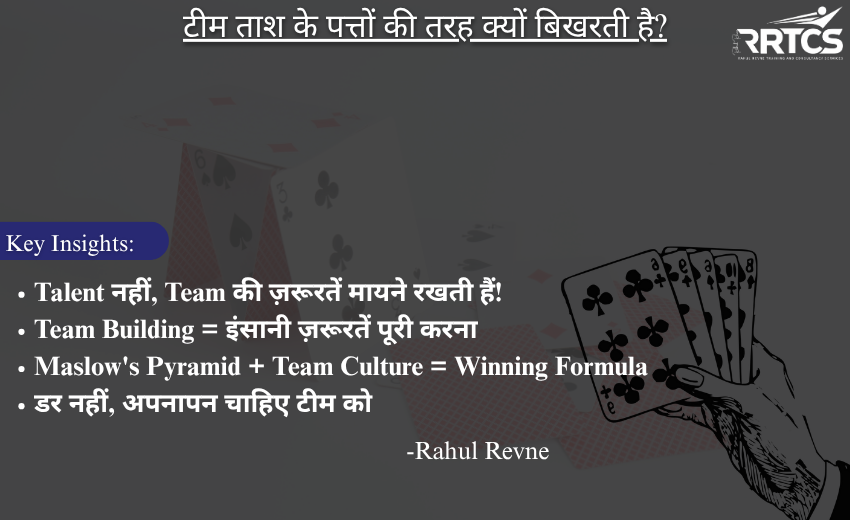
Team ताश के पत्तों की तरह क्यों बिखरती है?

कभी सोचा है — कुछ टीमें प्रेशर में टूट क्यों जाती हैं, जबकि कुछ उसी प्रेशर में चमक उठती हैं? असल वजह talent नहीं होती… असल वजह होती है — क्या आपकी टीम की “basic इंसानी ज़रूरतें” पूरी हो रही हैं या नहीं। Maslow की Hierarchy और Team Building Maslow की hierarchy बताती है —पहले नींव की ज़रूरतें पूरी करनी पड़ती हैं, तभी इंसान अपनी असली potential तक पहुँच पाता है। टीम भी वैसी ही है — एक पिरामिड की तरह, नीचे से ऊपर। मैंने Maslow की सोच को टीम बिल्डिंग से जोड़ा… और जो सामने आया, वो हर लीडर को जानना चाहिए: 🧱 1. Basic Needs (Security) “जहाँ डर हो, वहाँ performance नहीं होती।” 🤝 2. Belonging Needs (Community) “जहाँ अपनापन हो, वहाँ commitment होता है।” 🏅 3. Esteem Needs (Recognition) “जहाँ सराहना हो, वहाँ excellence होती है।” 📈 4. Growth Needs (Development) “जहाँ growth हो, वहीं loyalty होती है।” 🌟 5. Self-Actualisation (Purpose) “जहाँ मकसद हो, वहाँ magic होता है।” 🚀 6. Transcendence (Leadership Beyond Self) “असली लीडर वही होता है जो और लीडर्स बनाता है।” याद रखो: Talent कम हो तो चल जाएगा,लेकिन अगर इंसान को इंसान की तरह treat नहीं किया —तो best भी average बन जाएगा। टीम बिल्ड करना है? तो pyramid के base से शुरू करो।Top पर पहुंचना अपने आप होगा। — Rahul Revne, RRTCS

Business Growth

The Strategic Edge: Why Every Entrepreneur Needs a Game Plan

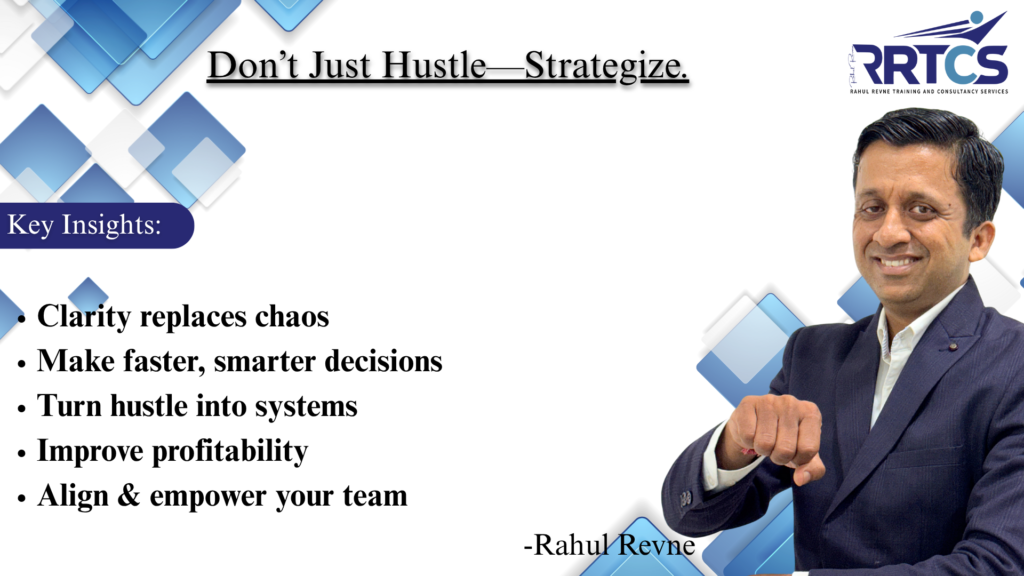
By Rahul Revne | Business Coach & Founder, RRTCS Running a business without a strategy is like sailing without a compass—you might stay afloat, but you’ll drift without direction. Over the years, in my journey as a business coach and consultant, I’ve worked with hundreds of small businesses. Most of them are driven, passionate, and hardworking. Yet many still struggle to grow—not due to lack of effort, but because they lack strategic direction. Whether you’re a solopreneur, a startup founder, or running a family-owned business, strategic planning is not a luxury. It’s your formula for survival, scalability, and sustainability. 🚀 Why Strategic Planning Is Essential (and Urgent) for Entrepreneurs 1. It Brings Absolute Clarity and Direction A solid strategic plan gives your business a GPS. You define: Clarity replaces chaos. You stop reacting and start leading.As I always remind my clients: “Clarity leads to confidence. Confidence drives action.” 2. It Empowers Smarter, Faster Decisions Without a strategy, decision-making becomes reactive or emotional. With one, every choice runs through a clear filter: From hiring to pricing, strategy brings consistency and logic into how you run your business. 3. It Converts Hustle into Scalable Systems Many entrepreneurs spend their days doing everything—overwhelmed, yet underachieving. Strategic planning helps you build: This shifts your business from being hustle-driven to system-driven—creating predictable, scalable growth. 4. It Boosts Financial Control and Profitability A strategic plan isn’t complete without financial foresight. With it, you learn how to: For businesses with limited capital, this clarity can be the difference between closing shop and closing deals. 5. It Aligns and Motivates Your Team Even a small team needs structure to thrive. Strategic planning helps every member understand: It’s not just your roadmap—it’s your team’s rallying point. 6. It Increases Resilience in Uncertain Times Markets shift. Competitors evolve. Customer needs change.With a strategy in place, you’re better equipped to: A strong strategy makes your business resilient, not reactive. 7. It Frees You from Daily Firefighting Finally, the ultimate win: time freedom. Strategic planning allows you to: You stop being the “everything-doer” and become the leader your business truly needs. 🎯 From Survival to Significance “Your business will either grow by default—or by design.Strategic planning is how you move from survival to significance.” At RRTCS, I help entrepreneurs like you create actionable, practical strategic plans that turn vision into execution—and real, measurable results. If you’re done being “busy but not growing,” it’s time to design your next level. ✅ Ready to Move from Confusion to Clarity? Start with strategic planning.Measure your success.Build the business you were meant to lead. — Rahul RevneFounder & Business Coach, RRTCS📍 Measure Your Success

Business Growth

5 Proven Tips for Effective Time Management

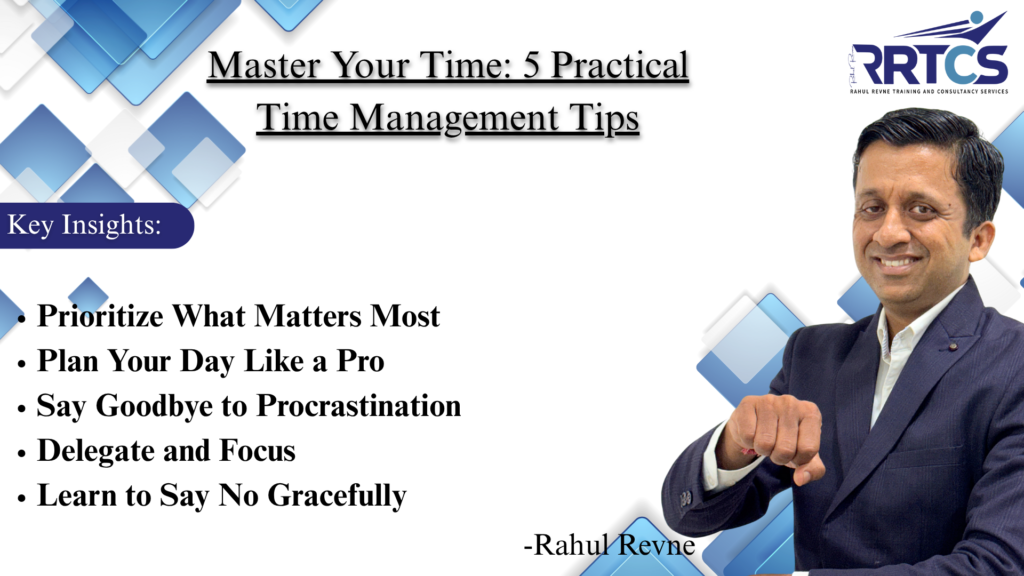
Time is one of our most valuable resources—but it’s also one of the easiest to lose track of. Whether you’re a busy professional, an entrepreneur, or managing a full personal schedule, mastering time management is essential for reducing stress, meeting deadlines, and maintaining a healthy work-life balance. In this post, I’m sharing five practical, real-world tips to help you make the most of your time and increase your productivity—without burning out. 1. Prioritize What Really Matters Not all tasks are created equal. To manage your time effectively, start by identifying what’s urgent and important. These are the tasks that have deadlines or significant consequences if left undone. 💡 Example: If you have a client presentation due in two days and a routine internal meeting tomorrow, your priority should be finalizing that presentation. Focusing on high-impact tasks first helps you avoid last-minute scrambles and ensures critical items get the attention they deserve. 2. Create a Realistic Schedule A well-structured schedule is your time management roadmap. Break your day into time blocks and assign specific tasks to each block—being realistic about how long things will take. 🗓️ Tip: Include buffer time between tasks, and don’t forget to schedule short breaks to recharge. Visualizing your day this way helps you stay organized and cuts down on wasted time or missed responsibilities. 3. Beat Procrastination with Small Wins Procrastination is the silent killer of productivity. It often stems from feeling overwhelmed, a fear of failure, or simply lack of motivation. The key to overcoming it? Break tasks into smaller, manageable chunks. 🔍 Try this: If you’ve been avoiding a big report, divide it into sections and set a mini-deadline for each one. Celebrate each completed step—it keeps you motivated and builds momentum. 4. Delegate and Outsource You don’t need to do everything yourself. In fact, trying to handle it all can be a major time waster. Delegation isn’t just about saving time—it’s about focusing on what only you can do. 🤝 Example: If you’re leading a project, assign parts of it to team members with relevant strengths. This not only frees up your time but also empowers your team and enhances collaboration. 5. Learn to Say “No” (Gracefully) It’s easy to fall into the trap of saying yes to every request or opportunity—but doing so can quickly overload your schedule and dilute your focus. 🚫 Remember: It’s okay to say no to tasks or meetings that don’t align with your priorities. Protecting your time is essential to staying productive and delivering quality work where it counts most. Time management isn’t about packing more into your day—it’s about making smarter decisions with the time you have. By prioritizing effectively, planning ahead, combating procrastination, delegating, and setting healthy boundaries, you’ll not only get more done—you’ll feel more in control and less stressed. Start small, stay consistent, and remember: your time is your most valuable asset. Use it wisely.

Business Growth, Case Study

🚀 The Five Levels of Leadership by John Maxwell: A Path to Growth, Influence & Impact

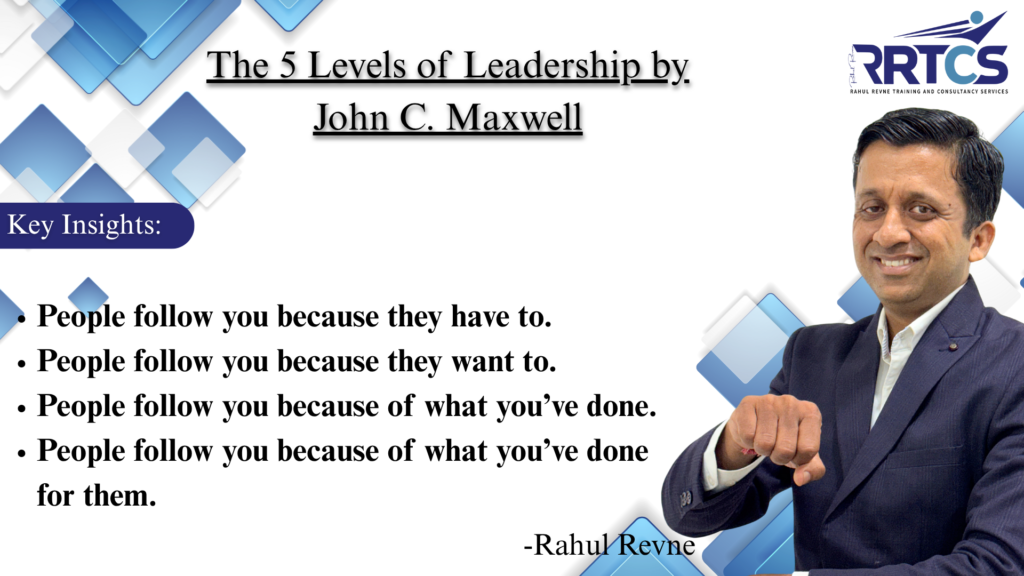
Leadership isn’t just about holding a title — it’s about influence, growth, and legacy.John C. Maxwell, one of the world’s foremost leadership experts, offers a clear and actionable framework through his “Five Levels of Leadership.” Whether you’re just stepping into a leadership role or aiming to leave a legacy, these levels can transform how you lead yourself and others. In this blog, we break down each level with examples and tips to help you apply them in your journey toward becoming a high-impact leader. Level 1: Positional Leadership – People follow you because they have to This is the entry-level of leadership — your influence comes solely from your job title. People comply with your instructions but may not be emotionally or intellectually engaged. Example: A newly promoted team manager who is followed because of hierarchy, not trust or respect.Tip: Earn credibility through consistency, fairness, and respect. Don’t rely on authority — build relationships and show you care. Level 2: Permission Leadership – People follow you because they want to Now you begin leading through relationships. Trust, empathy, and mutual respect become the glue that binds you and your team. Example: A leader who listens actively, understands team dynamics, and fosters genuine rapport with their people.Tip: Practice open communication. Empower your team by involving them in decision-making and showing appreciation regularly. Level 3: Production Leadership – People follow you because of what you’ve done for the organization At this stage, results speak louder than words. You lead by example, driving performance, efficiency, and outcomes. Example: A sales leader who consistently exceeds goals and motivates others to raise their own bar.Tip: Create a high-performance culture. Celebrate wins and model the discipline, focus, and resilience you expect. Level 4: People Development Leadership – People follow you because of what you’ve done for them This level is about multiplying leadership. You grow others, mentor emerging talent, and create leaders within your team. Example: A coach or mentor who’s invested in the long-term growth of their people, helping them climb the ladder.Tip: Offer stretch roles, mentoring, and feedback. Develop career paths for your team and support them as they take the lead. Level 5: Pinnacle Leadership – People follow you because of who you are and what you represent This is the level of legacy. Your leadership impact extends beyond your role or organization. You inspire movements, ideas, and transformation. Example: Think of Nelson Mandela or Steve Jobs — leaders who transcended positions and became symbols of vision, courage, and impact.Tip: Lead with purpose. Influence industries, mentor future leaders, and work toward a mission greater than yourself. Leadership isn’t a position — it’s a progression.By climbing these five levels intentionally, you can elevate not just your career but also the people and systems around you. Whether you’re at Level 1 or Level 4, the journey is ongoing. Keep growing, mentoring, and inspiring — that’s the Maxwell way.

Business Growth

The Jack Welch Way: 11 Measures Entrepreneurs Should Take to Become True Leaders

In the world of entrepreneurship, leadership is more than just a role — it’s a responsibility. The ability to inspire, adapt, and make tough calls can make the difference between a startup that survives and one that scales. Few leaders embody these traits better than Jack Welch, the legendary former CEO of General Electric. His leadership philosophy remains a gold standard for entrepreneurs aiming to build resilient, high-performance ventures. Whether you’re at the beginning of your entrepreneurial journey or scaling your operations, here are 11 leadership principles — the Jack Welch way — that can transform the way you lead your business. 1. Embrace Continuous Learning The best entrepreneurs are lifelong learners. Jack Welch believed in constantly upgrading one’s knowledge and staying ahead of trends. Continuous learning sharpens decision-making, fuels innovation, and ensures entrepreneurs remain relevant in a rapidly evolving world. 2. Foster a Winning Culture Culture isn’t just a buzzword — it’s your company’s heartbeat. Welch built high-performance cultures by encouraging accountability, collaboration, and excellence. As an entrepreneur, build an environment where people are motivated, empowered, and aligned to win. 3. Set Clear Goals & Communicate the Vision Welch advocated for setting bold yet realistic goals — and making sure everyone knows why they matter. Clarity of vision energizes teams. It turns daily tasks into mission-driven efforts. Don’t just manage — inspire. 4. Develop a Strong Network Leadership isn’t a solo sport. Build a network of mentors, advisors, and fellow entrepreneurs. Welch believed in surrounding himself with sharp minds and learning from every conversation. Strategic connections often lead to smarter decisions and faster growth. 5. Encourage Risk-Taking & Innovation Entrepreneurs who play it too safe rarely break new ground. Welch fostered innovation by supporting calculated risk-taking. Create a culture where ideas flow, experiments are welcomed, and failures become learning moments. 6. Nurture Talent Great leaders build great teams. Welch had a reputation for spotting and nurturing top talent. Invest in your people — their growth is your growth. Reward performance, recognize potential, and never settle for mediocrity. 7. Promote Transparency & Trust According to Welch, trust is the glue of any high-functioning team. Be transparent in your communication, open to feedback, and consistent in your values. A transparent environment builds loyalty and long-term commitment. 8. Be Decisive Analysis paralysis kills momentum. Welch believed in collecting data, analyzing smartly, and then acting fast. Entrepreneurs must make informed decisions, even when the path is unclear. Speed and decisiveness often set leaders apart. 9. Embrace Change & Adaptability The only constant in business is change. Welch thrived in transforming environments and encouraged leaders to pivot when needed. Stay agile, question the status quo, and be ready to shift strategy when the market demands it. 10. Adopt a Customer-Centric Mindset Put your customer at the center of everything. Welch taught that meeting — and exceeding — customer expectations leads to loyalty and growth. Build products, services, and experiences that solve real problems and deliver consistent value. 11. Lead by Example Perhaps most importantly, Welch led from the front. Integrity, resilience, humility — these weren’t just ideals; they were non-negotiables. Your team will model what they see. Be the kind of leader you’d want to follow. Entrepreneurial leadership demands courage, vision, and relentless discipline. By following the Jack Welch way, founders can transform not just their businesses, but also their own leadership identity. These 11 measures offer a powerful blueprint — one that promotes clarity, builds trust, drives performance, and ultimately creates ventures that stand the test of time.

Scroll to Top