Business Growth

Business Growth

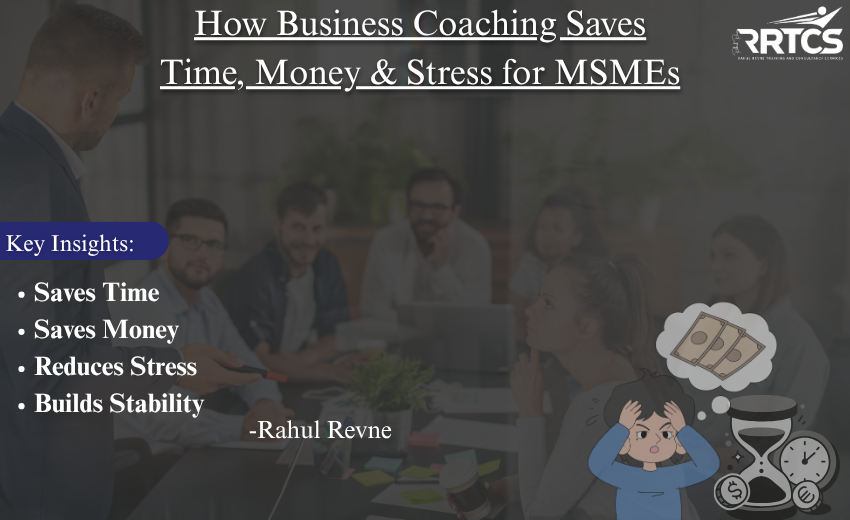
How Business Coaching Saves Time, Money & Stress for MSMEs

MSMEs (Micro, Small & Medium Enterprises) are the backbone of India’s economy. Yet, most owners face the same struggles: long hours, cash-flow crunches, and daily stress. The reason isn’t lack of hard work—it’s lack of structured guidance. A business coach helps MSME entrepreneurs streamline operations, reduce wastage, and build scalable systems. In simple terms—coaching saves time, money, and stress. 1. Saves Time – By Building Systems MSME owners often spend their entire day firefighting—approving bills, resolving customer complaints, following up with staff.👉 A coach introduces SOPs, KPIs, and delegation structures so that routine tasks run without the owner’s constant involvement.Result: More time for strategy, growth, and even family. 2. Saves Money – By Eliminating Waste Many MSMEs lose money through: A coach helps track financial leakages, optimize resources, and create dashboards. Every rupee is accounted for.Result: Higher profitability without extra effort. 3. Reduces Stress – By Creating Clarity Stress comes from confusion and overload. A coach helps MSMEs by: Result: The owner feels confident, in control, and less burdened. 4. Builds Long-Term Stability Without coaching, MSMEs often remain owner-driven. With coaching, they become system-driven. This transition is the key to building an autopilot business—one that grows sustainably, even without the owner’s daily presence. Why RRTCS? At RRTCS – Rahul Revne Training & Consultancy Services, we specialize in helping MSMEs save time, money, and stress by building businesses that run on systems, data, and people—not just the owner’s energy. When you invest in coaching with RRTCS, you’re not just learning—you’re transforming your business into an autopilot company. Because for MSMEs, every minute saved, every rupee saved, and every stress reduced = measurable success.  
Business Growth

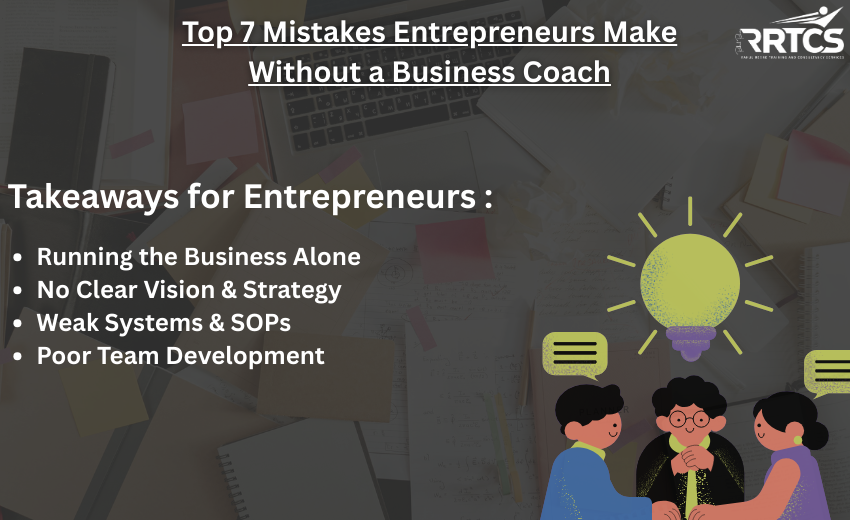
Top 7 Mistakes Entrepreneurs Make Without a Business Coach

Entrepreneurs often start with passion, energy, and big dreams. But somewhere along the way, many get stuck in confusion, burnout, or stagnant growth. Why? Because they try to do it all without guidance. A business coach acts like a GPS—saving years of trial and error. Without one, entrepreneurs usually make these 7 costly mistakes: 1. Running the Business Alone Many entrepreneurs become the center of everything—sales, HR, accounts, customer service. The result? No time to grow, no freedom, and constant stress. 2. No Clear Vision & Strategy Without external guidance, business owners confuse activity with progress. They work hard daily but lack a long-term roadmap. A coach brings clarity, vision, and direction. 3. Weak Systems & SOPs Entrepreneurs often delay building systems, thinking they’ll “do it later.” But without SOPs, KPIs, and dashboards, chaos spreads. Businesses remain owner-dependent instead of process-driven. 4. Poor Team Development Hiring without a strategy leads to mismatched teams. Without leadership development, employees remain followers instead of taking ownership. A coach helps create leaders at every level. 5. Blind Spots in Decision-Making Entrepreneurs often repeat mistakes because they can’t see their own blind spots. A coach provides an outside perspective and challenges limiting beliefs. 6. Emotional Burnout Business isn’t just numbers; it’s also emotions. Without support, entrepreneurs face stress, anxiety, and isolation. Coaching builds emotional resilience and balance. 7. Stagnant Growth The biggest mistake? Believing hard work alone = growth. In reality, growth comes from clarity, systems, accountability, and smart execution—exactly what a coach provides. Why Choose RRTCS? At RRTCS – Rahul Revne Training & Consultancy Services, we’ve seen these mistakes firsthand while working with entrepreneurs. Our coaching programs are designed to help you: ✅ Break free from chaos✅ Build systems and SOPs✅ Create accountable teams✅ Scale with clarity and confidence Don’t let these 7 mistakes hold you back.Choose RRTCS—because with the right coach, success is not a gamble, it’s a system.

Business Growth

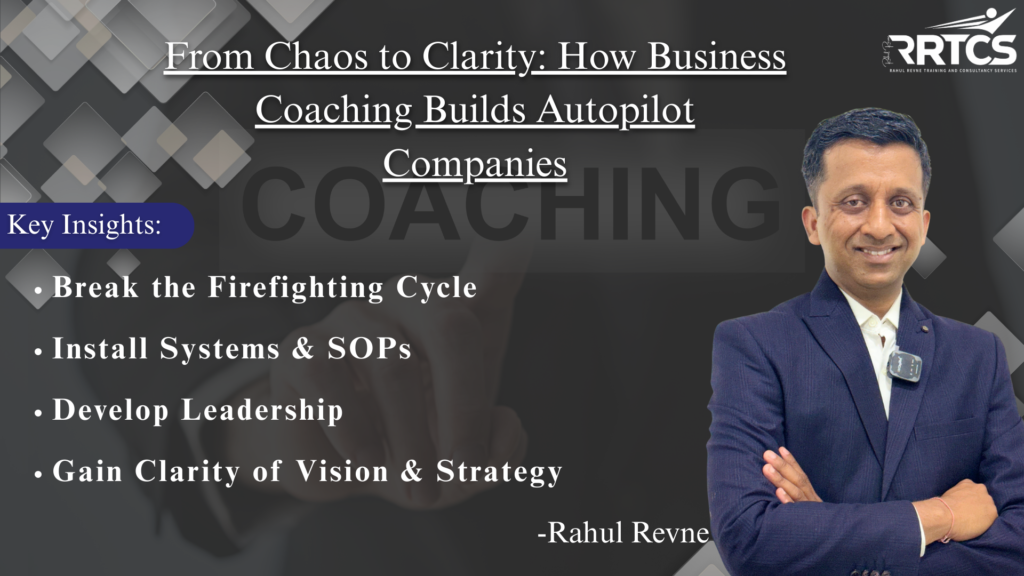
From Chaos to Clarity: How Business Coaching Builds Autopilot Companies

Running a business often feels like juggling fire—handling sales, people, production, finances, and customer issues all at once. Many entrepreneurs get stuck in the chaos of daily firefighting. They work hard but struggle to create consistent growth. What they really need is clarity—clarity of vision, systems, and execution. That’s where business coaching steps in. A good coach helps entrepreneurs move from “owner-driven chaos” to a system-driven autopilot company. 1. Breaking the Firefighting Cycle Most businesses depend heavily on the entrepreneur. If the owner takes a day off, the company slows down. This constant firefighting drains energy and limits growth.👉 A coach helps identify recurring issues, design processes, and train teams to handle them—so the entrepreneur can focus on growth, not just survival. 2. Installing Systems and SOPs An autopilot company is built on systems, not personalities. Business coaches bring tried-and-tested frameworks for: These tools ensure consistency, even when the owner isn’t involved in every decision. 3. Developing Leadership at Every Level Autopilot businesses don’t rely on one person. A coach helps entrepreneurs create leaders within teams—so responsibilities are distributed, ownership is shared, and decisions are faster. 4. Clarity in Vision & Strategy Chaos often comes from lack of clarity. A coach works with entrepreneurs to: 5. Freedom for the Entrepreneur The ultimate benefit of building an autopilot company? Freedom. Freedom to scale, innovate, and even take time off without worrying about collapse. Business coaching doesn’t just grow the business—it gives entrepreneurs back their life. Why Choose RRTCS? At RRTCS – Rahul Revne Training & Consultancy Services, our mission is to transform companies from chaos to clarity. We partner with entrepreneurs to build businesses that run on systems, data, and people—not just the owner’s presence. When you’re ready to stop firefighting and start scaling, choose RRTCS.Because with us, you don’t just grow a business—you build an autopilot company

Business Growth

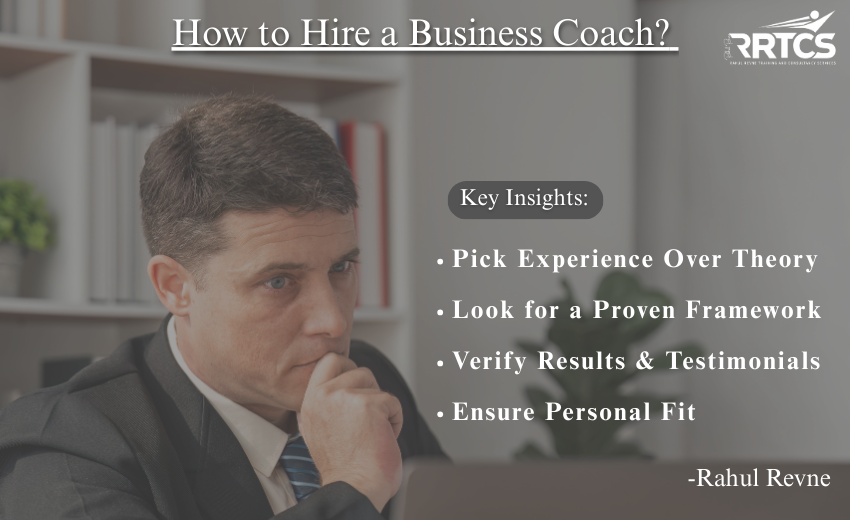
How to Hire a Business Coach?

Running a business is exciting but also challenging. Many entrepreneurs get stuck in daily firefighting, unclear strategies, and inconsistent results. This is where hiring the right business coach can make all the difference. But with so many options, how do you choose wisely? In this guide, we’ll break down the key steps to hire the best business coach in India and explain why RRTCS (Rahul Revne Training & Consultancy Services) is trusted by entrepreneurs who want to build autopilot businesses. 1. Define What You Want From Coaching Before searching, write down your top 3 challenges: Clarity on your needs ensures you hire a coach who specializes in solving your exact problems. 2. Choose Experience Over Theory The best business coach for entrepreneurs is not just a motivator but someone who has worked in real businesses. Look for someone who understands manufacturing, HR, sales, operations, and finance so that advice is practical, not just theoretical. 3. Check if They Have a Proven Framework A reliable coach should provide structured solutions like: This shows they don’t just talk – they implement. 4. Verify Testimonials & Results Before you hire, ask: Strong testimonials prove a coach’s ability to transform businesses. 5. Ensure the Right Personal Fit Your coach should challenge you to think bigger while respecting your values. Business coaching works best when there is trust, accountability, and shared vision. 6. Focus on ROI, Not Just Fees Hiring a coach is not an expense but an investment in growth. The right coach should bring you 5x–10x return through increased revenue, reduced waste, and improved efficiency. Why Choose RRTCS as Your Business Coach? When it comes to business coaching in India, RRTCS stands out because: ✅ Hands-on expertise in manufacturing, HR, sales, operations, and finance. ✅ Ready-to-use frameworks – SOPs, KPI trackers, growth strategies designed for MSMEs. ✅ Proven success stories – real entrepreneurs achieving sustainable growth. ✅ Focus on Autopilot Business Models – shifting from individual-driven to people, data, and system-driven organizations. ✅ Guided by core values like Demand Excellence and the promise to help you Measure Your Success. 👉 If you are serious about scaling your business, increasing profitability, and building systems that run without you, the right choice is RRTCS – Rahul Revne Training & Consultancy Services. 📍 Visit www.rahulrevne.com to get started today.

Business Growth

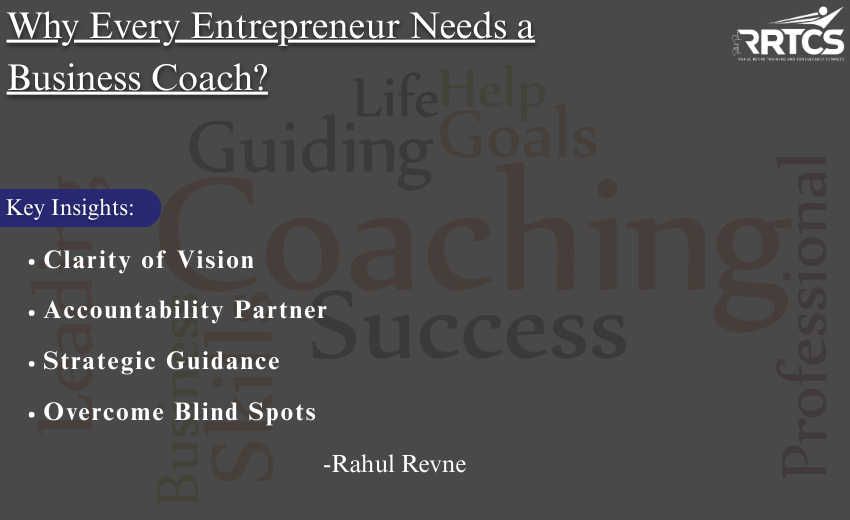
Why Every Entrepreneur Needs a Business Coach?

Entrepreneurship is exciting, but it can also be overwhelming. From managing finances to building a team, creating systems, and scaling the business, entrepreneurs often wear multiple hats. In this journey, even the most talented business owners encounter blind spots, doubts, and roadblocks. That’s where a business coach becomes not just helpful, but essential. 1. Clarity of Vision Many entrepreneurs start with passion but struggle to define clear goals and long-term vision. A business coach acts like a mirror—helping you clarify your purpose, align your vision with practical strategies, and stay focused when distractions come your way. 2. Accountability Partner Ideas are easy; execution is tough. Most entrepreneurs fail because they lack consistency. A business coach ensures accountability—pushing you to follow through on commitments, track progress, and measure results. 3. Strategic Guidance From sales and marketing to HR and operations, businesses demand strategic decisions daily. Coaches bring structured frameworks, proven tools, and real-world experience that can save years of trial and error. 4. Overcoming Blind Spots Every entrepreneur has weaknesses they may not recognize. A coach provides an external perspective—identifying patterns, challenging limiting beliefs, and suggesting solutions you may have overlooked. 5. Building Systems for Scale Without systems, businesses remain owner-dependent. A coach guides you to create SOPs, KPIs, and autopilot models so that your company can scale sustainably without burning you out. 6. Emotional Resilience The entrepreneurial journey is full of highs and lows. At times, entrepreneurs feel isolated, stressed, or stuck. A coach provides emotional support, mindset shifts, and resilience-building techniques to help you stay strong in tough times. 7. Faster Growth and Results With guidance, accountability, and the right strategies, entrepreneurs grow faster. A coach helps you avoid costly mistakes, make better decisions, and accelerate your path to success. Why Choose RRTCS? At RRTCS – Rahul Revne Training & Consultancy Services, we don’t just guide entrepreneurs—we partner with them to “Measure Your Success.” With practical tools, proven frameworks, and personalized coaching, we help you transform your business from individual-driven to system-driven, people-driven, and data-driven. 👉 If you want to grow faster, avoid unnecessary mistakes, and build an autopilot business model, then the smartest decision you can make today is to choose a business coach.And the right choice is RRTCS—because your success deserves a measurable path, not guesswork

Business Growth

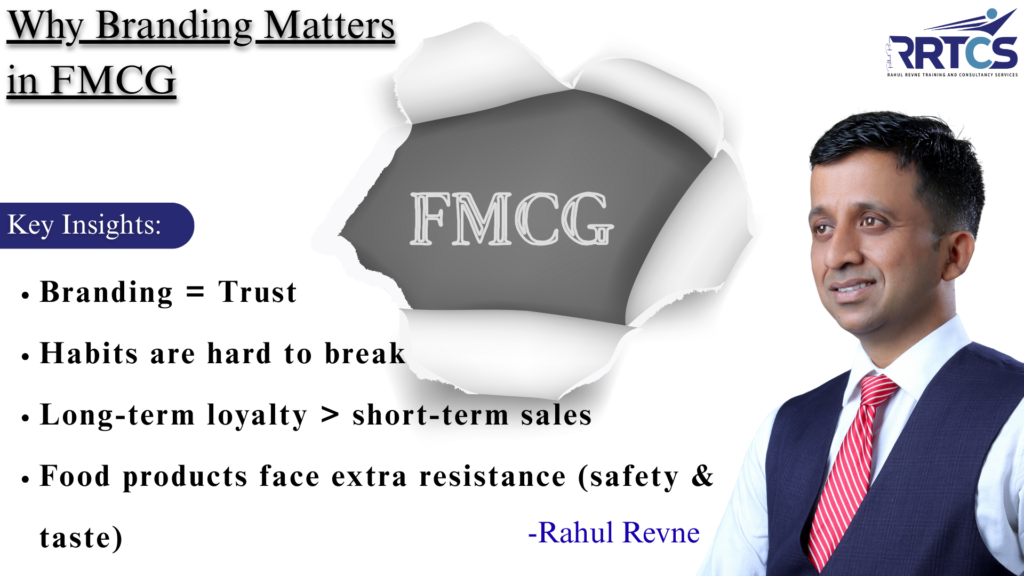
Branding: Why It Matters, Especially in FMCG

Branding is not just about a logo or a tagline—it is about trust. And when it comes to Fast-Moving Consumer Goods (FMCG), trust becomes the biggest currency a brand can have. In markets like India, where consumer behavior is deeply rooted in tradition and long-standing habits, branding plays an even more crucial role. People don’t just buy products—they buy into perceptions, memories, and emotions. Why is it difficult to break consumer habits? Overcoming these challenges: How new brands can build trust Breaking into the FMCG space is tough, but not impossible. The key is to build trust and reduce resistance through smart branding strategies: Branding in FMCG isn’t about short-term sales—it’s about building a relationship of trust that can last decades. In markets where habits are hard to break, the brands that succeed are those that patiently invest in trust, credibility, and consistent quality.

Business Growth

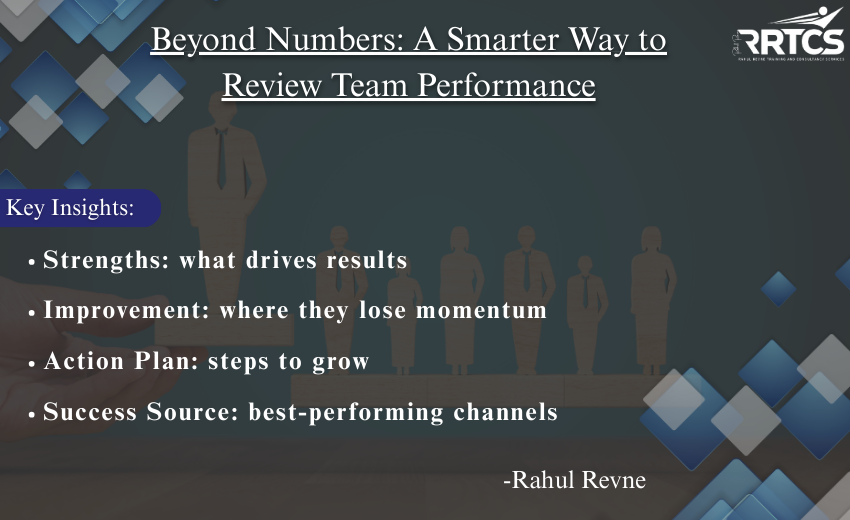
Beyond Numbers: How Leaders Can Create Performance Reports that Truly Empower Teams

When it comes to evaluating team performance, most leaders rely heavily on numbers—targets achieved, leads closed, projects completed. While these metrics are important, they don’t tell the full story. Numbers alone can’t explain why a team member is excelling in one area but struggling in another, nor can they guide you on how to nurture their strengths. A better approach is to create a structured performance report that doesn’t just measure outcomes, but also analyzes how those outcomes were achieved. One simple but powerful tool for this is a table with the following columns: Employee Strengths Areas of Improvement Action Plan Source of Success How to Fill This Table Why This Approach Works Great leaders don’t just count the results. They analyze the process, understand the person behind the numbers, and create a structured plan for growth. By using this table, you’ll not only improve individual performance but also build a culture of confidence, clarity, and continuous improvement.

Business Growth

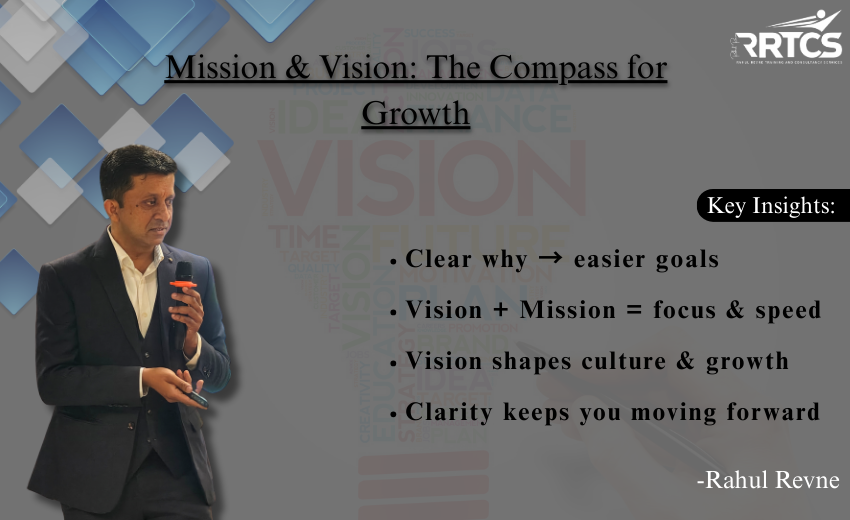
Mission and Vision: The Compass for Growth

Imagine standing in front of a tree filled with different fruits. If you know you want the mango, you can focus your arrow directly at it and hit your target. But if you’re just throwing arrows randomly, hoping to get “something,” chances are you’ll waste your energy, miss the mark, and walk away empty-handed. That’s exactly what happens in life and business when there’s no clear vision and mission. Vision: Your Long-Term Plan A vision is your big picture, your long-term plan. It defines where you want to go and what you ultimately want to achieve. Vision provides clarity—it’s the “why” behind everything you do. Without it, distractions and confusion creep in, pulling you in different directions, and eventually keeping you stuck where you are. When your vision is strong, it helps you: Employees, too, find confidence and security in a company with a defined vision. They see growth opportunities for themselves because they know the organization is moving forward, not standing still. Mission: Your Short-Term Plan While vision is about the destination, mission is about the journey. It’s the short-term plan—the steps and actions you’ll take today to move closer to your vision tomorrow. Mission answers the “how.” How will you achieve your long-term dream? What practical strategies will you apply? When you break your vision into actionable missions, your efforts become focused, intentional, and effective. Why Vision and Mission Matter Just like aiming at the right fruit ensures you don’t waste your arrows, having a strong vision and mission ensures you don’t waste your time and energy. When you know what you want in the long term (vision) and have a plan to achieve it in the short term (mission), growth is not just possible—it’s inevitable.

Business Growth

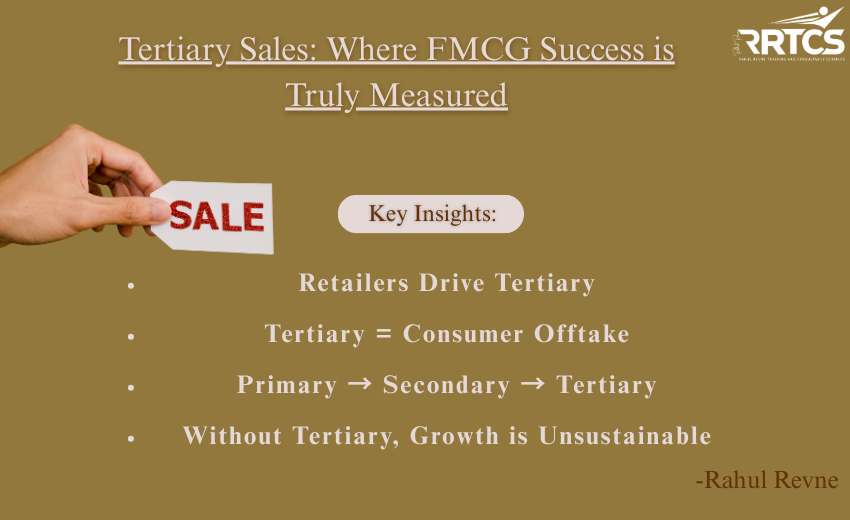
The Underrated Power of Retailers in FMCG: Why Tertiary Sales Matter Most

In the dynamic world of Fast-Moving Consumer Goods (FMCG), there’s a critical and often underappreciated stage in the distribution chain—tertiary sales. This stage is where retailers transform stock into actual consumer consumption, making them the hidden supporters of every brand’s success. 1. Understanding the FMCG Sales Phases To understand why tertiary sales matter, it’s important to first know the three phases: 👉 Tertiary sales represent the final and most important stage — when products are actually purchased and consumed by the end customer. 2. Why Tertiary Sales Drive Real Success 3. Retailers: The Hidden Supporters Retailers act as the bridge between your brand and your consumers. They are the ones ensuring: In short, while distributors and logistics push products forward, retailers pull products through to the final consumer, completing the cycle of sales. 4. In Summary: Tertiary Sales Are What Truly Matter Insight Takeaway Retailers drive this phase They execute the last-mile sale. Consumer offtake = Real Success Only tertiary sales prove genuine demand. In FMCG, success is not measured by how much stock you push into the market, but by how much stock actually reaches consumers’ hands. That is the essence of tertiary sales. And at the heart of this stage are your retailers — the true enablers of consumer offtake and the silent force behind your brand’s growth.

Business Growth

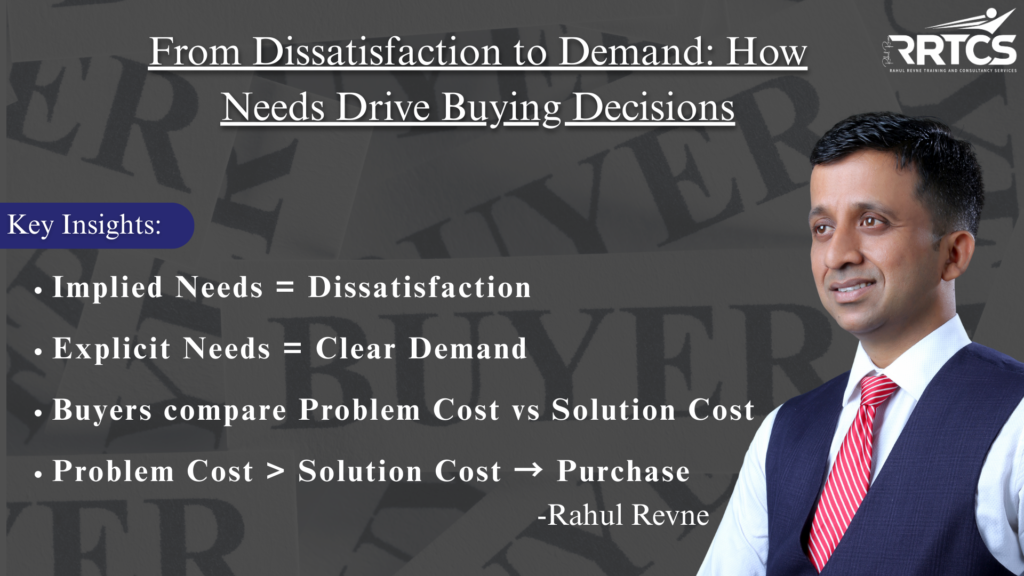
Implied Needs vs Explicit Needs: When Buyers Are Truly Ready to Purchase

In sales and marketing, understanding customer needs is the key to driving conversions. But not all needs are created equal. Some are subtle and hidden beneath the surface, while others are clear, strong, and ready for action. These two categories are known as Implied Needs and Explicit Needs. Knowing the difference—and how to move a customer from one stage to the other—is what separates average sellers from top performers. What Are Implied Needs? Implied needs are the starting point of every buying journey. They often appear as dissatisfaction, concerns, or vague problems a buyer is experiencing. At this stage, the buyer knows something isn’t right, but they haven’t fully defined it or decided to fix it. For example: These statements are signals of dissatisfaction. However, they are not yet strong enough to drive a purchase. Why? Because implied needs are not accurate or urgent—they simply highlight that there’s a problem. What Are Explicit Needs? Explicit needs are when the buyer clearly defines the problem and expresses a strong desire for a solution. They are no longer just dissatisfied; they want change—and soon. For example: Notice how explicit needs are specific, measurable, and solution-driven. At this point, buyers are no longer just thinking about the problem—they are actively looking for a way to fix it. From Implied Needs to Explicit Needs The real skill in sales is helping customers transition from implied needs to explicit needs. Until you do this, a sale is unlikely to happen. Here’s how that process usually works: Why Smart Buyers Compare Costs One of the most critical shifts in the buying process happens when buyers realize:👉 The cost of the problem is bigger than the cost of the solution. At this moment, hesitation fades. Investing in your product or service becomes the logical and necessary choice. If the buyer doesn’t yet see the cost of the problem, they will stall. That’s why great sellers don’t just talk about features—they magnify the pain of inaction until the buyer sees solving the problem as the only option. When Is the Buyer Ready to Purchase? The buyer is ready when: Until this shift happens, you’re not really selling—you’re only building awareness. Understanding implied and explicit needs is crucial for any business. Implied needs highlight dissatisfaction, but explicit needs create action. Your role is to guide the buyer through that transformation. The formula is simple:👉 Dissatisfaction → Problem Recognition → Cost of Problem > Cost of Solution → Explicit Need → Purchase When you master this process, you’ll not only close more sales but also build deeper trust with your customers.  

Scroll to Top