
Many founders copy competitors.
If competitors use:
- Subscription
- Franchise
- Commission
- Freemium
- Marketplace
- Monthly pricing
They also copy the same model.
But what works for one business may fail in another.
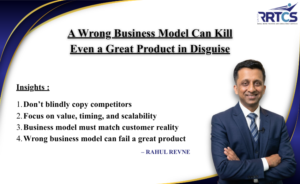
A great product with the wrong business model can still fail badly.
Why?
Because business models must match:
- Customer behavior
- Buying habits
- Cost structure
- Timing of value delivery
Example:
Some customers prefer:
- One-time payment
Others prefer:
- Monthly subscription
Some customers buy only after results.
Others buy for convenience.
That means your pricing and delivery model should fit how customers naturally buy.
One famous example is Hilti.
Instead of only selling tools, they created a monthly fleet management model.
Customers did not care about owning tools.
They cared about completing projects smoothly.
So Hilti aligned the business model with customer reality.
Another example is Xerox.
Instead of only selling machines, they charged customers per copy usage.
That reduced entry barriers and created recurring revenue.
The lesson is important:
Don’t blindly copy business models.
Ask these questions:
- How does my customer get value?
- When does the customer experience the value?
- What payment structure feels natural to the market?
- Can this model scale profitably?
A business model should support growth.
Not create friction.
Because sometimes the product is not the problem.
The model is.
_________________________________________________________________________________________
Author Bio
Mr. Rahul Revne Founder of RRTCS (Rahul Revne Training & Consultancy Services), Mr. Rahul Revne brings over 15 years of experience in HR, Sales, Strategy, and end-to-end business consulting.
Known for turning struggling ventures into thriving enterprises, he helps entrepreneurs master the art of meaningful customer connection, emotional intelligence in sales, and purpose-driven business growth. Author of Entrepreneurial Series and Spirit of Inspiration, Mr. Revne continues to empower leaders with clarity, courage, and customer focus.